Airlines Begin Cancelling Flights to Russia After Zelenskyy Warns of Drone Threat in Airspace
Several airlines have begun cancelling flights to Russia after President Zelenskyy warned that Ukrainian drone operations make Russian airspace unsafe. Putin responded by accusing Zelenskyy of 'state terrorism' and ordered retaliatory strikes on Ukraine's energy grid.
The first commercial airlines have started cancelling flights to Russia, Ukrainian President Volodymyr Zelenskyy said on 2 September, just one day after he warned that Russian airspace is becoming unsafe due to the scale of Ukrainian drone operations.
“We are receiving information that the first airlines have begun refusing to operate flights to Russian airports following our warning about the drone threat which objectively exists in Russian airspace,” Zelenskyy said in his evening address, as reported by Ukrainska Pravda. He added that Ukraine has officially informed the International Civil Aviation Organisation (ICAO) and other international partners about the situation.
The warning, issued on 1 September, was a direct challenge to the handful of non-Western carriers – chiefly from China, the Middle East and Central Asia – that still fly over Russia and serve Moscow, St Petersburg and other major cities. Most Western airlines have avoided Russian airspace since the full-scale invasion began in February 2022. Zelenskyy said on 2 September that his government had received confirmation that some carriers were now pulling out entirely.
‘State terrorism’ and retaliation
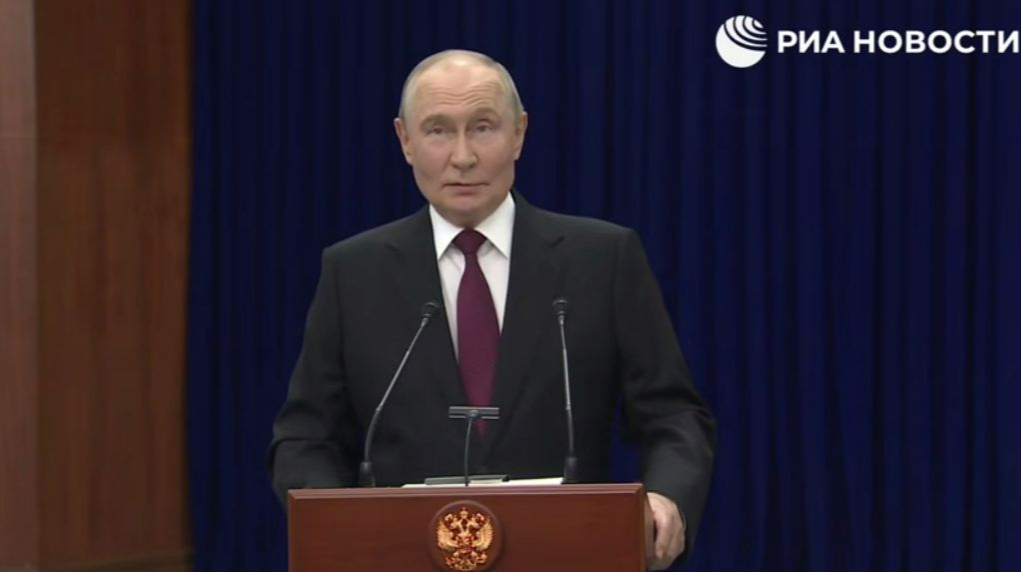
Russian President Vladimir Putin responded sharply to Zelenskyy’s initial warning, calling it a “bid for state terrorism” during a press conference at the Shanghai Cooperation Organisation summit in Bishkek. “You don’t negotiate with terrorists,” Putin said, according to RIA Novosti via Ukrainska Pravda. He reiterated that the Russian military had been instructed to carry out large-scale retaliatory strikes against Ukraine’s energy infrastructure, a threat that The Guardian noted is especially ominous as winter approaches.
The exchange of threats marks a new phase in the air war, which has escalated dramatically in the fifth year of the conflict. Ukraine has been launching hundreds of drones per day against targets deep inside Russia, including oil refineries, air bases and military factories. On 29-30 August, Ukrainian forces struck the Kirishi oil refinery in Leningrad Oblast and the Yeysk air base in Krasnodar Krai, as Ukrainska Pravda reported.
Putin acknowledged on 2 September that drones are now the “main challenge” for Russian forces across all domains – underwater, at sea, on land and in the air, according to Interfax. While he claimed Russia would meet its objectives, he admitted the threat is serious.
Economic damage and shipping losses
Beyond the airspace dispute, Putin provided a rare detailed assessment of the economic toll of Ukrainian strikes on Russia’s maritime trade. He said that over the past 40 days, Ukrainian forces have damaged approximately 100 commercial vessels in the Black Sea and Sea of Azov, causing losses estimated at about 1% of Russia’s GDP, as reported by The Moscow Times via Ukrainska Pravda.
“They cannot inflict critical damage on us. But there is damage nonetheless,” Putin said. According to the Institute of Black Sea Strategic Studies, exports of Russian crude oil from Black Sea ports dropped 3.2-fold in August compared with July, and grain exports also fell, though the Kremlin attributed part of that to market factors.
Diplomacy frozen
The airspace confrontation comes as peace negotiations remain stalled. Putin said on 1 September that the negotiating process is “currently frozen,” though he left the door open for “positive proposals” from any party, including individuals close to former US President Donald Trump, such as Steve Witkoff and Jared Kushner. He also revealed that CIA Director John Ratcliffe had visited Moscow, and that contacts between intelligence officials continue regularly, according to Ukrainska Pravda.
Zelenskyy has framed his airspace warning as part of a strategy to force Russia to accept peace talks. “The war started by Russia is closing its skies,” he said in his 1 September address, as quoted by the BBC. “We want to warn every airline that uses Russian airspace, every insurer, everyone who still uses key Russian airports: the Russian sky is becoming completely dangerous.”
Wider context: the Leipzig incident
The airspace dispute is not the only aviation-related flashpoint. Putin on 2 September linked a drone incident at Leipzig/Halle Airport in Germany to Berlin’s domestic political crisis, according to RIA Novosti. On 4 August, a drone carrying explosives was discovered near a Ukrainian Antonov cargo aircraft at the airport. German Interior Minister Alexander Dobrindt blamed Russia for the incident. Putin dismissed the accusation, saying the closure of Russian cultural centres and consulates in Germany was “unclear” and driven by a need to “confront an aggressive Russia.”
What it means
The effective closure of Russian airspace to a growing number of international carriers, combined with the escalating drone war and the economic damage to shipping, signals that Ukraine is now able to impose costs on Russia far beyond the front line. For airlines and insurers, the risk of misidentification or miscalculation is real: Osprey Flight Solutions, an aviation risk advisory firm, warned clients that daily attacks deep inside Russia are “almost certain” to continue and that the frequency is likely to increase in the short term, as the BBC reported.
Meanwhile, the Kremlin shows no sign of backing down. Putin’s threat to escalate strikes on Ukraine’s energy grid, paired with the continued supply of drones from Iran and other allies, suggests the air war will only intensify as winter sets in. For Ukraine, the goal remains clear: make the cost of the war so high that Russia has no choice but to negotiate.
This article is based on reporting from Ukrainska Pravda, BBC News, The Guardian, Al Jazeera, The Moscow Times, and RIA Novosti.
Sources
- Putin calls Zelenskyy's warning about Russian airspace "bid for state terrorism" September 1, 2026
- Putin says negotiations are currently frozen September 1, 2026
- Putin: Drones are the main challenge for Russian forces September 1, 2026
- Zelensky says airlines should avoid Russian airspace as Ukraine escalates drone operations September 2, 2026
- Putin links Leipzig airport drone incident to crisis in Germany September 2, 2026
- Russian airspace becoming unsafe for commercial airlines, Zelenskyy says September 2, 2026
- Putin reveals impact of Ukrainian strikes on shipping on Russian GDP September 2, 2026
- Putin and Zelenskyy issue threats as strikes rock Ukraine, Russia September 2, 2026
- Zelenskyy: Some airlines have started cancelling flights to Russia September 2, 2026
Part of the dossier
Russia-Ukraine Airspace Conflict →