EU Ambassador sleeps in bathroom as Russian strikes intensify; EU deadlocked on Putin sanctions but moves on child deportations
EU Ambassador Katarína Mathernová describes sleeping in a bathroom due to Russian attacks on Kyiv. Meanwhile, EU states fail to extend sanctions on Putin, Lavrov and Yanukovych, but advance sanctions on 27 entities linked to child deportation.
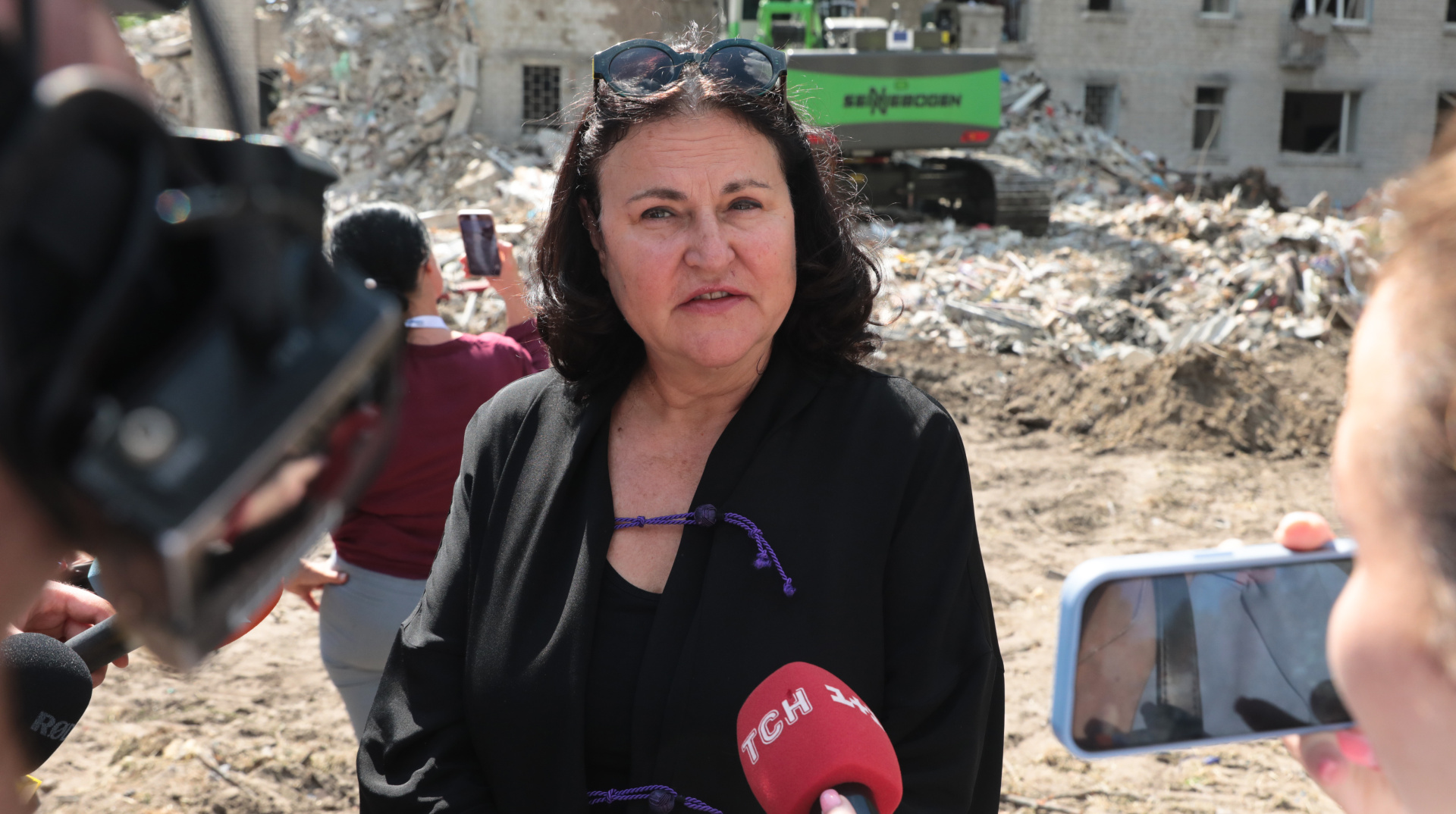
Russia's relentless missile campaign against Kyiv has forced the European Union's top diplomat in Ukraine to abandon her bed. Katarína Mathernová, the EU Ambassador to Ukraine, revealed on 1 September that she now spends nights on a mattress in the bathroom of her hotel room – the safest place during the near-daily air raids.
"I am tired. Sometimes scared. But I am not complaining. Kyiv is my mission," Mathernová wrote on Facebook, as reported by European Pravda. "The intensity of these attacks is becoming very difficult. People are exhausted. Cities are exhausted."
Her post came after a Russian strike on the night of 31 August–1 September killed eight people and wounded five in the capital. Mathernová had already described a similar attack on 1–2 July, which hit an area where many diplomats live. Her testimony underscores that Russia’s campaign targets not only military infrastructure but the daily life of a city that hosts embassies from across the world.
While the ambassador’s personal ordeal illustrates the human cost of the war, Brussels is wrestling with two divergent tracks on Russia policy. On 21 September, the Committee of Permanent Representatives (Coreper) of EU member states again failed to agree on extending individual sanctions against Vladimir Putin, Sergei Lavrov, and Ukraine’s former pro-Russian president Viktor Yanukovych. The current regime – in place since 2014 – expires on 14 September and has already been extended for only seven days due to obstruction from Slovakia and France. According to European Pravda sources in French diplomatic circles, Paris wants to remove oligarch Alisher Usmanov from the list in exchange for the release of French citizens held in Azerbaijan.
That deadlock stands in contrast to a concrete step forward on what Ukraine calls an even more urgent issue: Russia’s deportation of Ukrainian children. On 16 September, Foreign Minister Andrii Sybiha announced that the EU is preparing sanctions against 27 Russian individuals and entities linked to the forced transfer and indoctrination of children from occupied territories. "The deportation and forced transfer of Ukrainian children is a crime, and Russia must not be allowed to turn it into a fait accompli," Sybiha wrote on X. He added that Lithuania has allocated €600,000 to Ukrainian organisations working on returns and rehabilitation, and that New Zealand has joined the International Coalition for the Return of Ukrainian Children as its 51st member.
The EU’s sanctions package on the defence industrial base, already covering 1,576 individuals and entities, is separate from the individual sanctions against Putin et al. But the timing highlights a growing divergence: the bloc is willing to act decisively against specific war crimes while struggling to maintain symbolic punishment of the Kremlin’s top leadership. Slovak and French objections centre on a handful of oligarchs, not on Putin himself – yet the inability to renew the list risks sending a message of disunity to Moscow.
For Mathernová and the rest of the EU diplomatic corps in Kyiv, these debates in Brussels may feel distant. "Ukraine does not need to be told to be resilient," she wrote. "Ukrainians have proven that every single day. They need to be able to sleep." The ambassador’s choice of shelter is a stark reminder that even the representatives of the bloc funding Ukraine’s defence cannot escape the reality of Russia’s war.
Meanwhile, Ukraine is working with Canada and Norway to organise an international conference in Toronto on the return of children, detained civilians, and prisoners of war. In August alone, 103 Ukrainian children were liberated, bringing the total to 2,525. The EU’s promised sanctions on the 27 entities linked to child deportation – if eventually imposed – would be a step toward accountability, but the bloc’s failure to extend sanctions on Putin himself suggests that the gap between rhetoric and action remains wide.
Sources
- EU ambassador says she now sleeps in bathroom due to Russian attacks on Kyiv September 1, 2026
- Kyiv: EU to sanction 27 Russian individuals and entities involved in abduction of Ukrainian children September 16, 2026
- EU ambassadors once again fail to extend sanctions against Putin and Ukraine’s ex-president Yanukovych September 21, 2026
Part of the dossier
EU Ambassador's Safety in Ukraine →