EU and NATO Vow Tougher Response After Russia-Linked Drone Attack on Leipzig Airport as Sanctions Decision Stalls
Germany formally blamed Russia for a failed drone attack on Leipzig airport in August, prompting EU and NATO leaders to promise a stepped-up response. Meanwhile, the EU postponed a decision on extending individual sanctions against over 3,000 Russian entities due to Slovakia's opposition, as Brussels also dismissed a false Russian claim about mobilising Ukrainian women.
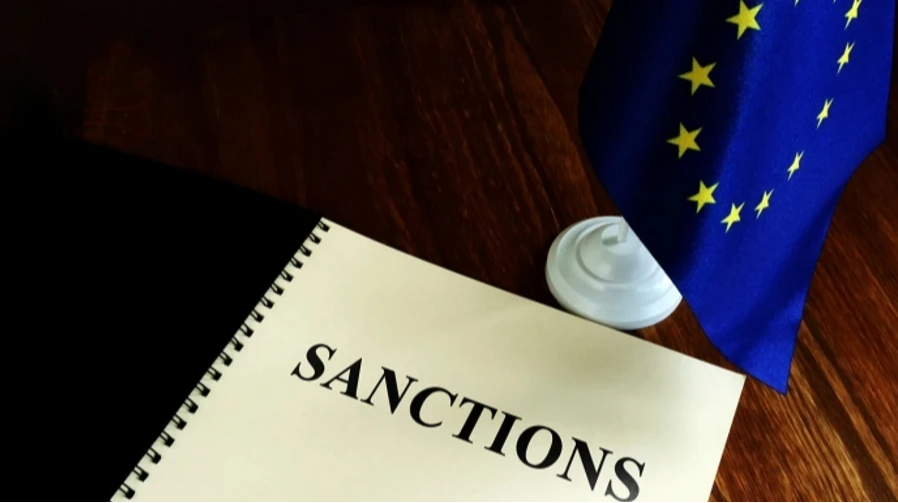
The European Union and NATO have condemned a failed drone attack on Leipzig/Halle airport in August as a deliberate act of Russian hybrid warfare on EU soil, promising to "step up" their response. The pledge comes as internal EU divisions delay the renewal of individual sanctions against more than 3,000 Russian individuals and entities, and as Brussels dismisses a fresh piece of Kremlin disinformation.
On 2 September, Germany’s government officially blamed Russia for the 4 August incident, in which a drone carrying explosives targeted a Ukrainian cargo plane at Leipzig/Halle airport. The drone was defused by a robot; a second drone is believed to have collided with another cargo plane. A third drone was found at the airport ten days later. Investigators said the drone’s configuration, components and explosives matched known Russian hybrid operations. Two suspects have been identified – a Belarusian holding a Russian passport who entered on a tourist visa, and an individual with Latvian and Russian passports who flew in and out of Berlin two days before the attack.
"Leipzig marks a new escalation on European Union soil directly attributed to Russia," EU Commission President Ursula von der Leyen said, standing alongside NATO Secretary General Mark Rutte in Brussels. "We have to step up and that means being ready to respond to Russia's recklessness faster and better." Rutte added that the whole alliance stood "in full solidarity with Germany". Source: BBC News
The airport is a key NATO logistics hub, regularly used by Ukrainian Antonov transport aircraft. France’s Foreign Minister Jean-Noël Barrot, speaking at an informal EU foreign ministers’ meeting in Wicklow, Ireland, said action could be taken on a European level against the attack.
But while leaders project unity, the EU’s ability to maintain pressure on Moscow faces a practical test. On 2 September, the EU Committee of Permanent Representatives (Coreper) failed to agree on extending individual sanctions against more than 3,000 Russian individuals and companies responsible for violating Ukraine’s territorial integrity. The restrictions are due to expire on 15 September. Source: Ukrainska Pravda
According to EU sources, the stumbling block is Slovakia, which opposes a one-year extension and insists on the traditional six-month renewal. Bratislava has also reportedly proposed removing several Russian individuals from the sanctions list – though their names have not been disclosed. The issue has been postponed to 9 September. The delay matters because it risks sending a signal of wavering resolve at a moment when Russia is escalating hybrid attacks on EU territory.
Separately, the EU has dismissed a false Russian claim that it wants Ukraine to mobilise women. The disinformation narrative, which appeared in Russian state media, alleged that Brussels was pressuring Kyiv to expand conscription to women. EU officials categorically denied the claim, calling it a fabrication designed to sow distrust between Ukraine and its European partners. Source: Ukrainska Pravda
Taken together, the past ten days illustrate the dual challenge facing Europe: repelling an increasingly audacious Russian hybrid campaign on its own soil, while keeping its own political consensus intact. The Leipzig attack shows Moscow is willing to strike at NATO infrastructure inside Germany. The sanctions delay shows that even with unambiguous evidence of Russian aggression, EU unanimity can be held hostage by a single member state. And the disinformation episode reminds readers that the information war continues alongside the kinetic one.
The EU and NATO have promised a faster and better response. What that will look like in practice – whether more air defence at European airports, new sanctions, or a formal attribution mechanism – remains to be seen. The 9 September Coreper meeting will be a first test of whether Europe’s words match its deeds.
Sources
Part of the dossier
EU-NATO Response to Russian Aggression →