Kremlin adviser threatens 'semi-military' attacks on UK arms factories as Burnham hands Storm Shadow blueprints to Ukraine
The Kremlin has threatened 'semi-military' attacks on UK arms factories after Prime Minister Andy Burnham shared Storm Shadow missile blueprints with Ukraine. Meanwhile, CIA Director John Ratcliffe visited Moscow for undisclosed security talks, and Ukraine struck a Wildberries logistics centre in Russia's Tambov region.
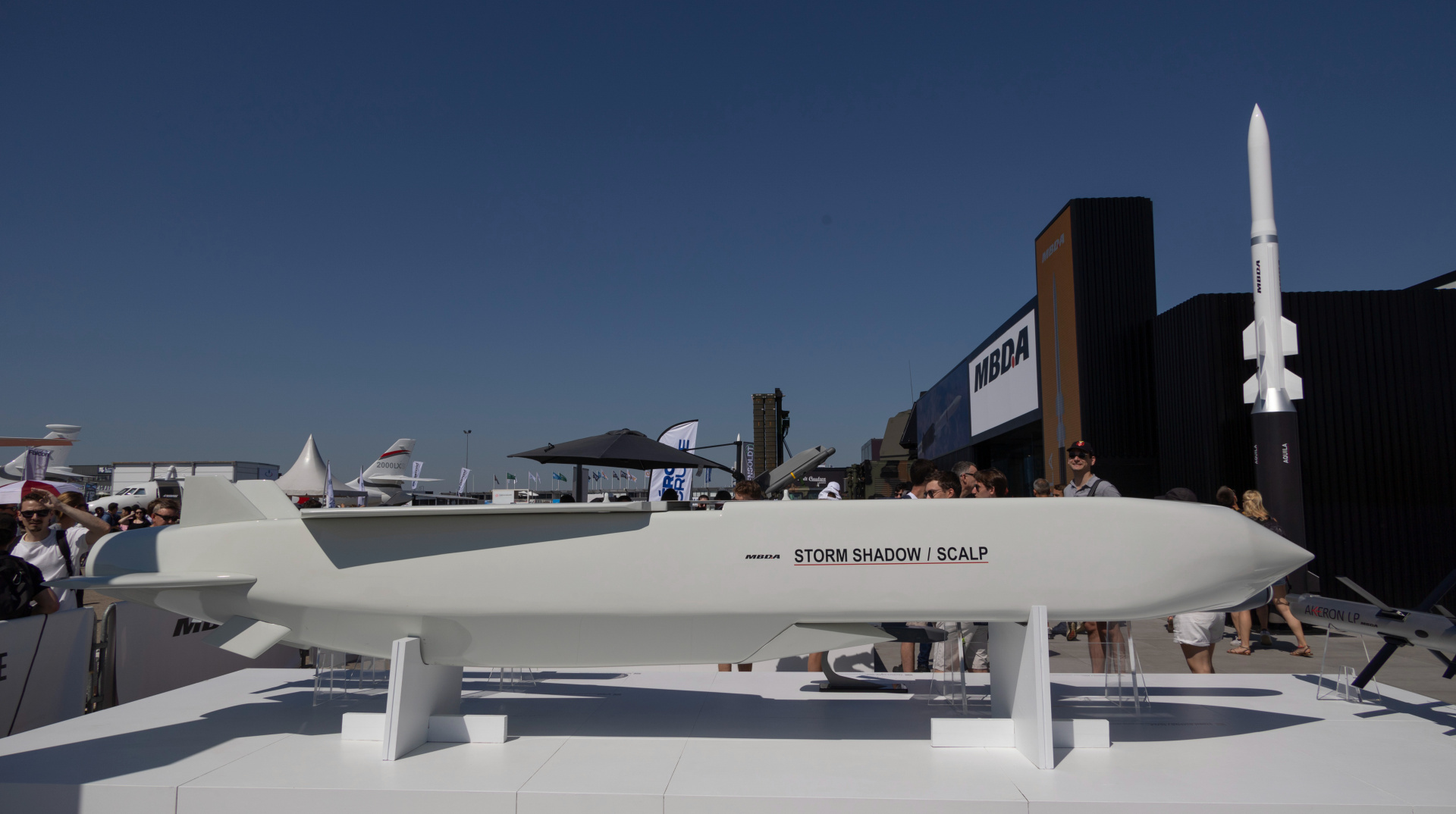
The Kremlin has threatened British arms factories with attacks from "unknown sources" after UK Prime Minister Andy Burnham agreed to share the production technology and blueprints for Storm Shadow cruise missiles with Ukraine during his first foreign trip to Kyiv on 25 August.
Andrei Fedorov, a Kremlin adviser and former Russian deputy foreign minister, told the BBC that he could not "exclude 100 percent" that there might be some "semi-military" action against British factories producing drones and missile components for Ukraine (Ukrainska Pravda). Fedorov framed the UK's decision as proof of "direct military involvement" in the war, and said pressure was building on President Vladimir Putin to respond in kind.
"Sooner or later, there might be not only verbal but maybe some visible reaction from Russia towards the UK," Fedorov said. He elaborated that attacks could come "not by Russia, but from unknown sources," hinting at plausible deniability through proxies, criminal groups, or hackers (Al Jazeera).
The threat comes on the same day Burnham, in his first overseas trip as prime minister, announced that Britain would share the technical blueprints for the Anglo-French Storm Shadow/SCALP cruise missile. The UK has been a leading supplier of the weapon to Ukraine, and the move to enable Ukrainian domestic production is seen as a strategic escalation — allowing Kyiv to sustain long-range strike capabilities independently of Western stockpiles (Al Jazeera).
Kremlin spokesperson Dmitry Peskov struck a similarly confrontational tone earlier, saying the UK was "participating in this war" by providing missile blueprints. Burnham retorted: "Who started the fire? That's the question, isn't it?" (Ukrainska Pravda).
The threats to UK factories are not empty rhetoric. The Telegraph has reported that Russia has already launched a campaign of attacks on European arms factories, recruiting local gang members to carry out arson and sabotage while testing NATO's response. Burnham's government is assessing potential security upgrades for industrial sites producing drone components.
CIA director in Moscow — and Ukraine asked to pause strikes
Amid the escalating UK-Russia tensions, CIA Director John Ratcliffe reportedly travelled to Moscow on 25 August — the highest-level visit by a Trump administration official to Russia since January. CBS News and Axios first reported the trip, citing unnamed sources; flight tracking data showed a US Air Force C-17 that had arrived from Riga (Al Jazeera).
Initially, Peskov denied any planned talks with US envoys this week. But by 26 August, he confirmed to The Washington Post that Ratcliffe's visit was related to "contacts between security services," declining to give further details (Ukrainska Pravda). According to The Wall Street Journal, Ratcliffe travelled after US intelligence indicated Russia was making early preparations for a possible military mobilisation. The US reportedly asked Ukraine to suspend strikes on Russia during the delegation's visit — a request that may have shaped the timing of operations.
Ukraine continues long-range strikes
Ukraine did not suspend all operations. On 26 August, a Ukrainian drone struck a logistics centre of Wildberries — Russia's largest online retailer — in the Tambov region. It was the 20th such attack on the company, which Ukraine says supports the Russian war effort by providing logistics and infrastructure (Al Jazeera).
What it means for the war
The combination of UK missile technology transfer, explicit Kremlin threats against British industrial targets, and a secretive CIA visit to Moscow marks a significant intensification of the conflict's international dimensions. For Ukraine, domestic Storm Shadow production could reduce reliance on uncertain Western supplies and allow a sustained long-range campaign against Russian military infrastructure. For the UK, it raises the real risk of hybrid attacks on its soil — a new front in a war that the Kremlin has long characterised as a proxy confrontation with NATO.
The open question remains whether Russia will follow through on Fedorov's threats. If it does, the war in Ukraine will have reached a dangerous new phase: one in which Western factories become battlefield targets, and the distinction between combatant and non-combatant grows perilously thin.
Sources
- UK to back Ukraine with missile blueprints amid Russia-Ukraine strikes August 25, 2026
- Kremlin denies planned talks with US envoys amid reports CIA head in Russia August 25, 2026
- Storm Shadows for Ukraine: Kremlin threatens UK with paramilitary action against arms factories August 25, 2026
- Kremlin adviser warns UK drone factories could face attacks August 25, 2026
- Russia’s ‘Amazon’ Wildberries comes under Ukraine attack again August 26, 2026
- Kremlin reveals purpose of CIA director's visit to Moscow August 26, 2026
Part of the dossier
Storm Shadow Missile Technology and Kremlin Threats →