Kyiv asks EU to spend loan on Patriot missiles as Brussels presses partners to cover the rest
Ukraine has formally asked the European Commission to spend over €2 billion of an EU loan on Patriot interceptor missiles. Brussels says the €90 billion loan covers only two-thirds of Ukraine's needs and has urged partners to provide the rest.
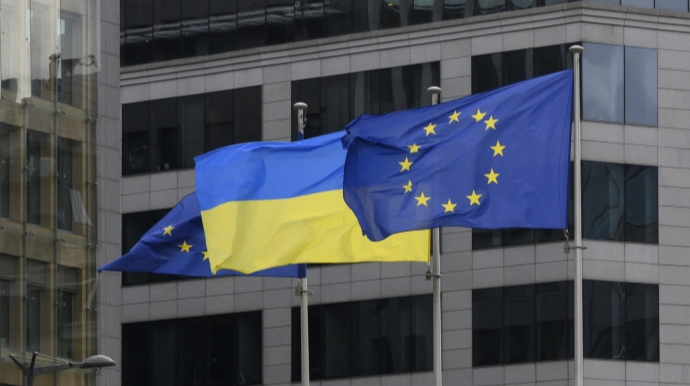
Ukraine has formally asked the European Commission to let it spend more than €2 billion from the EU's €90 billion loan on Patriot interceptor missiles, as Brussels insists the loan was always designed to cover only two-thirds of Ukraine's needs and presses partners to fill the rest.
The request, first reported by Ukrainian public broadcaster Suspilne, comes as Ukraine faces a critical shortage of anti-ballistic missiles. President Volodymyr Zelenskyy said in August that the United States would deliver Patriot missiles monthly, but that Ukraine has received roughly three times fewer such interceptors since the start of 2026 than it needs to defend against Russian ballistic strikes.
According to Suspilne, the European Commission previously received a list of weapons Ukraine plans to buy with the remaining €6 billion in the loan's defence component. Most items are manufactured in Ukraine or the EU, primarily drones. The Patriot request would be a departure — the system's PAC-2 and PAC-3 interceptors are American-made.
The €90 billion Ukraine Support Loan, agreed in 2025, is split into €30 billion in budget support and €60 billion for defence needs in 2026–2027. Of that, €28.3 billion is earmarked for Ukraine's defence industry in 2026 alone.
European Commission chief spokesperson Paula Pinho said on 1 September that the loan was calculated to cover "two-thirds of the needs of Ukraine" in the budgetary and defence domains for the two-year period. "There is one third which cannot be covered by the EU and where we have been urging our partners to come in and step in," she told reporters, as reported by European Pravda via Ukrainska Pravda.
Pinho also stressed that disbursements are tied to reforms in Ukraine. "These disbursements are also linked to the reforms that are being introduced in Ukraine," she said, adding that the Commission is "making very good progress" on the current schedule. She acknowledged "the extreme needs of Ukraine" but said Brussels is focused on "what is already a very ambitious disbursement plan."
The reform linkage is a sensitive point in Kyiv. The EU's macro-financial assistance has historically come with conditions on anti-corruption and governance reforms, and the pace of disbursement matters for Ukraine's ability to plan its budget.
In June, the Commission began paying out €3.9 billion, the first payment under an initial tranche of about €6 billion for drone purchases. The remaining €6 billion in the defence component is what Ukraine now wants to use for Patriots.
Separately, Pinho said on 4 September that the United States has not yet made any demand to return money previously provided for Ukraine aid. The remark appears to address speculation in some European capitals that Washington might seek repayment of earlier assistance as part of a broader policy shift. The absence of a formal request does not rule one out, but it removes an immediate threat to Ukraine's balance sheet.
Why this matters
The Patriot request is strategically significant for two reasons. First, it tests whether Brussels will allow European money to buy American weapons. The loan's defence component was framed as a way to boost Ukraine's own defence industry and European production. Spending €2 billion on US-made interceptors — however critical for Kyiv — could set a precedent for future purchases outside the EU.
Second, the two-thirds financing gap remains unresolved. If no other partners cover the remaining third, Ukraine will enter 2027 with a substantial hole in its budget and defence planning. The EU is effectively telling allies: we've done our part, now step up.
The Commission has not commented on the Patriot request beyond noting it is under review. A decision is expected in the coming weeks, and it will be watched closely not only in Kyiv but in Washington, where Patriot production schedules are already stretched.
Sources
- EU points out that €90bn loan will cover only two-thirds of Ukraine's needs September 1, 2026
- Ukraine reportedly asks to buy Patriot missiles using EU loan funds September 1, 2026
- EU says US has not yet made demand to return money for Ukraine aid September 4, 2026
Part of the dossier
EU Financial Support to Ukraine →