Kyiv drone attack death toll rises to nine as injured man dies in hospital
A 30-year-old man injured in Russia's 1 September drone attack on Kyiv has died, raising the death toll to nine. The attack hit a petrol station and warehouses. Separately, a man was killed in a Russian strike on a civilian car in Izium on 9 September.
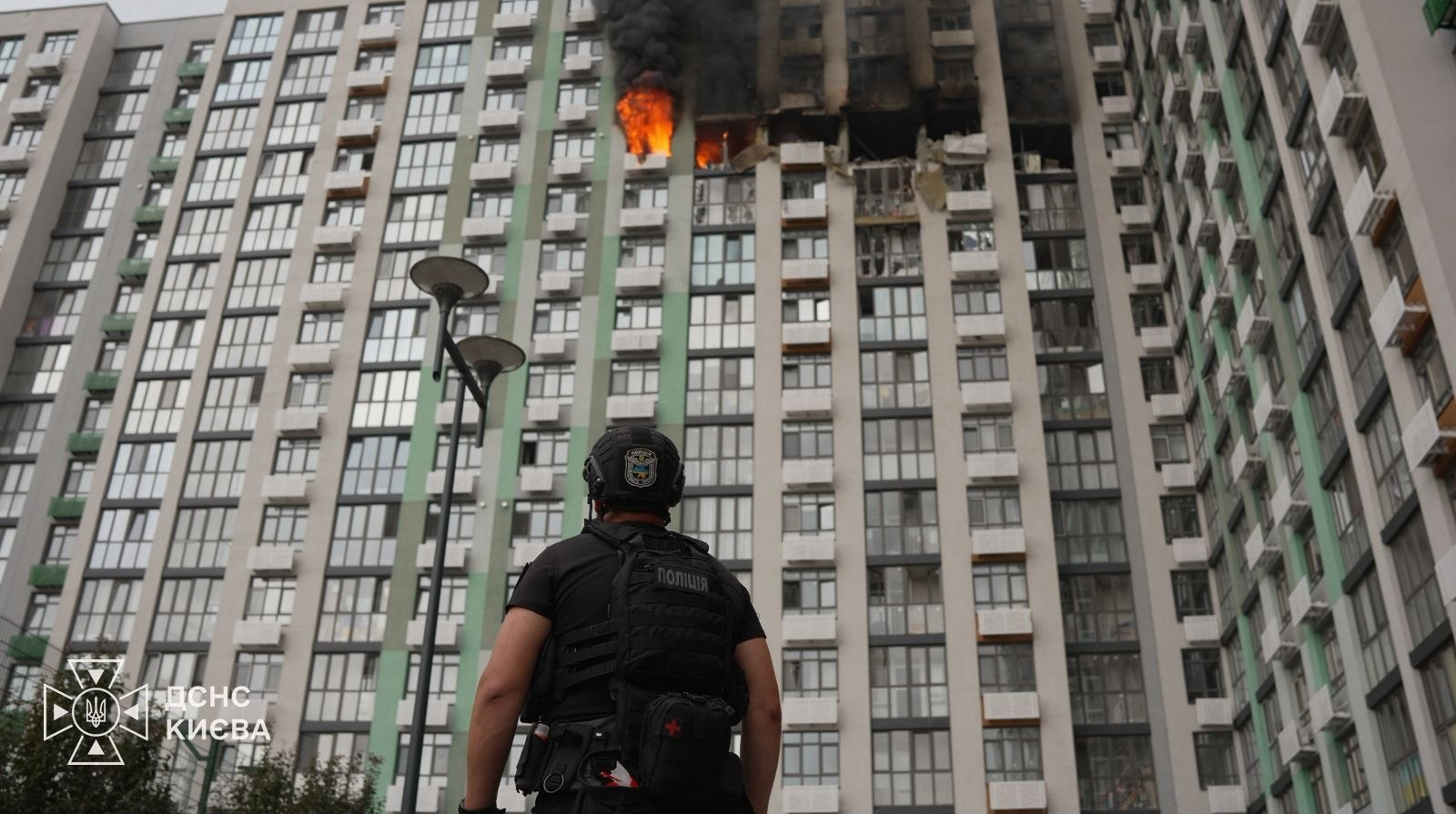
The death toll from Russia's 1 September drone attack on Kyiv has risen to nine after a 30-year-old man injured in the strike died in hospital, Ukrainian officials said. The man, who was wounded when a drone hit a petrol station in the capital's Darnytskyi district, had been in critical condition since the attack, according to Kyiv Mayor Vitali Klitschko and the Kyiv City Military Administration Ukrainska Pravda.
The attack, carried out overnight on 1 September, also hit warehouse premises in the Obolonskyi district, triggering a city-wide air-raid warning. Emergency services were deployed to both sites, with reports of fires and structural damage. The man was the sole reported injury from the initial strike, but his death on 7 September brought the total fatalities from that attack to nine, according to Ukrainska Pravda.
The 1 September attack was part of a broader pattern of Russian drone and missile strikes targeting Ukrainian cities and infrastructure. While Moscow has not officially claimed responsibility for the specific strike on Kyiv, the Russian military has repeatedly launched such attacks on Ukrainian urban centres, often using Iranian-designed Shahed drones. The type of drone used in the 1 September attack has not been officially confirmed, but the overnight timing and the nature of the targets—a petrol station and warehouses—are consistent with recent Russian tactics aimed at disrupting civilian life and critical infrastructure.
Separately, on 9 September, a man was killed in a Russian strike on a civilian car in the Izium district of Kharkiv Oblast, according to Ukrainska Pravda. The strike, which occurred in a region that has seen intense fighting since Russia's full-scale invasion in 2022, underscores the continued threat to civilians in frontline areas. No further details about the victim or the circumstances of the attack were immediately available.
The rising toll from the 1 September attack highlights the human cost of Russia's ongoing aerial campaign against Ukraine. For European readers, this is a reminder that the war remains a daily reality for Ukrainians, with no end in sight. The attacks on civilian infrastructure—such as petrol stations and warehouses—are particularly concerning, as they can disrupt essential services and create secondary hazards, such as fuel fires, that endanger nearby residents.
In response to the attacks, Ukrainian authorities have repeatedly called on Western partners to provide more advanced air-defence systems and to lift restrictions on the use of long-range weapons to strike Russian launch sites. While no new official statements were made following the 1 September attack, the continued strikes are likely to intensify pressure on NATO allies to accelerate military aid.
As of mid-September, the situation on the ground remains fluid. The death of the 30-year-old man in Kyiv is a tragic reminder that the consequences of Russian strikes can extend far beyond the initial moment of impact, with victims succumbing to injuries days or weeks later. For now, Ukrainians continue to live under the threat of further attacks, and the international community faces renewed calls to act.
This article will be updated as more information becomes available.
Sources
- Man injured in 1 September Kyiv attack dies in hospital September 7, 2026
- Man killed in Russian strike on civilian car in Izium district September 9, 2026
- Russian attack on Kyiv injures man, hits petrol station and warehouses September 15, 2026
Part of the dossier
Russian Attack on Kyiv (1 September) →