Russian drone attack on Myla business kills 27, as negligence probe and second strike add to Ukraine’s August toll
A Russian drone attack on a business in Myla, Kyiv Oblast, killed 27 and injured 42, including children. The head of the Dmytrivka hromada was among the dead. A separate attack in Poltava injured four. The Prosecutor General's Office is investigating possible official negligence over explosive storage.
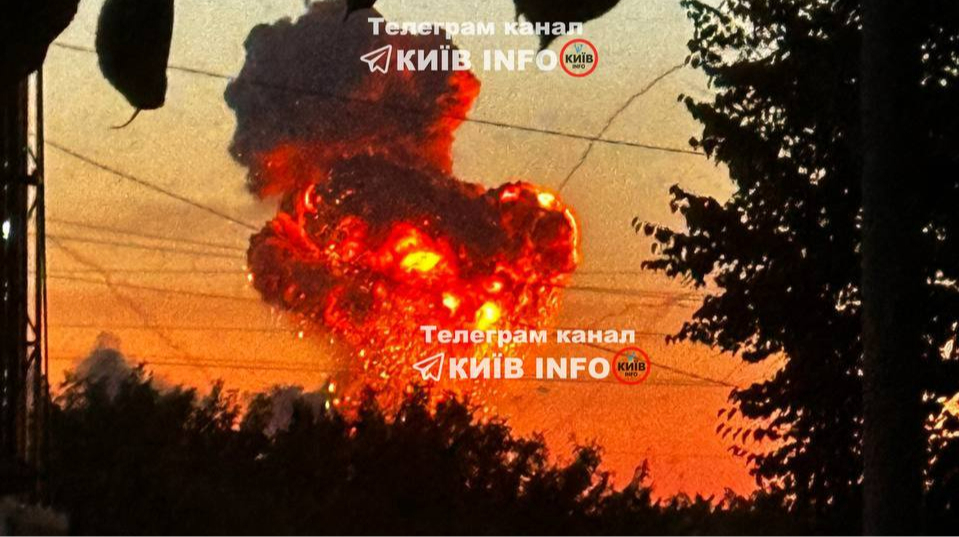
The death toll from a Russian drone attack on a business premises in the village of Myla, Bucha district, Kyiv Oblast, has climbed to 27, with 42 people injured, four of them children, local authorities reported on 29 August. The strike, which occurred around 20:10 on 28 August, triggered a large-scale fire and subsequent detonations that devastated the area, forcing the evacuation of 381 residents, including 59 children.
Among the dead was Taras Didych, the head of the Dmytrivka hromada, who was one of the first responders at the scene, according to Tymur Tkachenko, head of the Kyiv Oblast Military Administration. Tkachenko warned that the casualty count may not be final, as emergency crews continue to dismantle structures and search for victims.
Explosions from stored munitions under scrutiny
The Office of the Prosecutor General launched a pre-trial investigation into possible official negligence (Article 367 of the Criminal Code of Ukraine) on the night of the attack. Investigators are examining whether explosive items and materials were stored legally on the business premises and whether the required permits were in place. The inquiry also targets the actions of officials responsible for oversight.
"Unfortunately, we can already state that the terrible tragedy in Vyshneve has not become a lesson," Prime Minister Serhii Koretskyi said, referring to a similar incident on 6 July 2026, when a Russian strike on ammunition warehouses in Vyshneve, Kyiv Oblast, killed nine people and damaged more than 280 houses. "In the fifth year of the full-scale invasion, making the same mistakes over and over again is criminal negligence."
The explosions in Myla damaged at least 50 residential buildings, a fire engine and a care home for elderly people. One house was completely destroyed.
Second strike hits Poltava Oblast business
On 1 September, Russian forces struck a business in the Poltava hromada, injuring at least four people, according to Vitalii Diakivnych, head of the Poltava Oblast Military Administration. The Ukrainian Air Force reported that Banderol loitering munitions were heading towards Poltava from the east during the air raid. Emergency services are working at the scene.
While the Poltava strike appears separate from the Myla attack, it fits a pattern of Russian forces targeting commercial and industrial facilities across central and northern Ukraine, often causing secondary explosions that multiply civilian casualties.
Strategic context
For Ukraine, the recurring tragedy of secondary blasts from stored munitions underscores a systemic vulnerability: five years into the full-scale war, the safe storage of explosive materials on civilian-adjacent premises remains a lethal weak point. The Prosecutor General’s investigation in Myla could lead to criminal charges against officials who failed to enforce safety regulations—a move that would signal a shift toward accountability after similar disasters.
Rescue and firefighting operations continued through the weekend in Myla. Authorities have not yet identified the exact type of unmanned aerial vehicle used in the attack, though Russian forces frequently employ Shahed-type drones and loitering munitions against Ukrainian infrastructure.
Sources
Sources
Part of the dossier
Russian attack causes detonations and casualties in Myla, Kyiv Oblast →