Poland’s Sikorski Denies Role in Hungary’s Blockade of Ukraine’s EU Accession Talks, Points to Minority Rights Compromise
Polish Foreign Minister Radosław Sikorski denies Warsaw is behind Hungary's blockade of Ukraine's EU accession talks, saying Poland is not blocking any chapter. He links the resolution to a Ukraine-Hungary compromise on minority rights.
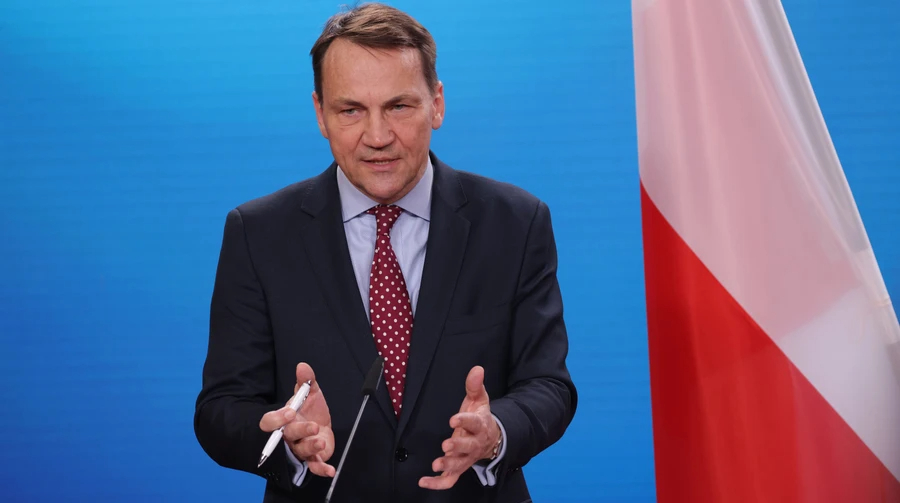
Polish Foreign Minister Radosław Sikorski has flatly rejected claims that Warsaw is behind Hungary’s continued blockade of Ukraine’s European Union accession negotiations, insisting that the key to unblocking the talks lies in a bilateral compromise between Kyiv and Budapest on minority rights.
In an interview with European Pravda published on 16 September 2026, Sikorski stated unequivocally: “That is not true. We are not blocking a single chapter.” He dismissed suggestions that Hungary had cited a Polish request during discussions at the Council of the EU Working Party on Enlargement and Countries Negotiating Accession to the EU (COELA). “This is not a matter of speculation. You either raise your hand for blocking, or you don’t. We don’t,” he stressed.
The denial comes after Hungary once again prevented the approval of screening results for negotiating clusters 2 and 3 for Ukraine at a COELA meeting last week. Since the formal opening of accession talks in June 2024, Budapest has repeatedly used procedural vetoes to slow Kyiv’s progress, often citing grievances over the rights of the Hungarian minority in western Ukraine.
Sikorski linked the resolution of the blockade directly to a potential understanding between Ukraine’s government and the new Hungarian administration under Prime Minister Péter Magyar. “There is a vigorous debate between Ukraine and the new Hungarian government on minority issues, and I hope it produces a positive result,” he said. The minister declined to predict when the remaining negotiating clusters might be opened, but his remarks signal that Warsaw sees the matter as a bilateral issue rather than a multilateral one within the EU.
The Polish position is strategically significant for Ukraine. Warsaw has been one of Kyiv’s staunchest allies since the full-scale Russian invasion began in February 2022, providing military, humanitarian and political support. Any perception that Poland might be colluding with Hungary to slow EU accession would damage that trust and play into Russian narratives of Western disunity.
Sikorski’s comments also come amid heightened tensions with Moscow. In a separate interview with Polsat News on 17 September, he dismissed a threat by Kremlin aide Nikolai Patrushev that Russia could destroy Poland in two to three days. “Russian generals have been threatening us with nuclear war for 20 years,” Sikorski said, adding that the war in Ukraine has demonstrated that Russia’s nuclear advantage is “difficult to use.” He noted: “If Russia could resolve this war through nuclear blackmail, it would have already done so.”
The minority rights dispute between Ukraine and Hungary dates back to before the full-scale war. Budapest has long complained about a 2017 Ukrainian education law that it says restricts the right of ethnic Hungarians to study in their native language. Kyiv has amended the law and adopted a new law on national minorities in 2023 to meet EU recommendations, but Hungary has argued that implementation remains insufficient.
The new Hungarian government under Magyar, who took office after Viktor Orbán’s resignation in early 2026, has signalled a more pragmatic approach to EU relations but has not yet lifted the veto on Ukraine’s accession clusters. Sikorski’s comments suggest that Warsaw is watching these talks closely but is not intervening directly.
For Ukraine, the blockade is a frustrating bottleneck. While the EU has formally opened accession negotiations, the actual pace of talks depends on unanimous approval of each negotiating cluster. With Hungary holding out, Kyiv cannot move to the next stage of harmonising its laws with EU standards in areas such as the internal market and justice, which are covered by clusters 2 and 3.
The Polish foreign minister’s insistence that Warsaw is not involved may also be an attempt to preempt any Russian disinformation campaign that could exploit the appearance of a rift among Ukraine’s allies. By publicly stating that the problem is solely between Ukraine and Hungary, Sikorski reinforces the message that Poland remains fully committed to Ukraine’s European future.
Sources
- Polish foreign minister insists Warsaw is not behind Hungary's blocking of Ukraine's EU accession September 16, 2026
- Polish foreign minister: Ukraine should choose its heroes carefully or don’t be surprised September 17, 2026
- Polish foreign minister on Russian threat to destroy Poland in 2-3 days: Ukraine has shown it is difficult September 17, 2026
Part of the dossier
Poland denies involvement in Hungary blocking Ukraine's EU accession →