Putin Calls Zelenskyy's Airspace Warning 'State Terrorism,' Orders Retaliatory Strikes on Ukrainian Energy Grid
Putin calls Zelenskyy's warning that Ukraine will make Russian airspace dangerous a 'bid for state terrorism' and orders large-scale retaliatory strikes on Ukrainian energy infrastructure. He also says negotiations are frozen but leaves room for proposals.
Russian President Vladimir Putin has branded Ukrainian President Volodymyr Zelenskyy's warning that Ukraine will make Russian airspace dangerous as a "bid for state terrorism," and announced that Russian forces have been ordered to carry out large-scale retaliatory strikes on Ukrainian energy infrastructure.
Speaking at a press conference following the Shanghai Cooperation Organisation summit in Bishkek on 1 September, Putin responded to Zelenskyy's earlier address in which the Ukrainian leader declared that Russian airspace was becoming "completely unsafe" and issued a warning to all airlines using it, as reported by Ukrainska Pravda.
"I haven't heard such statements, but if this was said publicly, then it is simply a bid for state terrorism," Putin said, according to Kremlin-aligned news agency RIA Novosti. "And I would point out that they are asking us to resume negotiations and are asking for personal meetings. You don't negotiate with terrorists."
Putin further stated that if such "tragedies" occur, Russia will find a way to respond. He reiterated that Russian armed forces had been instructed to carry out large-scale retaliatory strikes against Ukrainian energy infrastructure — a threat first made by Russia's Defence Ministry on 30 August.
The Russian leader also explained why Moscow has refrained from targeting Ukraine's leadership, saying that "we need some negotiators," according to the same press conference.
Drones as the 'main challenge'
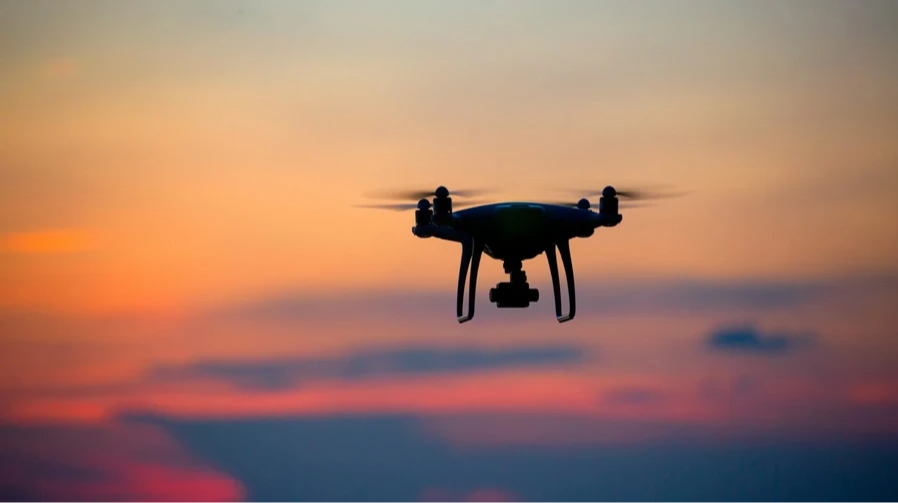
Separately, Putin identified drones as the primary threat facing Russian forces. Speaking at the same summit, he said: "The main challenge now is, of course, drones, and in all domains: underwater, at sea, on land and in the air. And this is a challenge for us; it is a serious one," as reported by Ukrainska Pravda citing Interfax.
Putin claimed Russia would meet its objectives in countering drones, highlighting the increasing pace of work at Russian defence companies.
His comments come after a series of Ukrainian long-range strikes on Russian territory. On the night of 29-30 August, Ukraine's defence forces struck the Kirishi oil refinery in Leningrad Oblast and the Yeysk air base in Krasnodar Krai. Earlier, Russian authorities in Leningrad Oblast reported an attack by more than 60 drones and a strike on the Kirishi refinery.
Negotiations 'frozen'
Putin also addressed the status of peace talks, describing the negotiating process as currently "frozen," though he left the door open for "positive proposals."
"We are in favour of any negotiations being filled with concrete substance. If anyone can make a specific contribution to this process, we are all for it," Putin said, as reported by Ukrainska Pravda. "The only thing we would not want is for this to go round and round without any meaningful purpose."
He added that military and diplomatic officials were needed for the process, although Russia is "comfortable working with people close to Trump as well as the sincere Steve Witkoff and Jared Kushner." Putin also commented on CIA Director John Ratcliffe's visit to Moscow, saying that contacts between intelligence officials are taking place on a regular basis.
Strategic significance
Zelenskyy's warning about Russian airspace represents a significant escalation in Ukraine's messaging, effectively declaring that no part of Russian territory is safe from Ukrainian strikes. Putin's response — framing this as "state terrorism" and ordering strikes on Ukraine's energy grid — signals that Moscow intends to retaliate harshly against civilian infrastructure rather than military targets.
The timing is notable: Putin's threat of large-scale energy strikes comes as Ukraine heads into autumn, a period when energy infrastructure becomes critical for heating and power. The Russian leader's insistence that Moscow avoids striking Ukraine's leadership in order to preserve potential negotiators suggests that while talks are frozen, Putin still sees a theoretical path to a deal — albeit one in which he sets the terms.
For European readers, the immediate concern is the potential for another winter of energy warfare, with Russia targeting Ukraine's grid just as it did in 2022-2023. The broader implication is that despite periodic signals of openness to negotiations, both sides are doubling down on military escalation.
Sources
- Putin calls Zelenskyy's warning about Russian airspace "bid for state terrorism" September 1, 2026
- Putin says negotiations are currently frozen September 1, 2026
- Putin: Drones are the main challenge for Russian forces September 1, 2026
Part of the dossier
Russia-Ukraine Airspace Conflict →