Election, Nationalization, and a Hockey Star: What Russia's 2026 Vote Really Means
Russia's 2026 parliamentary election delivered United Russia a supermajority, with 86 war veterans entering the Duma. Days earlier, Putin nationalized the Russian assets of Auchan, Nestlé, and Leroy Merlin. NHL star Alexander Ovechkin defended his campaign ad appearance, while the IPI demanded justice for journalist Viktoriia Roshchyna.
Russia's three-day parliamentary election, which ended on September 20, has delivered a predictable but revealing result: the ruling United Russia party has cemented its dominance, while the Kremlin simultaneously moved to nationalize the assets of three major Western companies and faced renewed international pressure over the death of a Ukrainian journalist. The developments, taken together, paint a picture of a regime tightening its grip at home even as it explores diplomatic openings abroad.
86 War Veterans Enter the Duma
United Russia, the party of President Vladimir Putin, secured 57.83% of the vote and is projected to win 355 out of 450 seats in the State Duma, according to early data cited by the Kremlin-aligned news agency RIA Novosti. The Communist Party of the Russian Federation came a distant second with 13.81% (40 seats), followed by the Liberal Democratic Party with 8.98% (23 seats).
More striking than the raw numbers is the composition of the new Duma. Vladimir Yakushev, secretary of United Russia's general council, told reporters that 86 participants of what Russia calls its "special military operation" in Ukraine had been elected as deputies. "This is a serious contribution," Yakushev said. The figure was initially reported by Russian outlet Agentstvo Novosti, though United Russia later demanded a retraction, and RIA Novosti deleted its original report "to clarify the data."
If confirmed, the 86 war veterans would constitute nearly a fifth of all Duma members, a deliberate injection of front-line experience into the legislature. For readers in Europe, this matters: a Duma populated by combat veterans is likely to push for even harder-line policies on the war and on relations with the West, reducing the already slim chances of a negotiated settlement.
Nationalization Without Exit
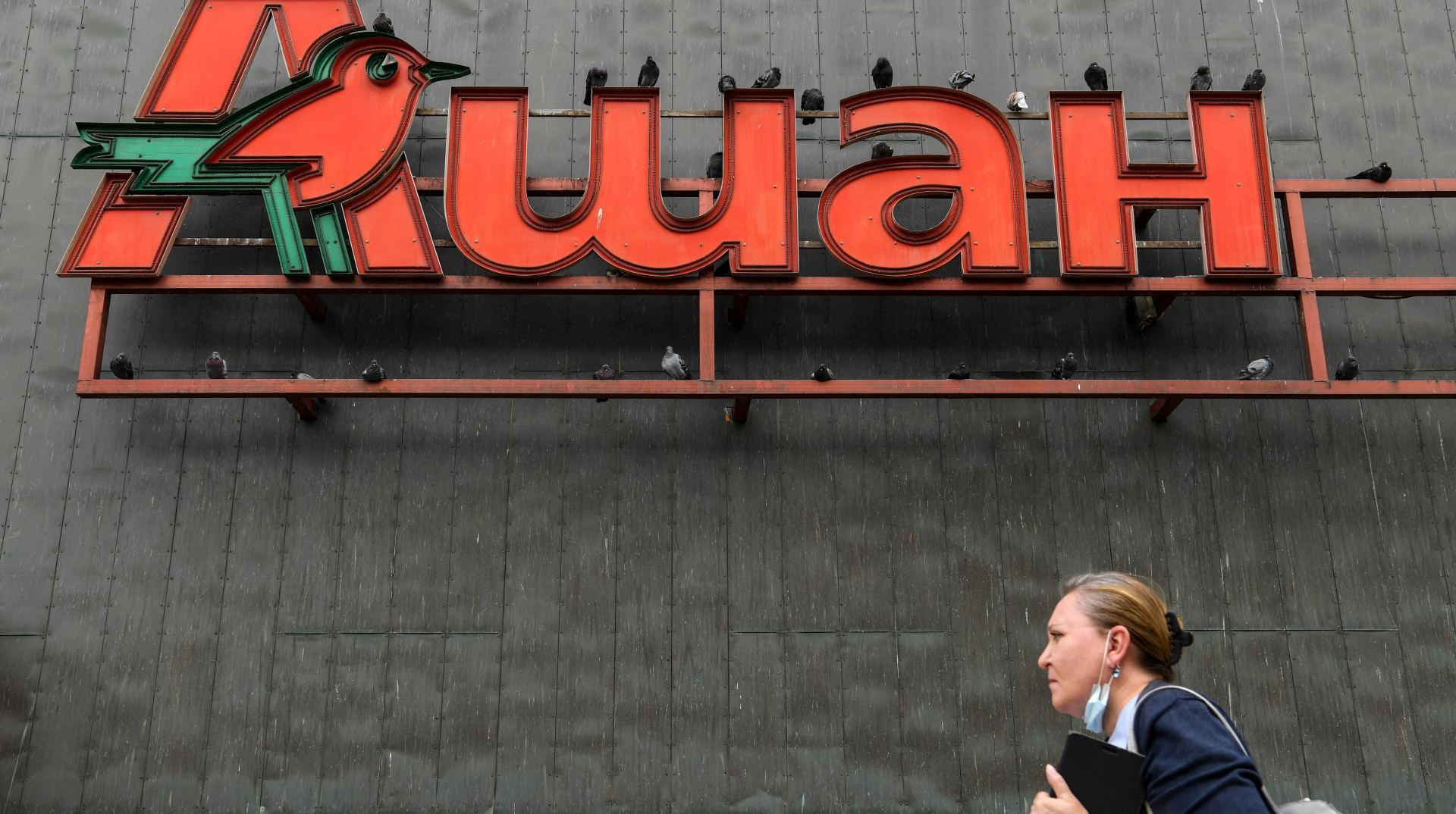
On September 17, the day before voting began, Putin signed a decree nationalizing the Russian assets of three international corporations that had refused to leave the country after the 2022 invasion: French retailer Auchan, Swiss food giant Nestlé, and the former Leroy Merlin chain (now operating as Le Monlid). According to the text of the decree published on Russia's legal information portal and cited by Ukrainska Pravda, the assets will be transferred to L.E.V. Management, a shell company registered in Moscow in October 2024 with no disclosed beneficial owners or commercial history.
Auchan, which operates 230 stores in 100 Russian cities, and Nestlé, which owns six production sites, had both faced sustained criticism from Kyiv for continuing to do business in Russia and paying taxes to the Kremlin. The nationalization effectively ends their presence — but without compensation. For European businesses that have stayed, the message is clear: the Kremlin can and will seize your assets when it suits its political calendar.
Ovechkin: ‘I’m Russian, and I Support My Country’
Amid the election campaign, Washington Capitals captain Alexander Ovechkin found himself defending his appearance in a United Russia campaign ad. In the video, Ovechkin stands behind Russian Foreign Minister Sergey Lavrov. Speaking at the Capitals' media day on September 17, the NHL star told reporters: "I'm Russian, and I support my country. I'm for peace and love." He added that he plans to return to Russia after his hockey career ends, saying, "I'm gonna live there, my kids gonna live there, family." Al Jazeera reported that Ovechkin has a long history of public support for Putin, including founding a pro-Putin movement in 2017.
For European audiences, Ovechkin's endorsement is a reminder that the Kremlin still values the soft-power cachet of international sports stars, even as the war grinds on. It also underscores the limited impact of Western sanctions on individual figures: Ovechkin continues to play in the NHL without apparent impediment.
A Diplomatic Overture — and a Journalist’s Death
Two other stories from the dossier hint at Russia's strategy beyond its borders. Reuters reported on September 18 that Putin's chief economic envoy, Kirill Dmitriev, is preparing a meeting with the leadership of Germany's far-right Alternative for Germany (AfD) party — co-leaders Alice Weidel and Tino Chrupalla — to discuss resuming Russian gas supplies via the Nord Stream pipelines. The meeting, possibly in March 2027, would depend on a prior Russia-Ukraine peace framework, according to sources cited by Ukrainska Pravda. The AfD, while blocked from power by a coalition of rivals, is currently the most popular party among German voters.
Separately, the International Press Institute (IPI) marked the second anniversary of the death of Ukrainian journalist Viktoriia Roshchyna, who was tortured to death in Russian captivity. IPI Executive Director Scott Griffen said Roshchyna "paid the ultimate price for her dedication to ensuring the stories of her fellow citizens living under occupation were heard by the world." The IPI noted that 27 Ukrainian journalists remain imprisoned in Russia as of August 2026, many held incommunicado on politically motivated charges. The call for justice serves as a stark counterpoint to the Kremlin's diplomatic overtures toward Europe.
What It Means
Russia's 2026 election was never in doubt, but the details matter. The injection of 86 war veterans into the Duma, the nationalization of Western holdout companies, and the simultaneous pursuit of gas talks with a far-right German party all point to a regime that is consolidating power at home while probing for cracks in the Western consensus. For Europe, the lesson is that the Kremlin will use every tool — from elections to energy to sports — to advance its interests, and that even a three-day vote can reshape the political landscape for years to come.
Sources
- ‘I’m Russian’: NHL star Ovechkin defends Putin ad appearance September 17, 2026
- International Press Institute calls for justice over journalist Viktoriia Roshchyna's death September 19, 2026
- Russia election: Could other parties challenge United Russia? September 17, 2026
- Putin seizes Russian assets of Auchan, Nestlé and Leroy Merlin September 17, 2026
- Putin envoy and German far right are preparing to discuss resuming Russian gas supplies, Reuters says September 18, 2026
- United Russia party brings 86 war participants to State Duma – almost a fifth of all members September 21, 2026
Part of the dossier
Russian Politics and Putin Support →