Russia's drone war on civilians: Kherson bleeds, medics targeted, Kyiv TV hit
Russia's intensified drone campaign targets civilians, medics, and journalists across Ukraine, with Kherson's power grid crippled and a Kyiv TV station struck. Zelensky urges allied air defense as attacks violate a short-lived pause.
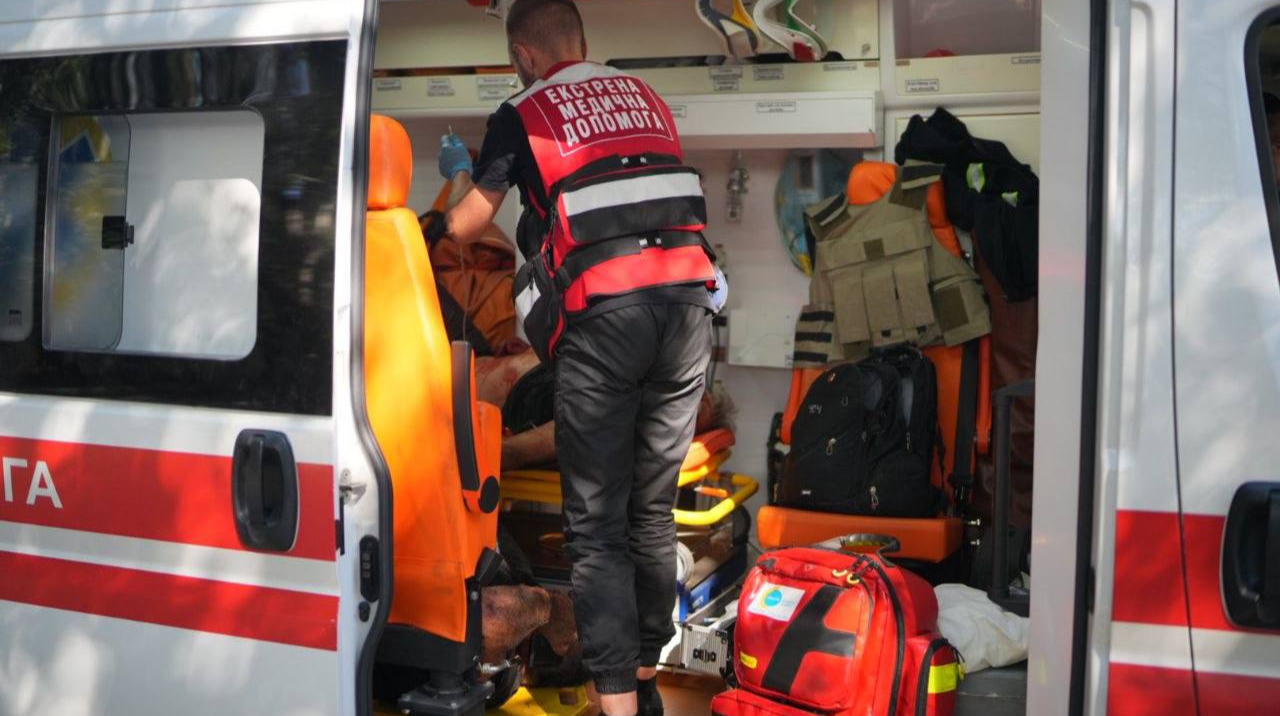
Russia's intensified drone campaign against Ukrainian cities has entered a particularly vicious phase, with civilian infrastructure, medical workers, and journalists now explicit targets. Over the past three weeks, attacks have killed and maimed dozens, pushed Kherson's power grid to the brink, and forced Ukraine's president to issue a desperate plea for allied air defense. The strikes are not a new front, but a deliberate escalation of a long-running tactic: using cheap, loitering munitions to terrorize the home front.
The southern city of Kherson, already reeling from months of daily bombardment, has become ground zero for this campaign. On 29 August, a drone attack killed one person and injured at least three others, with a medical facility in the city center also struck, according to Ukrainska Pravda. Two days later, on 31 August, a man and an elderly woman were killed in separate strikes, one of which hit a supermarket, injuring an 11-year-old boy, reported Ukrainska Pravda. The attacks have been relentless: on 1 September, an FPV drone killed a man in his car, with the State Emergency Service sharing a photo of the wreckage, per Ukrainska Pravda. By 4 September, Kherson's power supply had degraded so severely that it was operating at the level of a single Kyiv supermarket, according to Ukrainska Pravda.
The targeting of emergency responders marks a particularly grim escalation. On 13 September, a Russian drone struck an ambulance in Kherson, injuring two medics, Ukrainska Pravda reported. Four days later, on 17 September, an FPV drone hit another ambulance in Zaporizhzhia, wounding a paramedic and the driver, per the same outlet. This is not accidental fire; it is a deliberate campaign to prevent humanitarian aid and medical care from functioning, a violation of the Geneva Conventions that has drawn little international outcry.
The campaign reached a new threshold on 8 September, when a Russian drone struck the headquarters of the TV channel We Are Ukraine in central Kyiv during a live broadcast. At least five people were killed in the attack and a separate overnight strike on the capital, according to BBC News. President Volodymyr Zelensky condemned the strike as a "new page in Russian degradation," saying, "Russia carried out a strike on the media, journalists." The channel itself released footage it said proved the attack was "not accidental, but deliberate," aimed at silencing independent reporting. The strike came just days after both Moscow and Kyiv had agreed to pause attacks on each other's capitals during a visit by US envoys—an agreement Russia violated within 48 hours.
Oleksandr Prokudin, head of the Kherson Oblast Military Administration, has been blunt about the dire situation. "Recently, I have been as open as possible with you about the difficult security situation," he said, urging civilians to evacuate. "Even the most advanced protection cannot guarantee that a Russian guided aerial bomb will not hit the facility it is protecting." His warnings are backed by data: on 28 August alone, Russian attacks on Kherson Oblast killed one person and injured 26, including a child, Ukrainska Pravda reported. The city's critical infrastructure, including its combined heat and power plant, has been repeatedly struck, leaving residents without heat, water, or electricity as winter approaches.
The broader pattern is one of indiscriminate violence against civilian life. On 27 August, a 78-year-old woman was killed by an FPV drone in the village of Hryhorivka, Zaporizhzhia Oblast, while a civilian car was struck in the regional capital, injuring two men, per Ukrainska Pravda. In Kharkiv, a Russian drone hit the Karavan shopping centre—closed since 2022—on 28 August, causing no casualties but underlining the randomness of the attacks, Ukrainska Pravda reported. Even the country's railway network has been affected, with Ukrzaliznytsia reporting delays of over five hours on some routes due to air-raid warnings, and offering free waiting lounges and meals to stranded passengers.
For Ukraine's allies, the question is no longer whether Russia is committing war crimes, but what they will do about it. Zelensky has renewed his plea for more air defense systems, arguing that "Russia must be stopped, and this is possible only through joint efforts." Yet, as the strikes continue unabated, the message from Moscow is clear: no city, no hospital, and no newsroom is off-limits. The international community's response—so far limited to sanctions and statements—has done little to deter a campaign that thrives on impunity. For the people of Kherson, Kyiv, and Zaporizhzhia, the drone's buzz has become the sound of an indifferent world watching their suffering from a distance.
Sources
- Russian drone hits civilian vehicle in Zaporizhzhia: two people injured – photos, video August 27, 2026
- Four people, including child, injured in Russian evening attacks on Kherson August 26, 2026
- Russian FPV drone kills woman in Zaporizhzhia district August 27, 2026
- Drone debris falls near residential building and school in Kyiv August 27, 2026
- Russian drone hits balcony of high-rise residential building in Kharkiv: man injured August 27, 2026
- Russian drone kills man riding bicycle in Kherson August 27, 2026
- Ukraine downs 7 ballistic missiles, 1 Oniks missile, 3 Banderol drones and 222 Russian UAVs, but strikes recorded August 27, 2026
- Three Russians of Chechen origin detained in Warsaw, three firearms seized August 27, 2026
- Russian guided bomb kills lorry driver in Sumy, seven injured August 28, 2026
- Ukrainian Railways report on situation with train delays from Russian attacks August 28, 2026
- Russian drone attacks Kharkiv shopping centre closed since 2022 – photos, video August 28, 2026
- Russian forces strike industrial area in Sumy August 28, 2026
- Kherson under drone attack since this morning, one killed and several injured August 29, 2026
- Kherson Oblast head explains call for residents to evacuate August 31, 2026
- Russian drone attacks medical facility in central Kherson, injuring two staff members August 31, 2026
- Russia strikes Sloviansk with aerial bomb, hitting multi-storey building and injuring 4 people August 31, 2026
- Russians attack civilians in Kherson: one killed and one injured September 16, 2026
- Russian forces attack centre of Kherson: two people killed August 31, 2026
- Russian forces strike supermarket in Kherson, injuring one child August 31, 2026
- Russia's "human safari": FPV drone hits car in Kherson, man killed – photo September 1, 2026
- Kherson's power supply falls to level of one Kyiv supermarket September 4, 2026
- Ukrainian TV channel building hit by Russian drone as five killed in Kyiv September 8, 2026
- Russian drone attacks ambulance in Zaporizhzhia: paramedic and driver injured September 17, 2026
- Russian drone attacks ambulance in Kherson: medics injured September 13, 2026
Part of the dossier
Russian Strikes on Ukrainian Cities →