Russia intensifies drone and missile strikes on Ukrainian cities, targeting civilians and infrastructure
Russian forces launched a wave of drone and missile strikes on Ukrainian cities in late August and early September 2026, killing at least 15 civilians. Kherson bore the brunt with daily attacks on medical facilities, supermarkets, and a car, while a TV channel in Kyiv was hit live. The strikes broke a three-day halt on capital attacks.
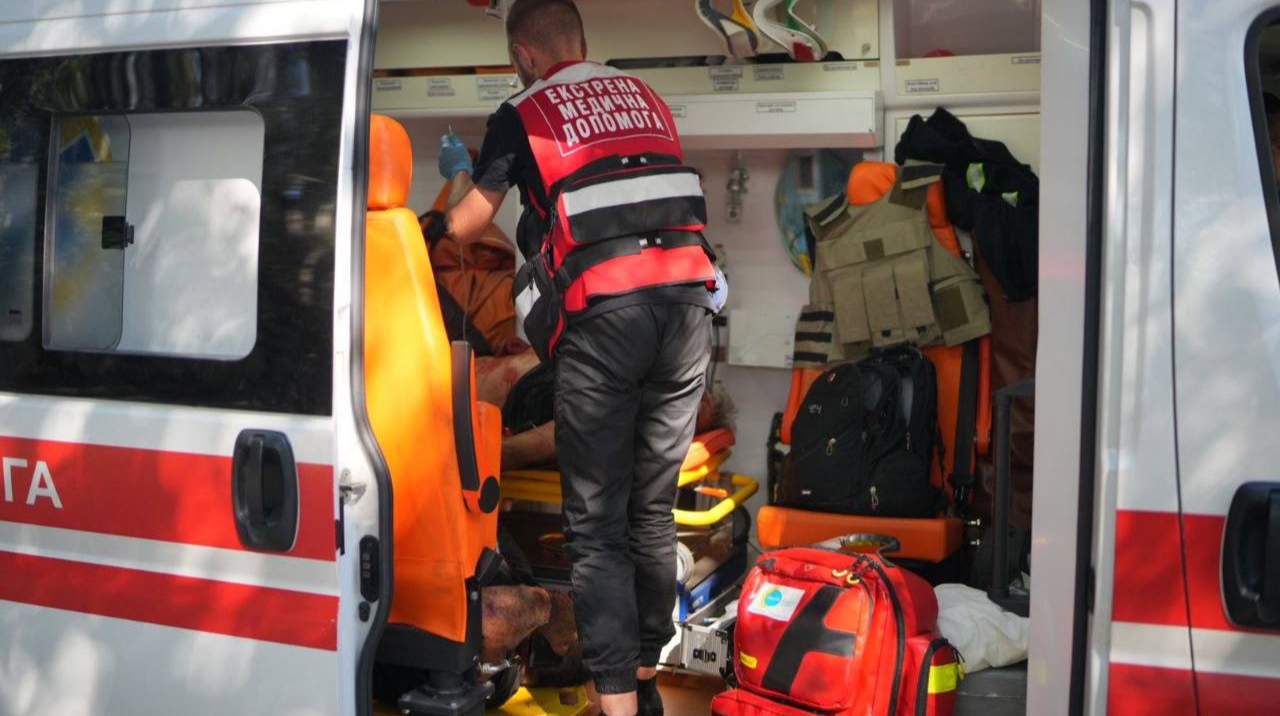
Russian forces have significantly escalated their drone and missile campaign against Ukrainian cities over the past two weeks, striking residential areas, medical facilities, supermarkets, and a TV channel headquarters, while deliberately targeting civilians with FPV drones in what officials describe as a "human safari." The attacks have killed at least 15 civilians and injured dozens more, particularly in Kherson, where daily drone attacks have become routine and the city's power supply has collapsed to the level of a single Kyiv supermarket.
Kherson: The epicentre of daily terror
Kherson remains the most heavily targeted city. On 31 August alone, Russian drone attacks killed a man and an elderly woman in the city centre, and later that afternoon an 11-year-old boy was injured when a drone struck the roof of a supermarket in the Tsentralnyi district (Source). Earlier that morning, a drone hit a medical facility in central Kherson, injuring two staff members — a 69-year-old woman and a 62-year-old man (Source).
On 1 September, a Russian FPV drone struck a car in Kherson, killing the driver instantly. The State Emergency Service said firefighters extinguished the blaze despite the risk of repeat attacks (Source). On 29 August, a man was killed in the Korabelnyi district, and a medical facility was also attacked (Source).
The relentless targeting of civilian infrastructure has forced Kherson Oblast head Oleksandr Prokudin to call for residents to evacuate. "If there is a recommendation to evacuate, evacuate," he said on 31 August, explaining that even the most advanced protection cannot guarantee safety from guided aerial bombs (Source). The city's power supply has collapsed to an extremely low level — equivalent to the consumption of one Kyiv supermarket — after a Russian strike on the Kherson Combined Heat and Power Plant on 27 August (Source).
Strikes across the country
Elsewhere, Russian forces used a FAB-500 aerial bomb to hit a multi-storey building in Sloviansk, Donetsk Oblast, on 31 August, destroying the stairwell from the ground to the fourth floor and injuring four people. At least 32 buildings, a hotel, a kindergarten and cars were damaged (Source).
In Kharkiv, a jet-powered drone struck the long-closed Karavan shopping centre on 28 August, causing a fire over 150 square metres. The centre has been shut since 2022 and was not used for military purposes (Source). The previous night, a drone hit the balcony of a high-rise residential building in Kharkiv's Industrialnyi District, injuring a 30-year-old man (Source).
On 28 August, Russian missiles struck an industrial area in Sumy's Zarichnyi district, injuring seven people. One person was in serious condition (Source). Earlier, a guided aerial bomb killed a 61-year-old lorry driver in Sumy on 27 August (Source).
In Zaporizhzhia, a 78-year-old woman was killed by an FPV drone in the village of Hryhorivka on 27 August (Source). On the same day, a Russian drone attacked a civilian vehicle in the city, injuring two men with shrapnel wounds (Source).
Kyiv TV channel struck during live broadcast
On 8 September, a Russian drone struck the headquarters of the TV channel "We Are Ukraine" in Kyiv, injuring at least five journalists while they were broadcasting live. President Volodymyr Zelensky called it a "new page in Russian degradation" and a deliberate attack on media (Source). The overnight attacks on Kyiv killed at least five people and injured 25 others, with residential buildings hit in the Solomianskyi and Podilskyi districts. The strikes came despite a three-day halt on strikes on capitals agreed between Moscow and Kyiv during a visit by US envoys — a halt that the 8 September attack appears to have broken.
Strategic implications
The pattern of attacks — deliberately targeting medical facilities, supermarkets, residential buildings, and a TV station — indicates a Russian strategy to terrorise civilian populations and degrade critical infrastructure ahead of winter. The call for evacuation in Kherson mirrors the forced displacement of civilians from other front-line cities. The attacks also caused significant rail delays across Ukraine, with some trains running 17 hours late (Source).
Ukraine's Air Force reported that on the night of 26-27 August, Russia launched 258 drones and multiple missiles, and Ukrainian air defence downed 233 aerial assets. Hits were recorded at 15 locations (Source). The question now is whether Ukraine's allies will respond to the deliberate targeting of media and infrastructure, and whether the three-day halt on capital strikes can hold after the attack on Kyiv.
Sources
- Russian drone hits civilian vehicle in Zaporizhzhia: two people injured – photos, video August 27, 2026
- Four people, including child, injured in Russian evening attacks on Kherson August 26, 2026
- Russian FPV drone kills woman in Zaporizhzhia district August 27, 2026
- Drone debris falls near residential building and school in Kyiv August 27, 2026
- Russian drone hits balcony of high-rise residential building in Kharkiv: man injured August 27, 2026
- Russian drone kills man riding bicycle in Kherson August 27, 2026
- Ukraine downs 7 ballistic missiles, 1 Oniks missile, 3 Banderol drones and 222 Russian UAVs, but strikes recorded August 27, 2026
- Three Russians of Chechen origin detained in Warsaw, three firearms seized August 27, 2026
- Russian guided bomb kills lorry driver in Sumy, seven injured August 28, 2026
- Ukrainian Railways report on situation with train delays from Russian attacks August 28, 2026
- Russian drone attacks Kharkiv shopping centre closed since 2022 – photos, video August 28, 2026
- Russian forces strike industrial area in Sumy August 28, 2026
- Kherson under drone attack since this morning, one killed and several injured August 29, 2026
- Kherson Oblast head explains call for residents to evacuate August 31, 2026
- Russian drone attacks medical facility in central Kherson, injuring two staff members August 31, 2026
- Russia strikes Sloviansk with aerial bomb, hitting multi-storey building and injuring 4 people August 31, 2026
- Russian forces attack centre of Kherson: two people killed August 31, 2026
- Russian forces strike supermarket in Kherson, injuring one child August 31, 2026
- Russia's "human safari": FPV drone hits car in Kherson, man killed – photo September 1, 2026
- Kherson's power supply falls to level of one Kyiv supermarket September 4, 2026
- Ukrainian TV channel building hit by Russian drone as five killed in Kyiv September 8, 2026
Part of the dossier
Russian Strikes on Ukrainian Cities →