Russia Pummels Ukraine with 800 Jet-Powered Drones in Four Days, Killing and Injuring Civilians
Russia launched 800 jet-powered drones into Ukraine over four days, hitting residential areas in Kyiv, Sumy, and Donetsk Oblast. The attacks killed at least three civilians, including a child, and injured others, as Kyiv endured hours of air alerts. The new faster Shahed models overwhelm Ukraine's air defence, signalling an escalation in Russia's campaign.
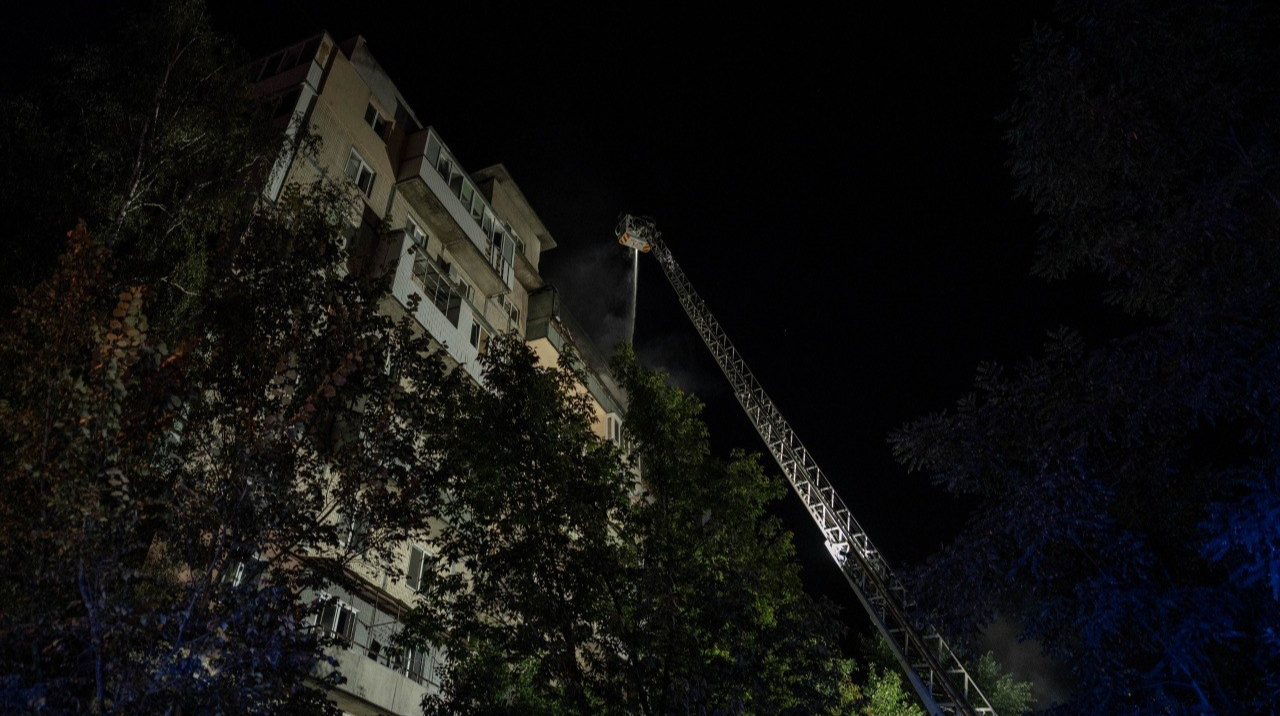
Over the past four days, Russia has intensified its aerial campaign against Ukraine, launching approximately 800 jet-powered drones that have killed at least three civilians, including a 13-year-old child, and injured several more. The attacks have targeted residential areas in Kyiv, Sumy, and Donetsk Oblast, causing widespread fires and damage.
On the afternoon of 31 August, a Russian Italmas UAV struck near a nine-storey residential building in Sumy's Zarichnyi district, injuring two people and sparking a fire in an apartment, according to acting mayor Artem Kobzar (Source 5). Emergency services have been working at the scene.
This follows a series of attacks on Kyiv and the surrounding region over the previous two days. On the night of 29–30 August, a Russian strike on the Sviatoshynskyi district caused a fire in a nine-storey residential building and injured two people at a nearby house, according to the Kyiv City Military Administration and the State Emergency Service (Source 1. The blaze was extinguished without further casualties.
The next morning, 30 August, a fire broke out in Kyiv's Holosiivskyi district after a two-storey non-residential building was hit, and falling debris set another roof on fire, reported Mayor Vitali Klitschko and the State Emergency Service (Source 2). In Kyiv Oblast, a Russian drone attack injured two people and ignited fires in the Fastivskyi and Vyshhorodskyi districts, including a house in Vita-Poshtova and metal containers in Oseshchyn (Source 3).
Separately, on 30 August, Russian forces carried out an airstrike with two FAB-250 bombs on the settlement of Bylbasivka in Donetsk Oblast, killing two people – including a 13-year-old child – and injuring two more, according to Sloviansk city military administration head Vadym Liakh. Two houses were destroyed, and around 20 were damaged (Source 4).
The scale of the Russian onslaught is dramatic. Ukraine's president, Volodymyr Zelenskyy, said on 31 August that in the previous four days, Russia had fired nearly 1,500 drones of all types, about 800 of them jet-powered. “There were almost 1,500 drones… about 800 of them jet-powered,” he stated, noting that Ukraine is now relying on combat aircraft to shoot them down (Source 6).
These new Shahed models reach speeds of 200–250 mph, double that of older propeller-driven versions, making them harder for Ukraine’s cheaper interceptors to stop. Their use marks a tactical shift: sustained daytime attacks have become common, with eight air raid alerts sounding in Kyiv by midday on 31 August. Daytime raids force businesses to halt work and residents to decide whether to shelter. Close drone threats also compel emergency services to evacuate attack sites, worsening damage from fires.
On 28 August, one of these jet-powered Geran-4 drones struck an ammunition dump in Myla, 15 miles west of Kyiv, killing 38 people in one of the war’s deadliest single attacks. The Kremlin has recently targeted warehouses around Kyiv in retaliation for Ukrainian strikes on Russian supply chains.
For Ukraine, the shift to faster, harder-to-intercept drones poses a severe challenge to its air defence. With Kyiv under near-constant alert and civilian areas taking repeated hits, the need for advanced interceptors and additional air defence systems grows more urgent. As the attacks continue, each air raid siren tests the resilience of a population already exhausted by more than two years of war.
Sources
- Two people injured in Kyiv after Russian attack, high-rise building catches fire August 29, 2026
- Fire breaks out in Kyiv due to morning Russian attack August 30, 2026
- Two people injured in Kyiv Oblast due to Russian drone attack – photos August 30, 2026
- Two people killed, including a child, in Russian attack on Donetsk Oblast – photos August 30, 2026
- Fire reported and two people injured: Russians attack apartment block in Sumy – video August 31, 2026
- Russia fires 800 jet-powered drones into Ukraine in four days August 31, 2026
Part of the dossier
Russian Attack on Kyiv Causes Fire and Injuries →