Russia Plans Long-Range Missile Tests as Poland Warns of Hybrid Strikes Against NATO Allies
Russia is preparing final tests of a ballistic missile with a range of up to 800 km by end of 2026, while up to 25,000 North Korean workers produce drones at a sanctioned Russian factory. Poland warns that Moscow plans hybrid strikes against NATO allies to weaken collective defence.
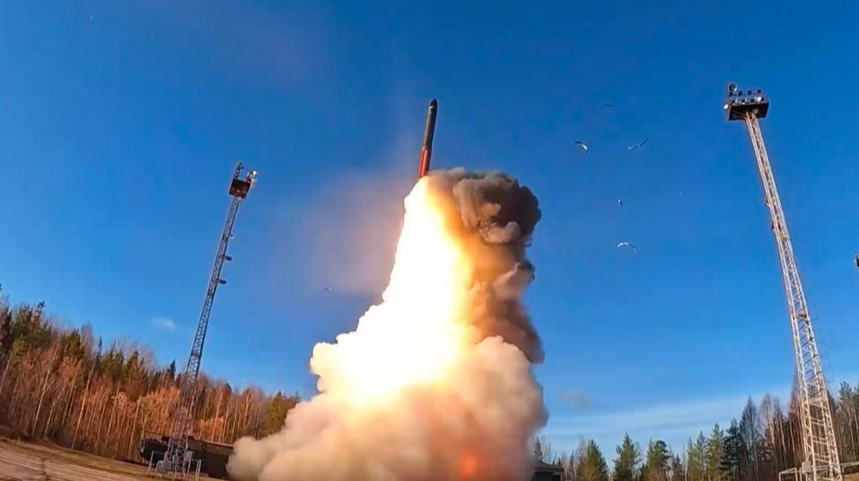
Moscow is preparing final tests of a new ballistic missile with a range of up to 800 kilometres by the end of 2026, a development that would allow Russian forces to strike targets across western Ukraine and potentially threaten NATO’s eastern flank.
The missile, whose name has not been disclosed, is being developed as part of Russia’s ongoing effort to expand its arsenal of medium-range systems. Ukraine’s military intelligence has previously noted that Russia is seeking to field weapons that can reach deep into Ukrainian rear areas, including the western city of Lviv and beyond. If operational, the missile would give the Kremlin the ability to hit supply hubs and training centres that currently lie out of range of most Russian ground-launched ballistic missiles.
The test schedule, reported by Ukrainska Pravda on 9 September 2026, aligns with Russia’s broader push to accelerate missile production after more than two years of war. Western officials have warned that Russia is receiving technical assistance from Iran and North Korea for its missile and drone programmes.
North Korean Workers Fuel Russian Drone Production
That cooperation with Pyongyang is now visible in plain numbers. A new report by the Multilateral Sanctions Monitoring Team (MSMT), summarised by Ukrainska Pravda, says that up to 25,000 North Korean workers are employed at the Alabuga Special Economic Zone in Tatarstan, where Russia manufactures Geran-2 drones – the Iranian-designed Shahed-type loitering munitions used daily against Ukrainian cities.
The workers are reportedly brought to Russia on student visas and assigned to “strategically important businesses”, including weapons plants. The MSMT report, which covers North Korea’s overseas labour programme, states that Russia now hosts between 15,000 and 30,000 North Korean workers, linked to 70‑80 DPRK companies. The number has surged since the start of the full-scale invasion of Ukraine in 2022.
“The DPRK has promoted the deployment of labourers to Russian Geran-2 drone factories in the Alabuga SEZ in Tatarstan, Russia since 2025,” the report says. The Alabuga zone is under Western sanctions, but Moscow has circumvented restrictions by using third-country intermediaries and direct flights from Pyongyang.
The development underscores how Russia is leveraging its alliance with North Korea to sustain its war effort while evading export controls. North Korea itself has been accused by Ukraine and Western governments of supplying artillery shells and ballistic missiles to Russia.
Poland Warns of ‘Accidental’ Hybrid Strikes
Against this backdrop, Polish Prime Minister Donald Tusk on 17 September told parliament that intelligence assessments suggest Russia is planning hybrid drone and missile strikes against countries supporting Ukraine, including Poland.
“According to intelligence assessments, Russia’s plan … includes hybrid drone and missile strikes against countries supporting Ukraine, including Poland,” Tusk said, as reported by Al Jazeera. He added that the strikes would be “quote-unquote ‘accidental’ in nature, intended to paralyse or at least weaken the resolve of NATO states to invoke the relevant NATO provisions in the event of aggression against a member country”.
Tusk did not specify which intelligence agencies provided the warning, but his statement comes after a series of suspicious incidents across Europe – including fires, sabotaged railway lines and cyberattacks – that governments suspect are orchestrated by Russian intelligence. The Kremlin has denied involvement.
The Polish PM also warned that such attacks could coincide with political shifts in Europe, where parties sceptical of continued aid to Ukraine are gaining ground. “They will call for peace – or rather, the total capitulation of Ukraine,” he said.
Strategic Implications
The convergence of these three signals – Russia’s new missile tests, the influx of North Korean labour at a sanctioned drone factory, and the Polish intelligence warning – paints a picture of a Kremlin that is simultaneously expanding its offensive capabilities and probing NATO’s red lines.
If Moscow deploys ballistic missiles with an 800‑km range, it could hit targets in western Ukraine that have so far been relatively safe, such as the Yavoriv training ground near the Polish border. It would also put NATO countries like Poland, Romania and Slovakia within easy reach, albeit with conventional warheads. The hybrid strikes that Tusk described appear designed to test the alliance’s response without triggering a full Article 5 invocation.
For now, Poland has scrambled fighter jets in response to a Russian attack near the Ukrainian border on 17 September. NATO has reaffirmed its commitment to defend every inch of allied territory, but the alliance is walking a fine line between deterrence and escalation. The coming months will show whether Russia’s new missiles and North Korean‑built drones are part of a coordinated strategy to split the West – or just another step in a grinding war of attrition.
Sources
- Russia’s plans may include strikes against Ukraine’s allies, Poland says September 17, 2026
- Russia plans to test new ballistic missiles with a range of up to 800 km September 9, 2026
- Up to 25,000 North Koreans work in Russian drone production September 17, 2026
Part of the dossier
Russia's New Ballistic Missile Tests →