Russia Strikes Steel Plants and Cargo Vessels as Winter Campaign Against Ukraine’s Grid Intensifies
Russia hit steel plants and cargo vessels on Sept 12, continuing its campaign against Ukraine's industrial and energy infrastructure. The attacks compound damage to power plants and the grid, threatening heating and electricity supplies as winter approaches.
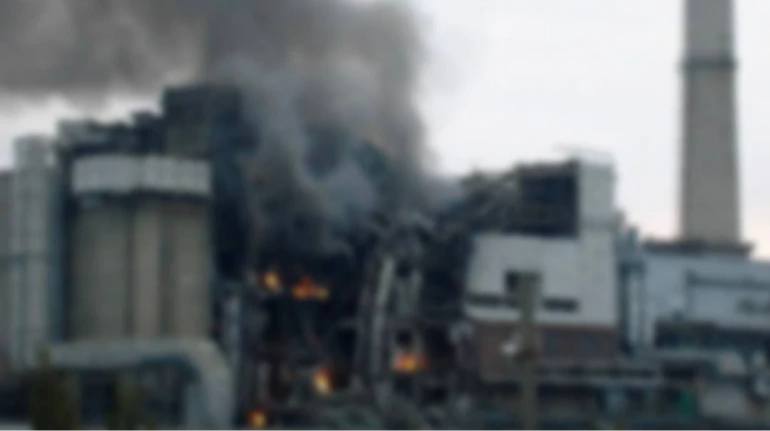
Russia struck steel plants, cargo vessels, and energy facilities across Ukraine on September 12, extending a months-long campaign to cripple the country’s industrial and power infrastructure before winter. The attacks came as Ukrainian engineers scramble to repair damage from earlier strikes that have already knocked out entire power plants and left the Zaporizhzhia nuclear plant reliant on emergency diesel for over a week.
Latest Strikes: Steel, Ports, and Power
Russia’s Defence Ministry said its forces hit the Zaporizhstal steel plant in Zaporizhzhia, an Interpipe Steel complex in Dnipro, and several plants in Kryvyi Rih, President Volodymyr Zelenskyy’s hometown. Two cargo vessels were also struck overnight in the Black Sea port of Chornomorsk, according to the Interfax news agency (Al Jazeera). The ministry claimed the attacks were part of a “targeted campaign” against Ukraine’s industrial infrastructure.
These strikes follow a pattern of Russian assaults on energy and industrial sites that has accelerated since late August. On September 1, Russian missiles and drones damaged the Odesa Combined Heat and Power Plant (CHP), a Naftogaz facility that supplies heat to the city. “Some of the main and auxiliary equipment was damaged,” Naftogaz reported, adding that debris removal was ongoing (Ukrainska Pravda).
The Systematic Destruction of Power Plants
No single attack has been as devastating as the one that destroyed the Kherson CHP plant on August 27. Russian forces struck the plant with four guided aerial bombs, completely disabling all remaining heat- and power-generating equipment. “The Russians struck an exclusively civilian facility that supplies heat to a significant part of Kherson’s residential buildings,” said Serhii Fedorenko, acting CEO of Naftogaz (Ukrainska Pravda).
Oleksandr Prokudin, head of the Kherson Oblast Military Administration, urged residents to leave the city, warning that Kherson could be without electricity and heating “not for hours or days, but for an extended period.” He noted that Russian forces had dropped 170 guided aerial bombs on Kherson Oblast since July 1 — more than in the entire first half of 2026 (Ukrainska Pravda).
The Kherson attack was part of a large-scale Russian strike on the night of August 26-27 that caused power outages in six oblasts: Donetsk, Dnipropetrovsk, Kharkiv, Poltava, Odesa, and Sumy. Ukrenergo, Ukraine’s national power transmission operator, said emergency repairs were underway “wherever the security situation allows” (Ukrainska Pravda). A second massive strike on August 31 hit the same six oblasts plus Zaporizhzhia and Mykolaiv, leaving hundreds of thousands without power (Ukrainska Pravda).
Nuclear Risk: Zaporizhzhia Plant Without External Power
The attacks have also endangered the Zaporizhzhia Nuclear Power Plant, Europe’s largest, which has been under Russian occupation since 2022. The plant lost all external off-site power for more than a week in late August, forcing it to rely on emergency diesel generators to keep its six non-operating reactors cool. The International Atomic Energy Agency (IAEA) warned on August 29 that the plant had only a ten-day diesel supply on site. “The availability of diesel fuel is of paramount importance whenever a nuclear power plant loses off-site power,” said IAEA Director General Rafael Grossi (Al Jazeera). Ukraine later restored external power to the plant on September 8, but the IAEA continues to push for a local ceasefire to allow repairs to the damaged transmission lines.
Winter Looms as Ukraine Calls for Help
Foreign Minister Andrii Sybiha called on Kyiv’s partners to provide additional support packages ahead of winter, describing the Russian attacks as “state terrorism.” “Proving his terror futile will bring the end of this war closer,” Sybiha said on X (Ukrainska Pravda). He urged allies to supply air defence systems, generation capacity, and equipment to strengthen Ukraine’s energy resilience.
Ukrainian energy workers continue to repair damaged infrastructure, but the cumulative toll is severe. Three of Ukraine’s nine controlled nuclear power units were already under repair before the latest strikes, according to Deputy Prime Minister Denys Shmyhal. The destruction of the Kherson and Odesa CHP plants, combined with repeated grid attacks, threatens to leave large parts of the country without heat and electricity during the coldest months.
Russia’s campaign is not limited to power plants. On the night of August 27, strikes in Poltava Oblast caused a fire at an energy facility and damaged industrial businesses in the Kremenchuk and Myrhorod districts (Ukrainska Pravda). The September 12 attacks on steel plants and cargo vessels underscore Moscow’s strategy of hitting both energy and industrial targets to disrupt Ukraine’s economy and military production.
With winter approaching and the grid battered, the question is how much more damage Ukraine’s energy system can absorb before repairs become impossible. For now, power engineers are asking consumers to shift energy-intensive activities to daytime hours and conserve electricity between 18:00 and 22:00. But as Prokudin warned about Kherson, the same could soon apply across the country: “We must be honest — it may be without electricity and heating for an extended period.”
Sources
- Russia hits Kherson thermal power plant with guided bomb, causing severe damage August 26, 2026
- Russian attacks target energy infrastructure in six Ukrainian oblasts August 27, 2026
- Ukraine's foreign minister urges Kyiv's partners to boost support ahead of winter after massive Russian attack August 27, 2026
- Russians destroy remaining equipment at Kherson Combined Heat and Power Plant August 27, 2026
- Russia attacks Poltava Oblast: energy and industrial facilities damaged August 27, 2026
- Russians destroy Kherson power plant with aerial bombs: authorities urge residents to leave the city August 27, 2026
- Russian strikes leave consumers without electricity in four Ukrainian regions August 28, 2026
- Ukrainian nuclear power plant without external power for over a week August 29, 2026
- Russian forces attack energy infrastructure in six Ukrainian oblasts August 31, 2026
- Russian forces damage equipment at Odesa Combined Heat and Power Plant September 1, 2026
- Bulgarian government approves exemption from sanctions against Russia, allowing purchase of equipment for its nuclear power plant September 3, 2026
- Ukrainian oil and gas extraction facilities attacked by Russia September 3, 2026
- Russian attacks hit energy infrastructure in four Ukrainian oblasts September 4, 2026
- Ukraine restores external power supply to Russian-occupied Zaporizhzhia Nuclear Power Plant September 7, 2026
- Russia strikes cargo vessels, steel plants across Ukraine September 12, 2026
Part of the dossier
Russian Attacks on Ukrainian Energy Infrastructure →