Russia Threatens UK Military Targets as Storm Shadow Technology Transfer to Ukraine Sparks Escalation
Russia has threatened to strike British military facilities inside and outside Ukraine after the UK and France agreed to share Storm Shadow missile production technology with Kyiv. The warning, from foreign ministry spokesperson Maria Zakharova, is Moscow's strongest direct threat yet to a NATO member. Meanwhile, CIA Director John Ratcliffe visited Moscow amid US concerns Russia may test NATO with a limited assault, and Ukraine reinforced defences around Sloviansk as Russian forces pressed their offensive.
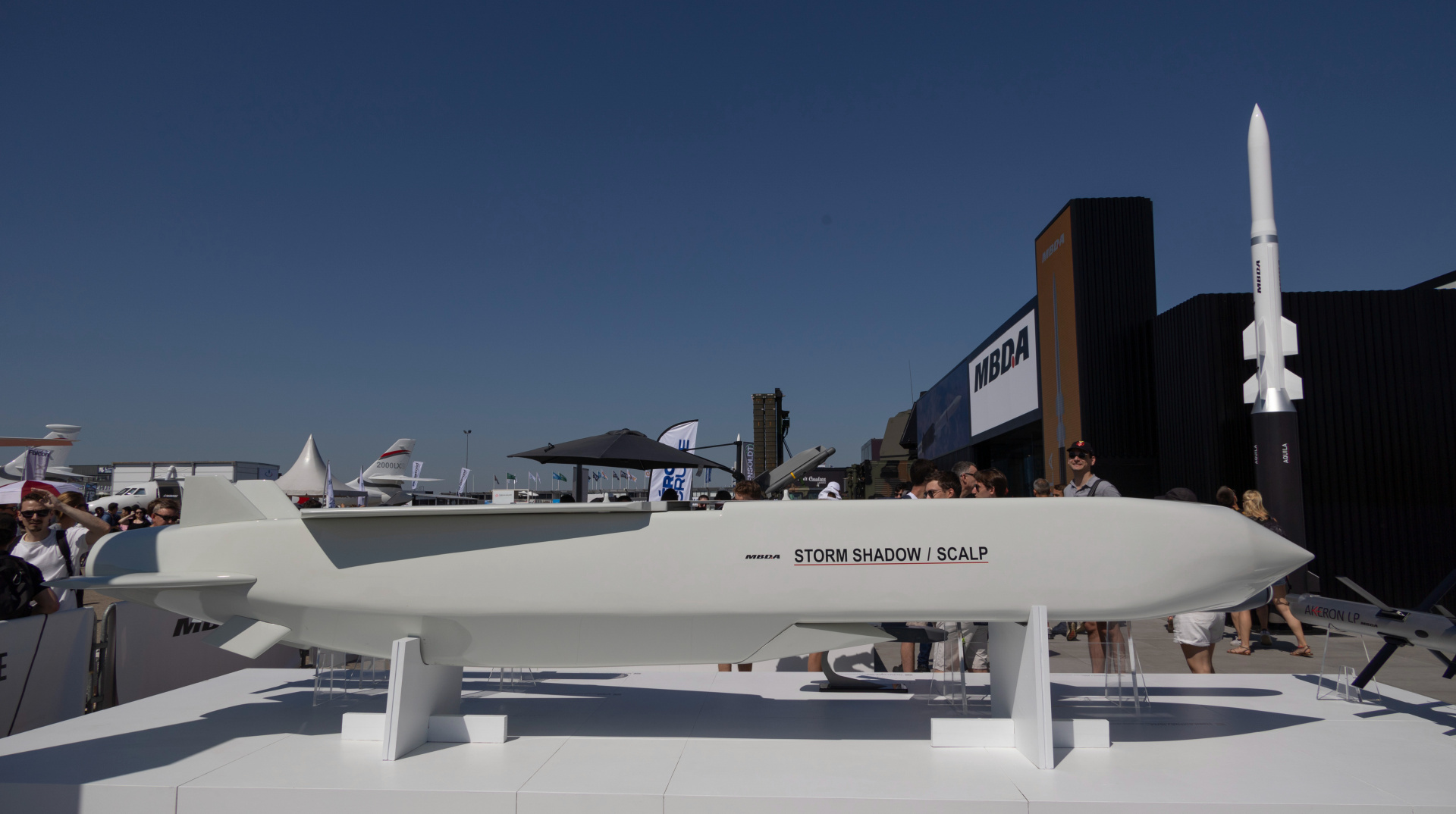
Britain and France have handed Ukraine the blueprints to produce its own long-range Storm Shadow cruise missiles, a move that has triggered the most direct Russian threat yet to strike British military facilities both inside Ukraine and beyond its borders.
UK Prime Minister Andy Burnham announced in Kyiv on 24 August that the UK would share the classified production technology and blueprints for the Storm Shadow – known in French service as the SCALP – allowing Ukraine to manufacture the missiles domestically with French licensing Source 1. The decision, Burnham’s first overseas trip as prime minister, was framed as a strategic shift from simply supplying weapons to enabling Ukraine’s own defence industrial base.
Within hours, Kremlin adviser Andrei Fedorov, a former Russian deputy foreign minister, warned the BBC that British factories producing drones and missile components could face attacks from “unknown sources”. “I cannot exclude 100 percent that there might be some semi-military action,” Fedorov said, adding that the response might come not from the Russian state but from “hackers attack from unknown source” Source 2.
Two days later, the rhetoric hardened. Russian Foreign Ministry spokesperson Maria Zakharova told a Moscow briefing that “any British military facilities and equipment in Ukraine and beyond its borders could become targets in response to Ukrainian strikes using British weapons on Russian territory.” She accused London and Paris of “playing with fire” and said they bore “direct responsibility for participating in terrorist attacks” Source 7; Source 9.
The threat marks an escalation in Russia’s campaign of intimidation against NATO members supporting Ukraine. Until now, Moscow’s warnings have been largely rhetorical – nuclear sabre-rattling and accusations of Western “direct involvement”. Zakharova’s statement, however, explicitly names British military assets as legitimate targets, a step that moves from generalised menace to specific operational threats.
CIA Director’s Moscow Visit Amid Rising Tensions
The week’s events unfolded against the backdrop of a secretive visit to Moscow by CIA Director John Ratcliffe on 25 August. US media reported that Ratcliffe’s trip followed intelligence assessments that Russia might be preparing to test NATO with a limited assault on a Baltic state, possibly ranging from a cyber-attack to a small-scale incursion Source 8.
Kremlin spokesperson Dmitry Peskov confirmed the visit took place, telling The Washington Post it concerned “contacts between security services”, but declined to elaborate Source 6. The Wall Street Journal reported that Ratcliffe’s trip was prompted by US intelligence indicating Russia was making early preparations for a possible military mobilisation. The US reportedly asked Ukraine to suspend strikes on Russian territory during the delegation’s visit Source 6.
Peskov later dismissed Western escalation warnings as “scare stories”, insisting that Russia’s advance on the front was “obvious” and that the “special military operation” would continue Source 11.
Battlefield Reality: Sloviansk Under Pressure
While the diplomatic and rhetorical war raged, the ground war in eastern Ukraine intensified. Ukrainian commander-in-chief Mykhailo Drapatyi, in his first major decision since taking command, on 26 August ordered the reinforcement of two units defending Sloviansk, a key city in Ukraine’s Donetsk “fortress belt” that also includes Kramatorsk, Druzhkivka and Kostiantynivka Source 12.
Russian commander-in-chief Valery Gerasimov claimed on Thursday that his troops were within four kilometres of Sloviansk. However, open-source maps published by Deep State and the Institute for the Study of War suggest Russian forces are actually between 12 and 16 kilometres from the city Source 12.
Russian forces have also been infiltrating Kostiantynivka to the south, but Ukrainian military observer Kostyantyn Mashovets said Kyiv still holds positions in central and northern parts of the town. President Volodymyr Zelenskyy said 70-80 percent of Russian casualties are occurring on the Kostiantynivka front, estimating Russian losses this year at 267,000, including at least 155,000 killed Source 12.
Strikes Behind the Lines
Ukraine continued its campaign to disrupt Russian logistics and infrastructure. On 26 August, a Ukrainian drone strike hit a Wildberries logistics centre in Russia’s Tambov region, the latest in a series of attacks on the country’s largest online retailer. Twenty of its warehouses have now been targeted by Ukraine Source 5.
What the Storm Shadow Technology Transfer Means
For Ukraine, the ability to produce Storm Shadow missiles domestically represents a significant strategic shift. It reduces dependence on Western stockpiles and allows Kyiv to sustain long-range strike capability against Russian command posts, logistics hubs and infrastructure. The missiles have a range of more than 250 kilometres and have been used effectively to hit targets deep inside Russian-occupied territory and, according to Russian claims, inside Russia itself.
France has agreed to license the technology for the European missile, while the UK is providing the blueprints for British-made components Source 10. The timeline for when Ukraine will begin serial production remains unclear, but the political signal is unambiguous: Western allies are prepared to go beyond supplying weapons to enabling Ukraine’s own defence industry, even at the risk of direct confrontation with Moscow.
For the Kremlin, the transfer crosses a red line. By equipping Ukraine with the means to produce its own long-range missiles, Britain and France are – in Russian eyes – becoming permanent military backers of a hostile neighbour. Whether Moscow follows through on its threats to strike British military targets will be the defining test of this new phase of the war.
Sources
- UK to back Ukraine with missile blueprints amid Russia-Ukraine strikes August 25, 2026
- Kremlin denies planned talks with US envoys amid reports CIA head in Russia August 25, 2026
- Storm Shadows for Ukraine: Kremlin threatens UK with paramilitary action against arms factories August 25, 2026
- Kremlin adviser warns UK drone factories could face attacks August 25, 2026
- Russia’s ‘Amazon’ Wildberries comes under Ukraine attack again August 26, 2026
- Kremlin reveals purpose of CIA director's visit to Moscow August 26, 2026
- Russia says it could hit UK military targets over support for Ukraine – UK politics live August 27, 2026
- Russia warns Britain is ‘playing with fire’ over its support of Ukraine August 27, 2026
- Russia threatens UK with strikes on military targets over weapons and technology supplies to Ukraine August 27, 2026
- Russia warns it could target UK in response to Kyiv firing British missiles August 27, 2026
- Kremlin claims battlefield gains as Russia focuses attacks on Ukrainian books and toys August 28, 2026
- Ukraine reinforces Donetsk as it seeks to disrupt Russia’s weapons flow August 28, 2026
Part of the dossier
Storm Shadow Missile Technology and Kremlin Threats →