Russia’s wartime Duma election delivers predictable win for United Russia as antiwar voices are silenced
Russia's first wartime parliamentary election delivered United Russia a predictable victory, with antiwar candidates barred. Meanwhile, Moscow opened unauthorized polling stations in Moldova's Transnistria region, defying protests.
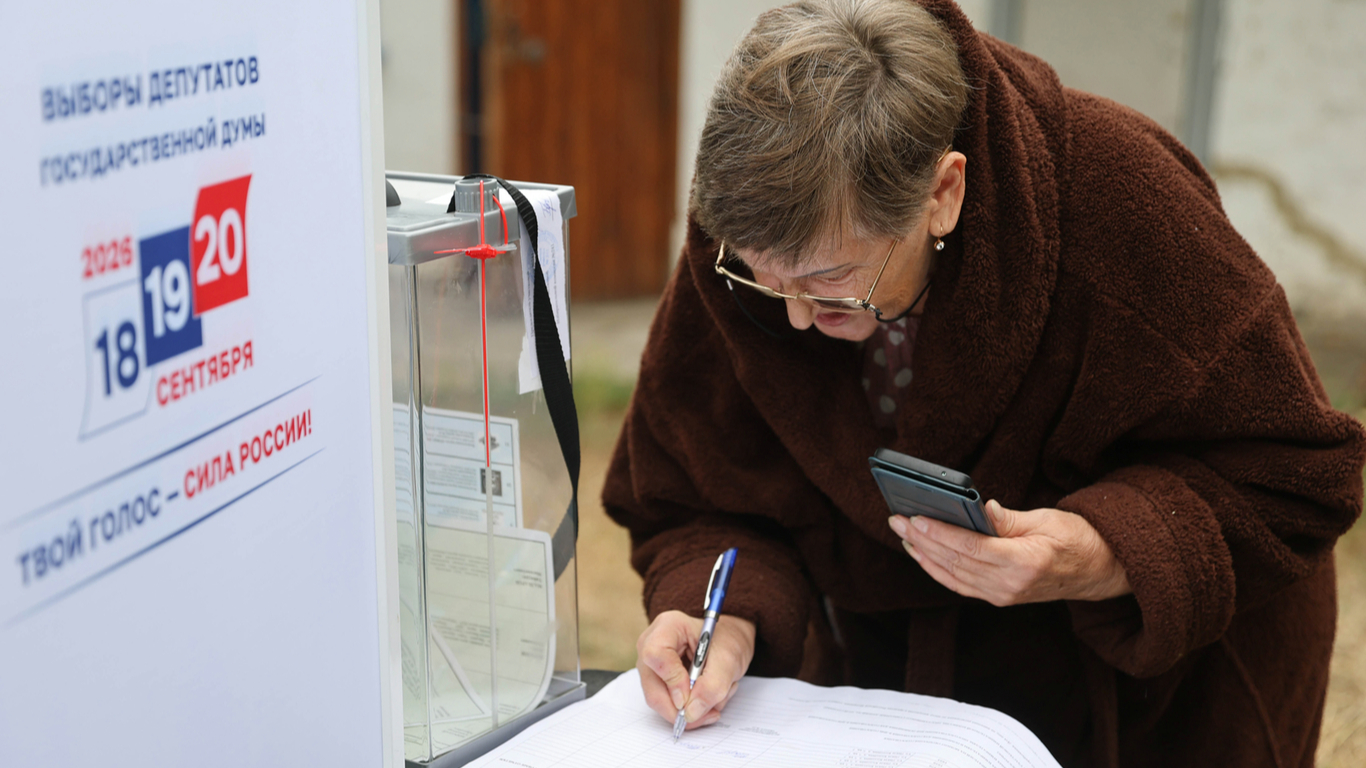
Russia held its first parliamentary election since the full-scale invasion of Ukraine from 18 to 20 September 2026, with results confirming what most observers expected: President Vladimir Putin’s United Russia party will retain its comfortable majority in the State Duma. Early data from the Central Election Commission (CEC), reported by state news agency TASS on 21 September, showed United Russia leading with 57.86 percent of the party-list vote after 90.43 percent of ballots were counted. The party is also projected to win most of the 225 single-mandate districts Al Jazeera.
Voter turnout stood just below 57 percent, with more than 3.6 million people voting online, according to the Ministry of Digital Development. Residents of the four Ukrainian regions illegally annexed in 2022 – Donetsk, Luhansk, Kherson and Zaporizhia – as well as Crimea, which was seized in 2014, were also allowed to cast ballots, a move condemned by Kyiv and the United Nations.
The election took place under tight control. Most antiwar candidates were barred from the ballot, and two senior figures from the liberal Yabloko party received long prison sentences before the vote for comments about the war. Yabloko’s leader, Nikolai Rybakov, demonstratively spoiled his ballot paper, writing his party’s name and the slogan “For peace” Al Jazeera.
“No party can be antiwar” in this election, as one Green Party candidate, Damir Gurin, told Al Jazeera. Gurin, running in Russia’s Far Eastern Federal District, focused his campaign on affordable housing and environmental issues, but acknowledged that the war dominated the atmosphere. State-run television ads for the election featured historical Russian warriors and ended with the line: “Their voice is the voice of victory. Your vote is the strength of Russia!” Al Jazeera.
In a separate but related development, Russia opened unauthorized polling stations in the breakaway Moldovan region of Transnistria on 20 September, defying protests from Moldova’s constitutional authorities. According to Ukrainska Pravda, citing Newsmaker, over 21,000 people had voted by noon. The so-called head of Transnistria, Vadim Krasnoselsky, also cast his ballot. Moldova’s Foreign Ministry had earlier declared the stations unacceptable without its consent, and Russian Ambassador Oleg Ozerov was summoned to receive a note of protest. The only polling station agreed upon with Moldovan authorities was at the Russian Embassy in Chișinău Ukrainska Pravda.
The election results are unlikely to change the balance of power in the Duma. United Russia already held a supermajority, and the Kremlin’s control over the political landscape has tightened since the invasion. However, the vote served as a propaganda exercise to demonstrate domestic support for the war effort. With antiwar voices effectively silenced, the official narrative of “victory” and national unity went unchallenged.
For Moldova, the unauthorized polling stations in Transnistria represent another instance of Russian interference in its sovereignty. The region, which broke away after a brief war in 1992, hosts Russian troops and has long been a flashpoint in Moscow-Chișinău relations. The election stunt may escalate tensions, though Moldova’s ability to respond is limited by its neutral status and the presence of Russian forces.
As the final seat distribution is tallied, the key question remains: what consequences will antiwar candidates and parties face now that the election is over? Yabloko’s leadership already faces prison, and other dissenters may be next. For now, the Duma will remain a rubber-stamp for Kremlin policies, including the war in Ukraine.
Sources
- The view from Russia: ‘No party can be antiwar’ in parliamentary election September 18, 2026
- Russia opens unauthorised Duma election polling stations in Transnistria, defying Moldovan ban September 20, 2026
- Russia election results show Putin’s party winning: What we know September 21, 2026
Part of the dossier
Russian Parliamentary Election 2024 →