Russian Drones Kill Child, Injure Several in Two-Day Attack on Kyiv and Oblast
A Russian drone attack on Kyiv on 29 August killed a two-year-old girl and injured several. Over two days, strikes caused fires in residential and commercial buildings across the capital and region.
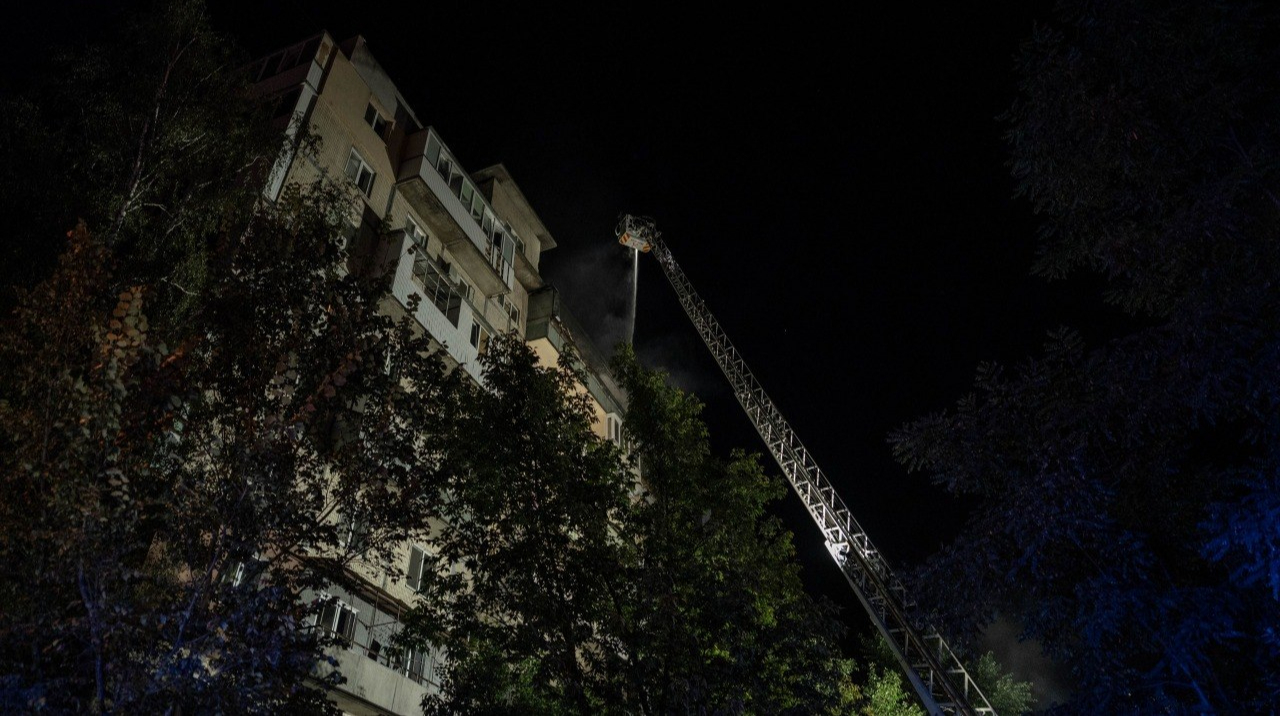
A two-year-old girl was killed and at least eight people injured in a series of Russian drone and missile strikes on Kyiv and Kyiv Oblast between the night of 28 August and the morning of 30 August, according to Ukrainian officials and emergency services.
Child killed in Podilskyi district
The most deadly single strike occurred on the afternoon of 29 August, when a Russian drone hit a non-residential area in Kyiv's Podilskyi district. Another drone landed in the Obolonskyi district, damaging a café and killing a two-year-old girl, according to the Kyiv City Military Administration. Several other people were injured in those attacks, and the total number of wounded in the capital on 29 August later rose to eight, the authorities reported.
Overnight residential fire
Earlier, on the night of 28–29 August, a Russian attack sparked a fire in a nine-storey residential building in the Sviatoshynskyi district. The State Emergency Service of Ukraine said the blaze broke out in an eighth-floor apartment but was extinguished before it could spread to neighbouring flats. Ceilings between the apartment and the roof were destroyed. No casualties were reported in that building, but two people were injured at a separate house in the same district and received medical assistance on site. Air raid alerts were still ongoing as of that morning, with air defence systems operating over the city.
Continued attacks on 30 August
The Russian assault did not let up. On the morning of 30 August, debris from downed drones caused a fire in a two-storey non-residential building in Kyiv's Holosiivskyi district, according to Mayor Vitali Klitschko. The roof of another non-residential building in the same district also caught fire after falling drone fragments.
Outside the capital, in Kyiv Oblast, drone strikes and falling debris triggered fires in the Fastivskyi and Vyshhorodskyi districts. In the village of Vita-Poshtova (Fastivskyi district), a house caught fire, injuring one person. In the village of Oseshchyna (Vyshhorodskyi district), two metal containers burned, and another person was found injured. The State Emergency Service said both fires were extinguished by the afternoon of 30 August.
Why it matters
These three days of attacks illustrate a persistent Russian tactic of launching drones – likely Shahed-type loitering munitions – in waves aimed at both civilian infrastructure and residential areas of Kyiv. While Ukrainian air defence has been effective at downing many incoming drones, debris still causes casualties and fires on the ground. The killing of a child in a café and the repeated fires in residential buildings underscore the human cost of these strikes, which have become a near-daily occurrence since last autumn.
Kyiv remains a primary target for Russian forces, who seek to demoralise the population and strain emergency services. The fact that attacks continued over 72 hours without a pause in multiple districts suggests Russia is maintaining a high tempo of strikes despite its own heavy losses on the front line. For Ukraine, the challenge is not only intercepting the drones but also protecting civilians from falling debris – a problem that no air defence system can fully solve in a dense urban environment.
The authorities have not provided specific information on the type of munitions used on 30 August, but the pattern matches previous Russian drone barrages. As of the afternoon of 30 August, air raid warnings in Kyiv had been lifted, but the danger remains.
Sources
Part of the dossier
Russian Attack on Kyiv Causes Fire and Injuries →