Russian guided bombs hit Sumy residential areas twice in three days, injuring six and leaving people trapped
Russian forces struck Sumy with guided aerial bombs on 16 and 18 September 2026, injuring six people including a 14-year-old girl, and damaging homes and a school. A second strike on a multi-storey building may have left people trapped under rubble, with authorities still gathering information.
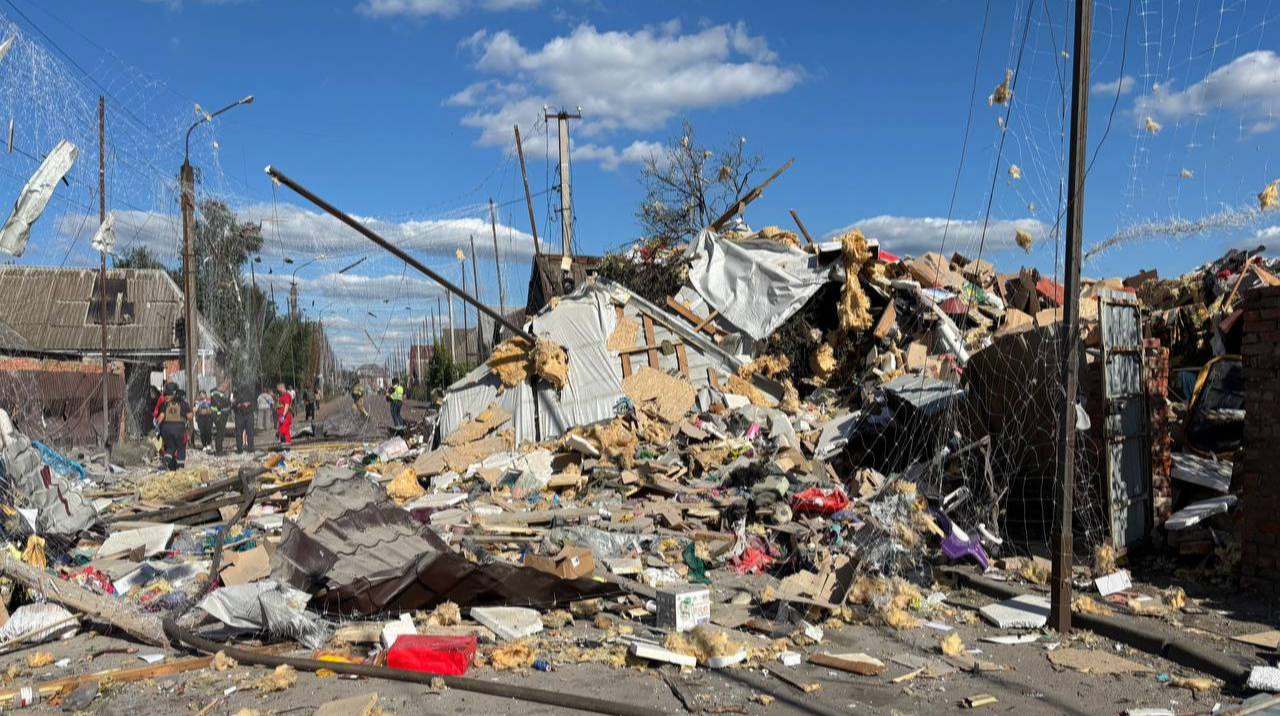
Russian forces struck the northeastern city of Sumy with guided aerial bombs on two separate occasions this week, hitting residential districts and an industrial zone. The first attack, on 16 September, injured six people including a 14-year-old girl and destroyed two houses, while a second strike on the evening of 18 September damaged a multi-storey residential building, with early reports indicating people may be trapped under the rubble.
According to Oleh Hryhorov, Head of Sumy Oblast Military Administration, the initial bombardment on 16 September targeted the Kovpakivskyi and Zarichnyi districts of Sumy, as well as the city's industrial zone. Acting mayor Artem Kobzar confirmed that the strikes destroyed two homes and damaged another ten houses and an educational institution. The injured included a teenager, underscoring the toll on civilians in a city that has been under repeated Russian aerial assault.
Two days later, on the evening of 18 September, Russian guided aerial bombs again hit Sumy and its outskirts. Hryhorov reported that a multi-storey residential building was struck and that "early reports indicate that people may be trapped under the rubble." Local outlet Kordon.Media published photos of the aftermath, showing a partially collapsed building with emergency services on site. Authorities are still gathering information on the full extent of casualties and damage from the second attack.
Guided aerial bombs — also known as glide bombs — have become a hallmark of Russia's air campaign in Ukraine. Launched from aircraft well outside Ukrainian air defence range, these munitions allow Russian forces to strike targets with relative impunity, though their accuracy remains limited. The repeated targeting of residential areas in Sumy suggests a deliberate strategy to terrorise the civilian population and degrade urban infrastructure, rather than purely military objectives.
Sumy, located less than 40 kilometres from the Russian border, has faced frequent aerial attacks throughout the war. The use of guided bombs in particular has increased in recent months, as Russia adapts its tactics to counter Ukraine's air defence systems. For residents, the psychological impact is severe: the bombs often arrive without warning, leaving little time to seek shelter.
As of the evening of 18 September, no further updates on trapped persons or casualty numbers had been released. The Sumy Oblast Military Administration continues to assess the situation. The strikes come amid a broader escalation of Russian aerial attacks on Ukrainian cities, with Kharkiv, Zaporizhzhia, and Dnipro also reporting guided bomb hits in recent weeks.
For readers following the war, these attacks illustrate a persistent pattern: Russia uses its air power to strike urban centres from a distance, causing civilian harm and forcing Ukraine to expend scarce air defence resources. The fact that the second strike hit a residential building suggests either poor targeting or an intentional choice to maximise psychological effect. Either way, the people of Sumy are paying the price.
Sources
- Russian forces strike Sumy with guided aerial bombs: six injured, including teenager September 16, 2026
- Russia strikes Sumy with guided aerial bombs, people may be trapped under rubble September 18, 2026
- Russia strikes Sumy with guided aerial bombs, people may be trapped under rubble September 18, 2026
Part of the dossier
Russian guided bomb strikes on Sumy residential area →