Russian Strike on Kyiv Injures Two, Ignites Fires as Jet-Powered Drone Barrage Continues
Russian forces struck Kyiv on 15 September, injuring two people and igniting fires in the Sviatoshynskyi district. The attack is part of a sustained campaign of jet-powered drone strikes that has killed at least six civilians in the capital since late August, as Russia uses faster Shahed-type drones to overwhelm Ukrainian air defences.
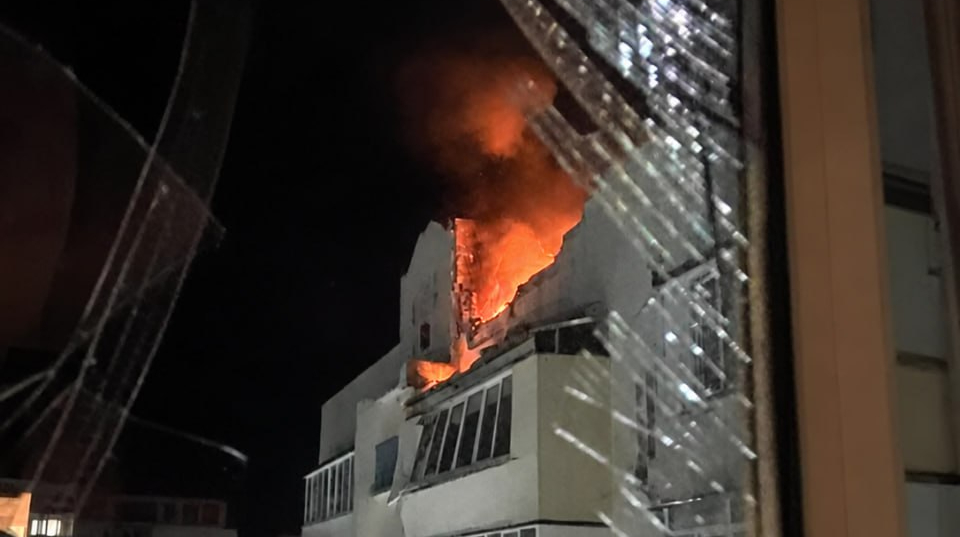
Russian forces struck the Ukrainian capital at midday on 15 September, injuring two people and setting five cars and a garage ablaze in the Sviatoshynskyi district, according to Kyiv Mayor Vitali Klitschko and the State Emergency Service Source 18.
The attack, which occurred during a daytime air raid, saw debris from downed drones fall on residential courtyards in the Solomianskyi and Holosiivskyi districts as well. The Kyiv City Military Administration confirmed that two people were injured and received medical attention at the scene. Firefighters quickly contained the blaze, preventing it from spreading to adjacent buildings.
This strike is the latest in a sustained campaign of jet-powered drone attacks that has hammered Kyiv and surrounding regions since late August. President Volodymyr Zelenskyy stated on 31 August that Russia had fired approximately 800 jet-powered Shahed-type drones into Ukraine over four days, with the new Geran-4 models reaching speeds of 200–250 mph (320–400 km/h) – roughly double that of older piston-engine versions and beyond the interception capability of Ukraine’s cheap drone-killers Source 8.
The 15 September attack follows a series of devastating hits on the capital. On 11 September, a Russian drone strike on a petrol station in Kyiv killed two people, and another drone attack the same day injured two and caused a fire in a high-rise building Source 16, Source 17. On 8 September, residential buildings in Kyiv were damaged and two people were killed in a separate attack Source 13. A fire also broke out at a business in Kyiv Oblast the same day Source 14.
The pattern of daytime raids has forced Kyiv residents to endure prolonged air alerts – eight by lunchtime on 31 August alone, according to The Guardian Source 8. The speed of the jet-powered drones means they can reach the capital before air raid sirens finish sounding, reducing reaction time for civilians and emergency services.
Beyond Kyiv, the Russian drone campaign has struck critical infrastructure across Ukraine. On 1 September, a 16-storey building in the Podilskyi district caught fire after a drone hit, while another drone fell near a residential building in Sviatoshynskyi Source 10. On 2 September, two people were injured in Kyiv Oblast when warehouse facilities and houses were damaged in the Bucha, Brovary and Boryspil districts Source 11. A fire broke out at a tobacco factory in Pryluky on 7 September following a Russian attack Source 12. On 9 September, a market in Khmelnytskyi was set ablaze Source 15.
The Ukrainian Air Force has been relying on combat aircraft to intercept the faster drones, as ground-based systems struggle to track them. The sustained tempo of attacks – often multiple waves per day – is designed to wear down air defence ammunition stocks and stretch response capabilities, military analysts note.
Kyiv remains the primary target, but the strikes on Odesa Oblast, Sumy, and Donetsk Oblast in the same period show Russia is applying pressure across the country. On 30 August, a drone attack on Kyiv Oblast injured two people in the Fastivskyi and Vyshhorodskyi districts Source 5. On 1 September, Odesa Oblast came under a large-scale combined attack that damaged a border crossing, two residential buildings, and a sewing workshop, injuring one person Source 9.
As of 15 September, the State Emergency Service reported that five cars and a non-residential building near garages were destroyed in the Sviatoshynskyi district. Debris from downed drones also fell on the grounds of a residential building in the same district. The full extent of damage is still being assessed.
For Ukraine Desk readers, this wave of attacks underscores a critical shift in Russian tactics: the use of faster, harder-to-intercept drones to sustain near-constant pressure on Kyiv and other cities, aiming to disrupt daily life and force Ukraine to expend scarce air defence resources. The civilian toll – at least six dead and dozens injured in Kyiv alone over the past three weeks – is a grim reminder of the war’s enduring cost.
Sources
- Two people injured in Kyiv after Russian attack, high-rise building catches fire August 29, 2026
- Fire breaks out in Kyiv due to morning Russian attack August 30, 2026
- Two people injured in Kyiv Oblast due to Russian drone attack – photos August 30, 2026
- Two people killed, including a child, in Russian attack on Donetsk Oblast – photos August 30, 2026
- Fire reported and two people injured: Russians attack apartment block in Sumy – video August 31, 2026
- Russia fires 800 jet-powered drones into Ukraine in four days August 31, 2026
- Russian attack causes fire at sewing workshop in Odesa Oblast, damages border crossing – photos, video September 1, 2026
- 16-storey building catches fire during UAV attack on Kyiv, another drone falls near residential building September 1, 2026
- Two people killed and 34 injured in two oblasts due to Russian strikes September 5, 2026
- Two people injured in morning Russian attack on Kyiv Oblast September 2, 2026
- Russians attack high-rise residential building in Boryspil: fire breaks out, two injured September 4, 2026
- Russia attacks Kyiv: residential buildings damaged, two people killed – photos September 8, 2026
- Fire breaks out at tobacco factory in Pryluky following Russian attack September 7, 2026
- Fire breaks out at business in Kyiv Oblast following Russian strike September 8, 2026
- Russian attack causes fire at market in Khmelnytskyi September 9, 2026
- Russians attack Kyiv with drones, injuring two and causing fire in high-rise building September 11, 2026
- Russian attack on petrol station in Kyiv kills two people – mayor September 11, 2026
- Russians attack Kyiv: two injured, cars on fire – photos September 15, 2026
Part of the dossier
Russian Attack on Kyiv Causes Fire and Injuries →