Russian strikes hit Kramatorsk and Zaporizhzhia as Ukraine pursues war crimes charges for child deportations and animal theft
Russian aerial bombs hit residential areas in Kramatorsk and industrial facilities in Zaporizhzhia, injuring four people over two days. Ukraine's Prosecutor General has submitted an indictment against a Crimean zoo owner for stealing rare animals from a UNESCO reserve, and four occupation officials face charges for deporting 53 children to Russia in 2022.
Russian forces continue to pound Ukrainian cities with guided bombs and drones, while Ukrainian prosecutors advance cases against occupation officials and collaborators accused of war crimes, including the deportation of children and the theft of rare animals from a UNESCO biosphere reserve.
Civilian infrastructure under fire
On the night of 26–27 August, Russian aircraft dropped seven aerial bombs on residential areas of Kramatorsk in Donetsk Oblast, injuring two people and damaging 16 apartment blocks, according to Ukraine's State Emergency Service. Fires broke out in several buildings, and emergency workers had to evacuate four residents trapped on upper floors after a stairwell was destroyed Source: State Emergency Service.
The attack follows a pattern of systematic strikes on civilian targets. On 27 August, Russian forces hit an industrial facility in Zaporizhzhia, causing a fire. Ivan Fedorov, head of the Zaporizhzhia Oblast Military Administration, reported that production premises were damaged but no casualties were recorded Source: Ivan Fedorov. The previous day, a Russian airstrike on central Sloviansk – also in Donetsk Oblast – injured two people and damaged at least 12 apartment buildings. Vadym Liakh, head of the Sloviansk City Military Administration, said the attack used guided aerial bombs at 04:20 local time Source: Vadym Liakh.
On 25 August, strikes on Kharkiv's Osnovianskyi district and a Zaporizhzhia industrial facility left four people injured, according to Oleh Syniehubov, head of the Kharkiv Oblast Military Administration, and the Kharkiv Oblast Prosecutor's Office. The Kharkiv attack used Geran-3 UAVs, damaging six houses and five cars Source: Syniehubov.
Legal accountability pushes forward
While the strikes continue, Ukrainian law enforcement is moving to hold accountable those responsible for war crimes committed under occupation. On 26 August, prosecutors submitted an indictment to court against Oleh Zubkov, the owner of the Skazka Zoo in Yalta and the Taigan Lion Park in occupied Crimea, for removing rare animals from the Askania-Nova Nature Reserve in Kherson Oblast.
Askania-Nova, a UNESCO biosphere reserve, was seized by Russian forces in 2022. Investigators say that occupation authorities appointed Dmytro Meshcheriakov as director of the reserve, and in October 2023 he reached an agreement with Zubkov to transfer animals. Between 2023 and 2024, Chapman's zebras and Ukrainian Grey cattle were taken to occupied Crimea, causing losses of more than UAH 67 million (about US$1.5 million). Zubkov has been charged under Article 438.1 of the Criminal Code of Ukraine (violation of the laws and customs of war) and faces eight to 12 years in prison if convicted. He is currently wanted Source: Office of the Prosecutor General.
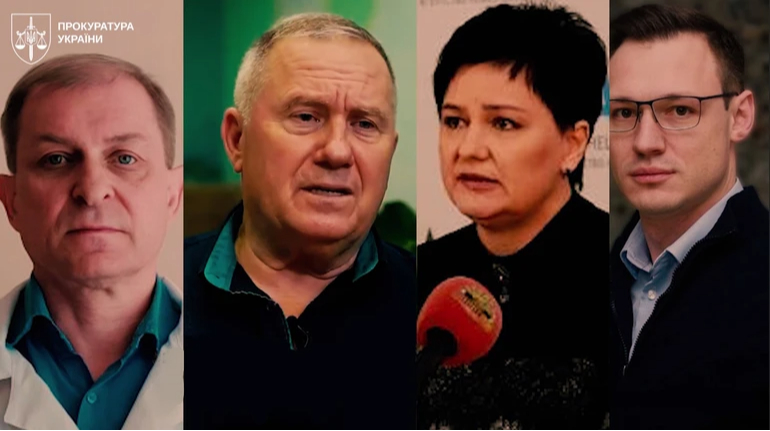
Separately, four occupation officials have been served with notices of suspicion in absentia for the deportation of 53 children from three children's homes in Donetsk and Makiivka to Russia in October 2022. Prosecutor General Ruslan Kravchenko described the operation as “a planned deportation of Ukrainian children, organised at the highest level of Russia's military-political leadership.” The children were transported to Rostov-on-Don, flown to Moscow Oblast, and processed under Russian law: granted citizenship, entered into state databases, and placed with families. According to the investigation, 28 of them were placed under guardianship of Russian families and their profiles appeared on an adoption portal Source: Prosecutor General. The suspects include Dmytro Hartsev, the occupation's “health minister”; Svitlana Maiboroda, head of the “State Service for Family and Children's Affairs”; and children's home directors Viacheslav Vysiahin and Viktor Honcharov.
Why it matters
These cases underscore two dimensions of the war that Ukraine is trying to document and prosecute: the systematic destruction of civilian infrastructure and the deliberate erasure of Ukrainian identity through the forced transfer of children and cultural heritage. While no court in Ukraine can physically arrest the accused while they remain in Russian-controlled territory, the indictments build a legal record that could be used in future international proceedings. The strikes on residential areas, meanwhile, continue to kill and wound civilians, with no sign of abatement as the war enters its fourth year.
Sources
- Occupation officials involved in deportation of 53 Ukrainian children to Russia served with notices of suspicion in absentia August 25, 2026
- Russian forces strike Kharkiv and Zaporizhzhia this evening, injuring four – photo, videos August 25, 2026
- Russian forces strike central Sloviansk, damaging apartment buildings and injuring two people – photos August 26, 2026
- Crimean zoo owner and collaborator Zubkov to stand trial for removing animals from Askania-Nova reserve August 26, 2026
- Russian forces strike another industrial facility in Zaporizhzhia August 27, 2026
- Russian forces drop seven aerial bombs on residential area in Kramatorsk overnight: two injured – photos August 27, 2026
Part of the dossier
Ukraine War Crimes & Deportations →