Six days of Russian strikes on Kyiv push residents to the brink: 'We are considering leaving'
Russian forces have struck Kyiv continuously for at least six days, injuring 10 civilians on 3 September alone. The psychological toll is pushing some residents to consider leaving the capital, as President Zelenskyy prepares for talks with US envoys in the coming days.
After six consecutive nights of Russian drone and missile attacks, some Kyiv residents say the psychological toll is becoming unbearable, and they are now weighing whether to abandon the capital.
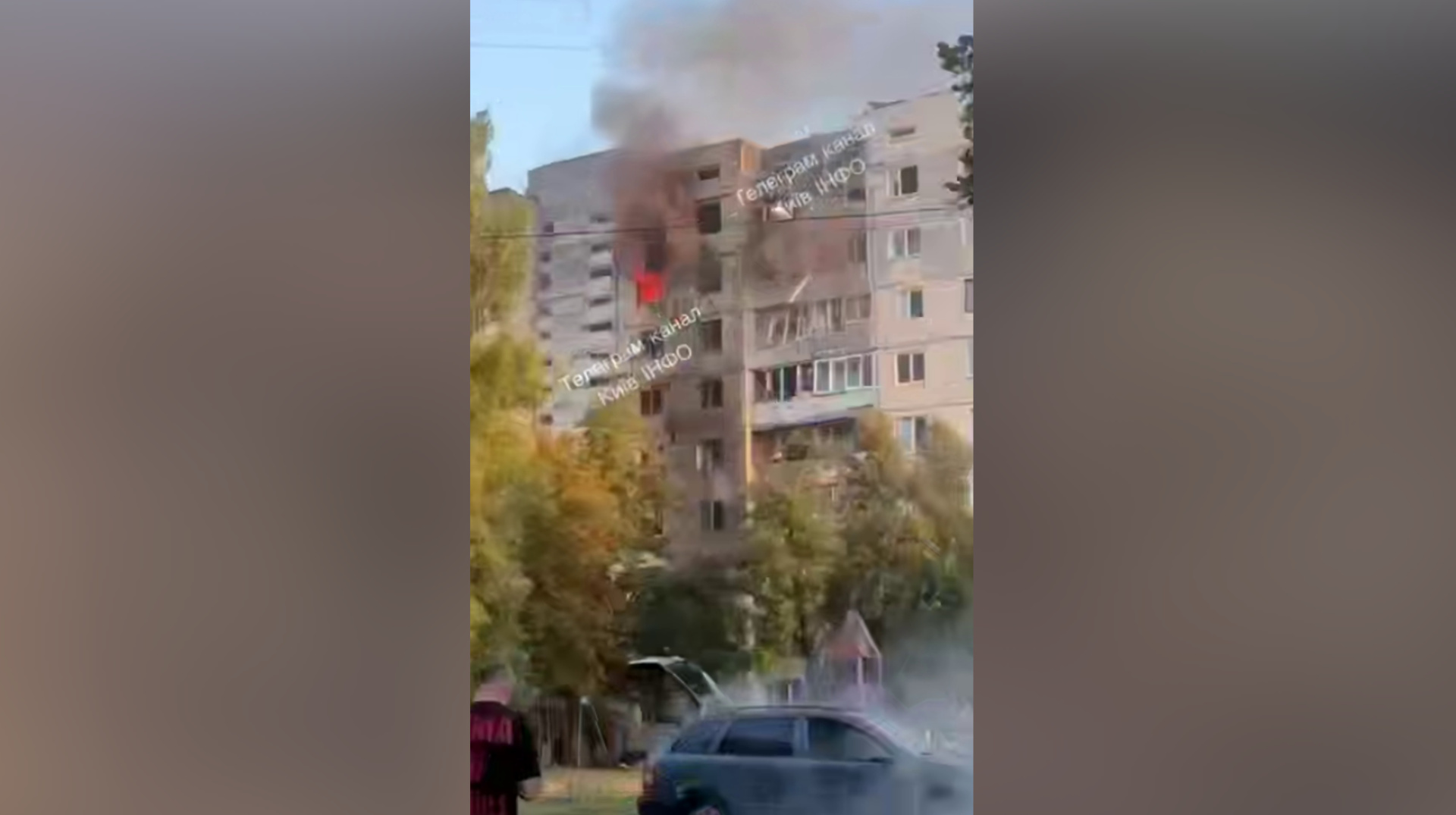
The latest wave of bombardment struck a residential building in a district just outside the city centre on the evening of 3 September, injuring ten people — including a child and six medical personnel, according to Mayor Vitali Klitschko (Al Jazeera). The Ukrainian military administration initially reported a fatality in that attack but later corrected the information, stating no one had died.
Video clips shared on unofficial Telegram channels showed a large fireball rising above the damaged high-rise. Fifteen residents were evacuated from the building. Air raid alerts remained active for more than two hours after the strike, and local media reported further explosions later in the evening.
Relentless bombardment
The attack on 3 September marked at least the sixth day of near-continuous Russian strikes on the capital and its surroundings. Residents interviewed by Al Jazeera on 1 September described the cumulative strain of nightly explosions and the failure of air defences to prevent hits on civilian infrastructure (Al Jazeera).
"The constant noise, the sirens, the shaking of the building — it wears you down," one resident said. "People are thinking about leaving their homes, their jobs, everything."
Officials have not yet released an official tally of evacuees or displaced persons from the past six days, but the psychological effect is evident in the growing number of social-media posts and private conversations about temporary relocation to western Ukraine or abroad.
Talks with US envoys expected
President Volodymyr Zelenskyy said on 3 September that he expects to meet with US envoys "in the coming days" to discuss continued support for Ukraine (Al Jazeera). Neither his office nor the White House have confirmed the exact agenda, but sources suggest the talks will focus on air-defence systems, long-range strike capabilities, and the economic package needed to sustain Ukraine's energy grid through winter.
The energy grid has already taken hits: Ukraine's state oil and gas company Naftogaz announced that Russian strikes had caused "significant damage" to production equipment, without specifying the location of the targeted site.
Concerns over escalation
A separate incident on 3 September saw a Ukrainian drone strike a bus in the Russian-controlled city of Horlivka in Donetsk region, killing one person and injuring five others, according to the Russian state news agency Interfax (Al Jazeera). Ukraine has not confirmed the strike, which fits a pattern of Kyiv targeting rear-area military and transport infrastructure.
Military analysts note that the sustained Russian air campaign against Kyiv is partly a reaction to Ukraine's growing ability to strike into Russian-occupied territory. The Kremlin appears to be trying to break Ukrainian morale ahead of what many expect to be a difficult winter of energy shortages and ground offensives.
What to watch
As the week of bombardment continues, the key question is whether Kyiv's residents will depart in significant numbers. Mayor Klitschko has urged calm but has not ruled out the need for organised evacuations if the attacks persist. The Zelenskyy government hopes that new Western air-defence systems, pledged in recent months, will eventually restore a sense of safety to the capital.
For now, many Kyivites are making contingency plans — packing bags and checking train schedules — while the air raid sirens wail.
Sources
Part of the dossier
Russian Strikes on Kyiv →