Russian strikes hit Zaporizhstal again, destroy Khortytsia vodka factory in coordinated attack on Zaporizhzhia industry
On 27 August, Russian forces struck the Zaporizhstal steelworks for the second time in two weeks, hitting the same location as a deadly 11 August attack. In the same city, a strike destroyed the Khortytsia vodka factory, damaging a KOLO warehouse. The attacks signal a deliberate campaign against industrial infrastructure.
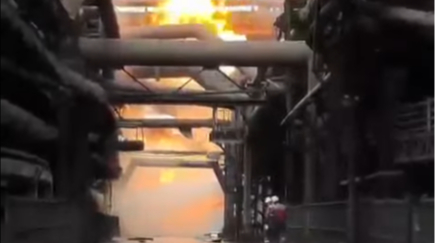
Russian forces launched a series of strikes on industrial targets in Zaporizhzhia on the night of 27 August, hitting the same spot at the Zaporizhstal steelworks where seven workers were killed two weeks earlier, and completely destroying the Khortytsia liquor and vodka factory. The attacks also damaged a warehouse of the KOLO grocery chain and an Avrora distribution centre in Kyiv Oblast, underscoring a deliberate campaign to cripple Ukraine’s industrial and logistics base.
Zaporizhstal: second strike in August
The Zaporizhstal steelworks, already forced to suspend operations after a ballistic missile strike on 11 August that killed seven employees and injured 21, was hit again by five missiles that struck the same location, according to Musa Mahomedov, Chair of the Ukrainian Parliamentary Subcommittee on Industrial Policy. In a Facebook post cited by Ukrainska Pravda, Mahomedov said: “The Russians struck Zaporizhstal yet again tonight. Five missiles hit the same place where people were killed during the previous attack. Since that attack, the plant has been forced to suspend operations.” He added that the plant had been hit by North Korean missiles in the earlier strike, though that claim has not been independently confirmed. The steelworks had already suffered power outages in December 2025 and January 2026 due to Russian attacks on energy infrastructure, leading to emergency shutdowns. Mahomedov said workers are trying to resume operations, but the damage remains severe.
Khortytsia vodka factory: total loss
A separate strike on the same day destroyed the Khortytsia liquor and vodka factory, owned by Global Spirits. The company told Ukrainska Pravda that the facility sustained four direct hits and burned for at least three hours. “Part of the production was destroyed by fire, while the remainder melted and must be disposed of,” the press service said. Global Spirits lost three to four million bottles of products on which excise duty had already been paid, estimating the average unit cost at UAH 100 (about US$2.25). More than 500 people worked at the factory, which had a bottling line capacity of 16 bottles per second. In addition to Khortytsia, the plant produced vodka under the Morosha, Pervak, Medova, Pshenychna Slioza and Gold Ukraine brands. The facility is a total loss and cannot be restored.
KOLO warehouse and other logistics hits
A warehouse of the KOLO grocery chain, owned by Varus, was damaged in the same wave of attacks. According to a company press release, no employees were injured, but temporary delays in product deliveries may occur at some stores. Varus said it is assessing damage and seeking alternative supply routes, though it did not specify which product lines would be affected. All KOLO stores remained open. The attack came just weeks after Varus completed its acquisition of KOLO on 4 August, bringing the combined chain to 374 stores and over 9,000 employees.
Also on 27 August, a Russian strike destroyed an Avrora distribution centre in Kyiv Oblast; no injuries were reported, according to the same source. A warehouse used by the Fora grocery chain, which had only begun using the facility days earlier, was also damaged.
Strategic significance
The repeated targeting of Zaporizhstal – a key steel producer that had already been knocked offline by the 11 August strike – suggests Moscow is intent on preventing its return to operation. Steel production is a vital part of Ukraine’s wartime economy, providing export revenue and materials for defence manufacturing. The destruction of the Khortytsia factory, a major employer and exporter of spirits, further erodes the region’s economic resilience. The attacks on logistics hubs, including the KOLO warehouse and Avrora distribution centre, indicate a broader effort to disrupt supply chains in both frontline and rear areas.
Zaporizhzhia, a city of around 700,000 before the war, lies less than 50 kilometres from the front line and has been a frequent target of Russian missile and drone strikes. The 27 August strikes mark the second time in August that Russian forces have hit the same industrial facility twice, raising questions about whether the attacks are coordinated to maximise damage to critical infrastructure.
Sources
- Russians strike Zaporizhzhia Steelworks again: extent of damage reported August 27, 2026
- Russian attack damages KOLO grocery store chain warehouse August 27, 2026
- Russia destroys Khortytsia vodka factory in Zaporizhzhia August 28, 2026
Part of the dossier
Russian Strike on Zaporizhstal Steelworks →