Trump Demands Europe Repay US for Ukraine Aid, Sends Kushner and Witkoff to Revive Peace Talks
President Trump demands Europe repay the US for Ukraine aid provided under Biden, while sending envoys Kushner and Witkoff to revive peace talks. Experts warn the demand could fracture Western unity at a critical moment.
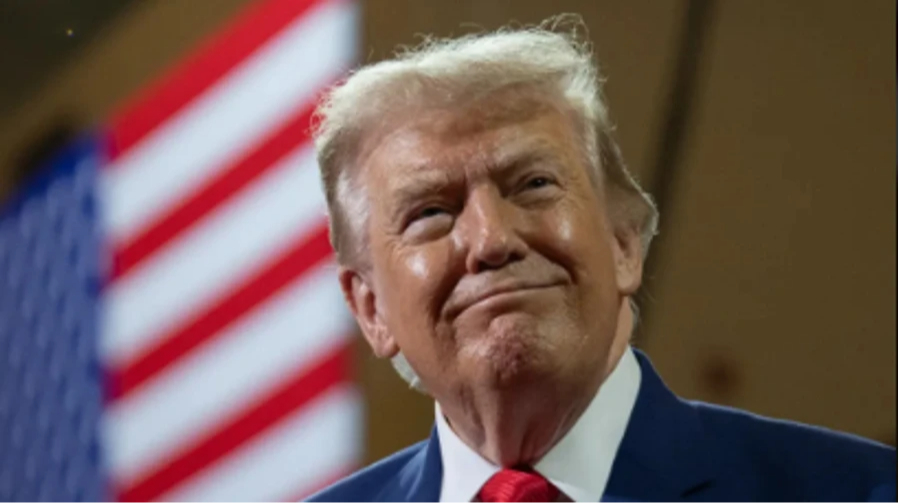
US President Donald Trump has escalated a simmering transatlantic dispute by demanding that European countries repay the United States for military aid provided to Ukraine under the Biden administration. Speaking at the White House on 3 September 2026, Trump said the US had provided billions of dollars in weapons and ammunition “free of charge” and would now seek reimbursement from Europe. The demand comes as Trump simultaneously dispatches his son-in-law Jared Kushner and special envoy Steve Witkoff to Kyiv and Moscow this weekend to restart peace negotiations, raising questions about the coherence of US policy toward the war.
According to Al Jazeera, Trump told reporters on 4 September that Kushner and Witkoff would travel to Russia and Ukraine with “an idea for peace,” though he offered no specifics. Ukrainian President Volodymyr Zelenskyy confirmed the envoys will be in Ukraine on Sunday; Russian state news agency TASS says they will be in Moscow on Saturday and Sunday. The trip marks the first high-level US mediation effort since Trump returned to office in January 2025.
Yet the repayment demand threatens to undermine any goodwill Washington might need from European allies. Trump’s complaint, as reported by Ukrainska Pravda on 3 September, is that Europe should have borne the cost of Ukraine’s defence. The US has provided tens of billions of dollars in military assistance since Russia’s full-scale invasion in February 2022, with the bulk delivered under former President Joe Biden. Trump now characterises that as a gift that Europe must repay.
Experts warn that the demand could fracture the Western alliance at a critical moment. On Al Jazeera’s Inside Story programme from 4 September 2026, Doug Bandow of the Cato Institute argued that “Trump’s transactional approach ignores the fact that European countries have already provided substantial aid to Ukraine – in some cases exceeding US contributions relative to GDP.” Charles Kupchan of the Council on Foreign Relations added that “demanding repayment retroactively will poison the well for future cooperation on Ukraine and other security issues.”
Marina Miron of King’s College London noted that Europe is already struggling to sustain its own weapons stockpiles and budget support for Kyiv. “If the US insists on being reimbursed, it could force European capitals to choose between replenishing US stocks and continuing direct support for Ukraine,” she said. “That is a lose-lose for Kyiv.”
The timing is particularly delicate. On 4 September, a Russian drone strike hit the headquarters of Ukraine’s Security Service (SBU) in Kyiv, wounding at least 12 people, according to Mayor Vitali Klitschko. Al Jazeera’s Audrey MacAlpine reported from Kyiv that the strike “raises the question of what else Russia can hit.” The attack underscores the urgency of maintaining military assistance.
Strategically, Trump’s repayment demand does not change the legal fact that the aid was authorised by Congress and delivered under Biden. No mechanism for recouping those funds from Europe exists. The demand appears to be a political argument aimed at domestic audiences, but it reverberates across NATO capitals where officials are already wary of US reliability.
European governments have so far reacted cautiously. The European Commission declined to comment on Trump’s statement, while a German defence ministry source told Reuters that Berlin does not consider the request serious. “The aid was a gift from the American people, not a loan,” the source said on condition of anonymity.
For Ukraine, the combination of Trump’s envoy trip and his repayment threat creates deep uncertainty. On one hand, the White House is actively engaging in peace diplomacy; on the other, it is alienating the allies Kyiv needs for long-term support. As the war grinds on – with no let-up in Russian drone and missile barrages – Ukraine urgently needs clarity on whether Western unity will hold. Trump’s mixed signals suggest it will not.
What to watch: Whether European countries offer any formal response at the NATO defence ministers’ meeting scheduled for late September, and whether the Kushner-Witkoff mission produces a concrete ceasefire proposal.
Sources
- Trump says he will demand money from Europe for Ukraine aid provided under Biden September 3, 2026
- Will Europe pay the US to provide military aid to Ukraine? September 4, 2026
- Witkoff and Kushner will travel to ‘end’ Russia’s war in Ukraine: Trump September 4, 2026
Part of the dossier
Trump demands Europe repay Ukraine aid →