Ukraine's 3rd Army Corps debuts air-dropped kamikaze UGVs, expands Donetsk offensive
Ukraine's 3rd Army Corps debuts air-dropped kamikaze UGVs in Operation Vivaldi, liberating five villages and crippling Russia's elite Rubicon drone unit in northern Donetsk Oblast.
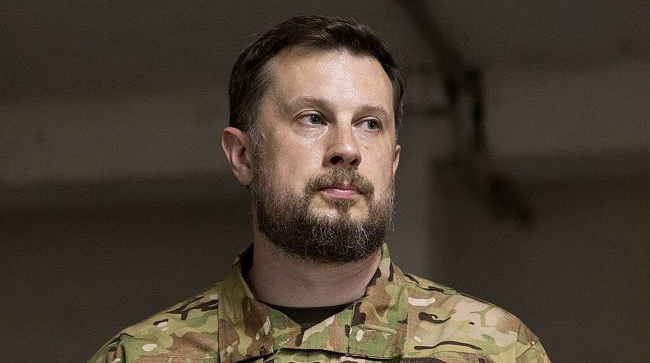
Ukraine’s 3rd Army Corps has introduced a battlefield first in its ongoing offensive in northern Donetsk Oblast: air-dropped kamikaze unmanned ground vehicles (UGVs) delivered by heavy bomber drones, striking Russian positions more than 10 kilometres behind the front line. The new tactic, revealed on 20 September, marks the latest phase of Operation Vivaldi, a multi-stage counteroffensive that has already cleared 75 square kilometres of territory and liberated at least five settlements since mid-September.
What happened
On 20 September, Brigadier General Andrii Biletskyi, commander of the 3rd Army Corps, announced that his troops had used heavy drone bombers to insert kamikaze UGVs deep into Russian-controlled areas. The ground robots—roughly the size of a small all-terrain vehicle—are packed with explosives and designed to engage fortified positions, armour or logistics hubs. According to the corps, the operation was a “first in the world” and allowed Ukrainian forces to liberate two villages and clear another without exposing infantry to direct fire. Russian reconnaissance drones were blinded by a coordinated electronic warfare and air-defence screen, preventing Moscow from spotting the attack (Source: Ukrainska Pravda).
The UGV deployment is the third significant milestone in a fortnight. On 15 September, Biletskyi confirmed that the 3rd Army Corps had launched Operation Vivaldi – named after the four-season composition, hinting at a phased campaign. In the first two stages, his units “eliminated pockets of enemy infiltration and cleared 75 sq km,” liberating the villages of Serednie, Novoselivka, Oleksandrivka, Yarova and the outskirts of Korovii Yar. He claimed the offensive had inflicted roughly 1,500 Russian casualties, destroyed more than 12,000 drones and hundreds of armoured vehicles, and cut fuel supplies by striking a pipeline and warehouses inside Russia (Source: Ukrainska Pravda).
Three days later, on 18 September, the corps reported a major blow against Russia’s elite Rubicon drone unit. Rubicon, a specialised centre for attack drones and reconnaissance UAVs, had been deployed to the Lyman-Borova front as a priority asset. Ukrainian fighters disabled its command-and-control system, destroyed logistics depots and launch sites, and killed experienced operators. The Russian command withdrew the remnants to a different sector, according to the 3rd Army Corps (Source: Ukrainska Pravda).
Why it matters
Operation Vivaldi is the first major Ukrainian offensive since the autumn of 2023, and it demonstrates a significant evolution in combined-arms drone warfare. The use of air-dropped UGVs solves a persistent problem: how to strike deep Russian positions without risking Ukrainian soldiers or expensive loitering munitions that are vulnerable to electronic warfare. By coupling heavy bombers with ground robots, Kyiv can now hit targets that were previously beyond the reach of standard artillery or FPV drones.
The elimination of the Rubicon unit is equally consequential. Rubicon was the Russian military’s showcase for drone innovation—the equivalent of Ukraine’s own unmanned systems commands. Its forced withdrawal from a critical axis suggests that Russian electronic warfare and air-defence gaps are being exploited more effectively, and that Ukraine’s own counter-drone tactics are maturing.
Territorially, the gains may seem modest—10 to 20 square kilometres liberated and 75 cleared of infiltrators—but they are strategically placed. Northern Donetsk Oblast forms the hinge between the Lyman-Borova front and the Kharkiv axis. Prying open this sector could eventually threaten Russian supply lines to occupied Luhansk Oblast, and it forces Moscow to divert reserves from other sectors, including the grinding battles around Chasiv Yar and Pokrovsk.
What’s next
Biletskyi has warned that Vivaldi has four “seasons” and called for information silence, so the full scope of the operation remains unclear. The 3rd Army Corps has been reinforced with elements from the 60th and 66th Separate Mechanised Brigades, the 125th Heavy Mechanised Brigade, the 3rd Assault Brigade and special-operations units, suggesting that Ukrainian commanders are committing substantial resources. Whether the offensive will escalate into a full breakthrough or remain a series of sharp, localised strikes depends on Russia’s ability to plug the gaps left by the battered 20th and 25th Armies.
For now, the Ukrainians have seized the initiative on this stretch of the front—and with it, a psychological edge that has been rare in the grinding war of 2026.
Sources
- 3rd Army Corps commander confirms Ukrainian offensive near Lyman, promises good news September 15, 2026
- Ukraine's 3rd Army Corps says it has crippled Russia's elite Rubicon drone unit September 18, 2026
- Ukraine's 3rd Army Corps deploys air-dropped kamikaze UGV for the first time during offensive in Donetsk Oblast September 20, 2026
Part of the dossier
Ukraine Counteroffensive Updates →