Ukraine Deepens Strikes on Russian Military Assets: Drone Sites, Naval Losses and Railway Attacks Mark September Campaign
Ukraine's defence forces struck a Russian drone launch site and repeaters on 13 September, following earlier hits on a naval missile carrier, fighter jet, helicopter, BK-16 boat, EW system and air defence near Sochi. Russian forces intensified attacks on Ukrzaliznytsia trains in six oblasts. A temporary ceasefire ordered on 4 September appears to have lapsed.
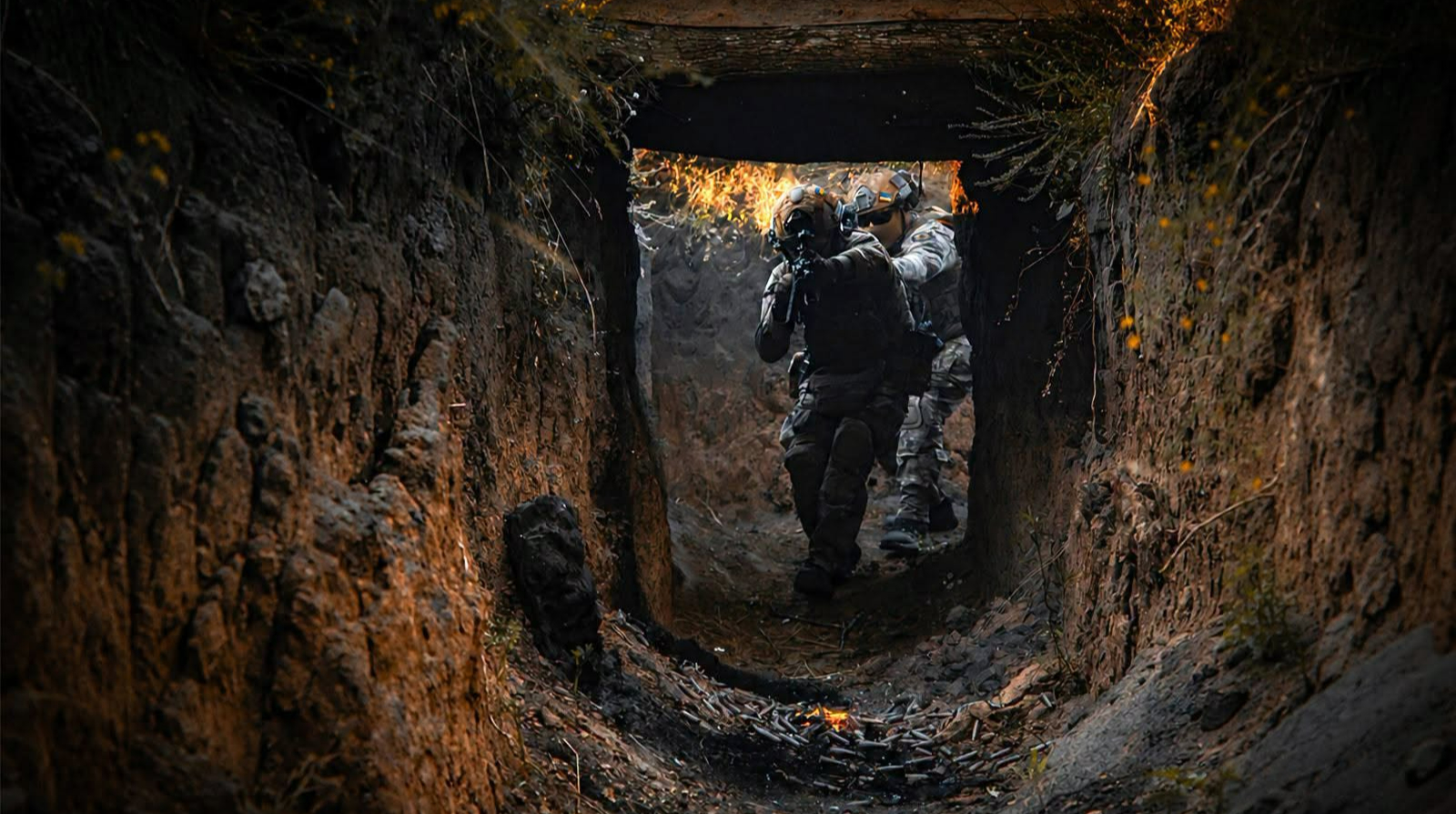
Ukraine's defence forces have escalated their campaign against Russian military infrastructure in the first half of September 2026, striking a drone launch site and repeaters in occupied territories, sinking a naval missile carrier, and forcing a temporary ceasefire along the line of contact — though that truce appears to have been short-lived.
On 13 September, the General Staff of Ukraine confirmed that its forces struck a Russian drone launch site and UAV repeaters in temporarily occupied areas. The operation targeted infrastructure used to coordinate and extend the range of Russian unmanned aerial vehicles, which have been a persistent threat to Ukrainian positions and civilian infrastructure. The strikes follow a pattern of systematic degradation of Russian reconnaissance-strike capabilities, according to Ukrainian military officials. Source: Ukrainska Pravda, 13 Sept
Just days earlier, on 9 September, Ukraine's drone chief reported that Russian forces lost a naval missile carrier, a fighter jet, and a helicopter overnight. The losses — though not independently verified by third parties — underscore the growing effectiveness of Ukrainian long-range precision strikes and drone operations against Russian assets even far from the front line. The naval missile carrier was likely hit in port or at sea, while the aircraft were probably destroyed on the ground or during combat missions. Source: Ukrainska Pravda, 9 Sept
Meanwhile, Russian forces have been intensifying attacks on Ukraine's railway infrastructure. On 10 September, Ukrzaliznytsia, the state railway operator, reported that Russian strikes most frequently targeted trains in six oblasts: Kharkiv, Dnipro, Zaporizhzhia, Donetsk, Luhansk, and Kherson. The attacks aim to disrupt military logistics and civilian movement, a tactic Russia has employed throughout the war. Source: Ukrainska Pravda, 10 Sept
The September campaign began with a series of precise strikes. On 3 September, Ukraine's defence forces hit a Russian BK-16 boat and an electronic warfare system — both high-value targets. The BK-16 is a fast assault boat used for coastal raids and troop transport; its destruction limits Russian amphibious options in the Black Sea and Sea of Azov. The electronic warfare system, likely a Krasukha or similar, was designed to jam Ukrainian drones and communications. Source: Ukrainska Pravda, 3 Sept
A day later, on 4 September, Ukrainian forces struck a Russian air defence unit near Sochi, deep inside Russian territory. The attack, confirmed by video evidence, demonstrates Ukraine's ability to hit targets far behind the front lines, putting pressure on Russia's southern air defence network. Source: Ukrainska Pravda, 4 Sept
Also on 4 September, sources told Ukrainska Pravda that Ukraine's defence forces were ordered to observe a temporary ceasefire along the line of contact. The reasons for the order remain unclear — it may have been a diplomatic gesture, a tactical pause, or an effort to allow for prisoner exchanges or civilian evacuations. No further details have emerged about its implementation or duration, and subsequent strikes by both sides suggest any ceasefire was not widely observed or has since lapsed. Source: Ukrainska Pravda, 4 Sept
Taken together, the September operations reflect a deliberate Ukrainian strategy: combine deep strikes against Russian military infrastructure with persistent pressure on front-line logistics, while also protecting Ukraine's own critical infrastructure from Russian retaliation. The strikes on drone sites and EW systems are particularly significant, as they directly counter Russia's ability to conduct reconnaissance and electronic warfare — two areas where Moscow has traditionally held an advantage.
The campaign also highlights Ukraine's growing reliance on domestically produced drones and long-range munitions, which allow for precise strikes without risking aircraft close to Russian air defences. As the war enters its fourth year, both sides are adapting their tactics: Russia is increasingly targeting railways, while Ukraine is systematically dismantling the technological backbone of Russia's occupation forces.
Sources
- Ukraine's defence forces strike Russian BK-16 boat and electronic warfare system September 3, 2026
- Ukraine's defence forces strike Russian air defence unit near Sochi – videos September 4, 2026
- Ukraine's defence forces ordered to observe temporary ceasefire on line of contact – sources September 4, 2026
- Russians lost naval missile carrier, fighter jet and helicopter overnight, Ukraine's drone chief says September 9, 2026
- Russian forces most frequently attack Ukrzaliznytsia trains in 6 oblasts September 10, 2026
- Defence forces strike Russian drone launch site and repeaters in occupied territories – Ukraine's General Staff September 13, 2026
Part of the dossier
Ukraine Strikes Russian Military Assets →