Ukraine’s drone campaign cripples Lukoil refineries, strikes expand to Dagestan and Tatarstan
All three of Lukoil's major Russian refineries are offline after Ukrainian drone strikes in July–August 2026. New attacks hit a Caspian port in Dagestan and refineries in Tatarstan in September, widening the pressure on Russia's fuel production and exports.
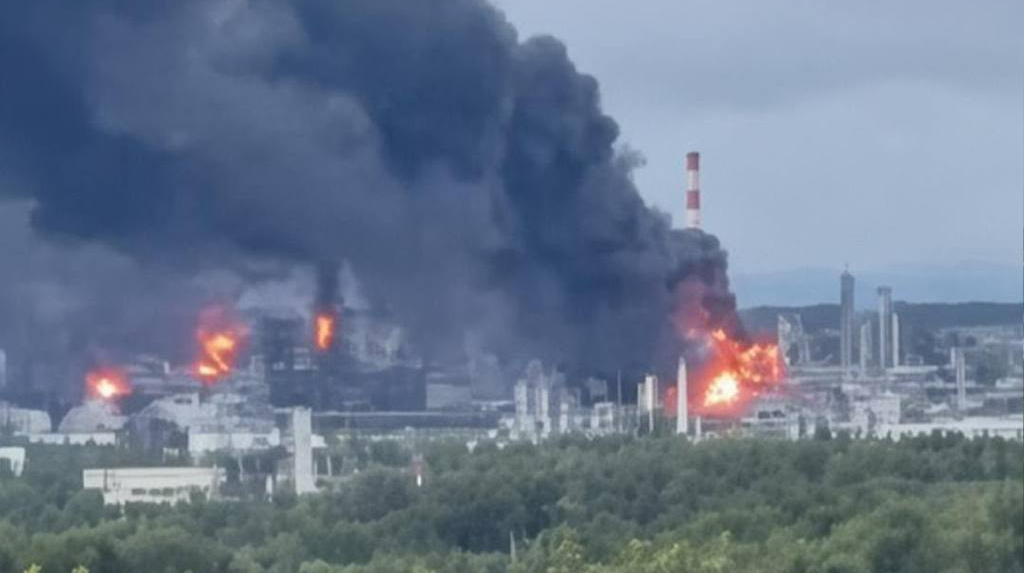
Ukraine’s deep-strike drone campaign against Russian oil infrastructure has reached a new milestone: all three of Lukoil’s major refineries are now offline, and recent attacks have hit a Caspian Sea port in Dagestan and facilities in Tatarstan, widening the economic and logistical pressure on Moscow.
Lukoil refineries shut down
The Lukoil-Nizhegorodnefteorgsintez refinery in Nizhny Novgorod – Russia’s fourth-largest by capacity and the country’s second-largest producer of petrol – suspended crude oil processing on 26 August after a Ukrainian drone attack, according to industry sources cited by Reuters. The attack damaged several processing units, inter-unit infrastructure and plant-wide facilities, Reuters reported. Repairs could take weeks or months, and no timeline for resuming operations has been given.
That strike followed an attack on the Lukoil Perm refinery on 21 August and one on the Lukoil Volgograd refinery on 31 July. All three are now halted. Ukraine’s Special Operations Forces, working with the Unmanned Systems Forces, claimed responsibility for the Nizhny Novgorod strike, saying long-range drones hit the refinery on the night of 25–26 August.
New strikes in September
The campaign has not slowed. On 10 September, suspected Ukrainian drones struck a Caspian Sea port in Dagestan, according to a video report by Al Jazeera. No specific damage details have been released, but the port is a key hub for Russian energy exports and military logistics in the Caspian region.
On 13 September, drones attacked oil refineries in Russia’s Tatarstan region, Ukrainska Pravda reported, though details of the damage remain unclear. Tatarstan is home to the Taneco refinery, one of Russia’s largest, operated by Tatneft. That attack, if confirmed, would mark the first known Ukrainian strike on oil infrastructure in the republic.
Strategic significance
The cumulative effect is stark. Lukoil alone accounts for roughly 15% of Russia’s refining capacity. With its three major plants offline, domestic fuel production has taken a serious hit, forcing Russia to import petrol from Belarus and cut exports, according to industry analysts. Ukraine has made energy infrastructure a priority target since 2024, aiming to reduce Russia’s ability to fund the war and supply its military.
“The strikes on refineries are part of a systematic effort to degrade Russia’s economic base,” said a Ukrainian military source who spoke on condition of anonymity. “Every refinery that stops operating means less fuel for Russian tanks and less revenue for the Kremlin.”
Open questions
Key unknowns remain. How long will repairs take at the Nizhny Novgorod refinery? What was the extent of damage at the Dagestan port and in Tatarstan? And what is the total impact on Russian fuel production and exports? Western intelligence assessments have not yet provided granular estimates.
What is clear is that Ukraine’s drone campaign, using domestically produced long-range UAVs, has become more aggressive and more precise in 2026. The strikes are not limited to refineries: in recent weeks, drones have also hit Russian airbases, ammunition depots and command posts.
For European readers following the war, the takeaway is that Ukraine is increasingly able to strike deep inside Russia, forcing Moscow to defend a vast energy network while its refining capacity shrinks. The economic pain may not be immediate, but it is cumulative – and it is widening.
Sources
- All of Lukoil's major Russian refineries halted after damage August 26, 2026
- Ukrainian drones strike Russian Caspian Sea port in Dagestan September 10, 2026
- Drones attack oil refineries in Russia's Tatarstan September 13, 2026
Part of the dossier
Ukrainian Drone Strike on Russian Refinery →