Ukraine’s Drone Campaign Cuts Russian Refining Capacity by 30%, IEA Warns
Ukrainian strikes on Russian oil infrastructure, including at the port of Makhachkala, have destroyed significant refining capacity. An IEA report estimates Russia could lose 30% of capacity for up to 18 months, crippling fuel exports and war funding.
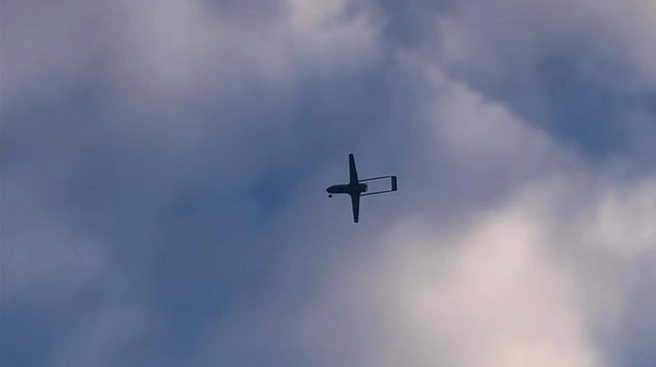
Ukrainian forces have intensified their campaign against Russian oil infrastructure, hitting a key refinery at the ice-free port of Makhachkala on 10 September and striking additional facilities in the preceding days. According to a new report from the International Energy Agency (IEA) published on 11 September, Russia stands to lose up to 30% of its oil refining capacity for as long as 18 months, a blow that could cripple the country’s ability to process crude for both domestic consumption and export markets.
President Volodymyr Zelenskyy confirmed on 7 September that Ukrainian forces had carried out strikes against oil refineries inside Russia and an unspecified asset in the Black Sea. In a video address, Zelenskyy described the operations as part of a systematic effort to reduce Russia’s ability to fund its war effort through energy sales. “Every ton of refined product that does not reach the Russian war machine brings us closer to peace,” he said, without detailing the exact locations hit. The claim could not be independently verified, but satellite imagery and regional reports later corroborated activity at several refineries.
Three days later, on 10 September, Ukrainian Defence Forces struck the oil terminal at Makhachkala, a rare deep-water, ice-free port on the Caspian Sea that serves as a crucial transit hub for Russian crude exports to Central Asia and, via pipelines, to the Black Sea. The strike, confirmed by a Ukrainian military official who spoke on condition of anonymity, targeted storage and loading infrastructure. “The aim is to disrupt the logistics chain that keeps Russia’s energy revenue flowing,” the official said. Local Russian authorities reported a fire at the facility but did not disclose the extent of the damage.
The cumulative impact of such strikes is now being quantified by the IEA. In its latest monthly oil market report, the agency estimated that Ukraine’s drone and missile campaign – which has hit at least a dozen refineries since spring 2024 – has knocked out approximately 30% of Russia’s primary distillation capacity. The IEA noted that repairs require specialised equipment and skilled crews, many of whom have been reassigned or are under sanctions, leading to a projected recovery timeline of 12 to 18 months. “This is not a temporary disruption that can be fixed with quick patches,” the report stated. “The damage to critical units is structural.”
The strategic significance is twofold. First, reduced refining capacity forces Russia to export more crude oil rather than higher-value refined products like diesel and jet fuel, cutting into its profit margins. Second, domestic fuel shortages have already been reported in several Russian regions, forcing the Kremlin to impose temporary export bans on gasoline – a politically sensitive move ahead of regional elections. For Ukraine, each successful strike chips away at Moscow’s primary source of foreign currency, which in turn limits its ability to procure new weapons and sustain offensive operations.
Western officials have largely declined to publicly endorse the strikes, fearing escalation, but privately acknowledge their effectiveness. The United States has urged Ukraine to avoid hitting civilian infrastructure, while the United Kingdom has provided guidance on target selection. As the campaign continues, the IEA’s assessment provides a rare independent benchmark – one that suggests Ukraine’s strategy is exacting a measurable and lasting cost on Russia’s war economy.
Sources:
Sources
Part of the dossier
Ukrainian Strikes on Russian Oil Refineries →