Ukraine Unleashes Largest Drone Attack on Moscow, Hitting Oil Refinery and Killing Civilians
Ukraine launched its largest drone attack on Moscow on 20 September, with over 1,600 drones. The Moscow Oil Refinery was hit, damaging a key unit and causing a major fire, while a residential building strike killed at least two. The attack, using multiple Ukrainian long-range weapons, is part of a coordinated campaign against Russian energy infrastructure.
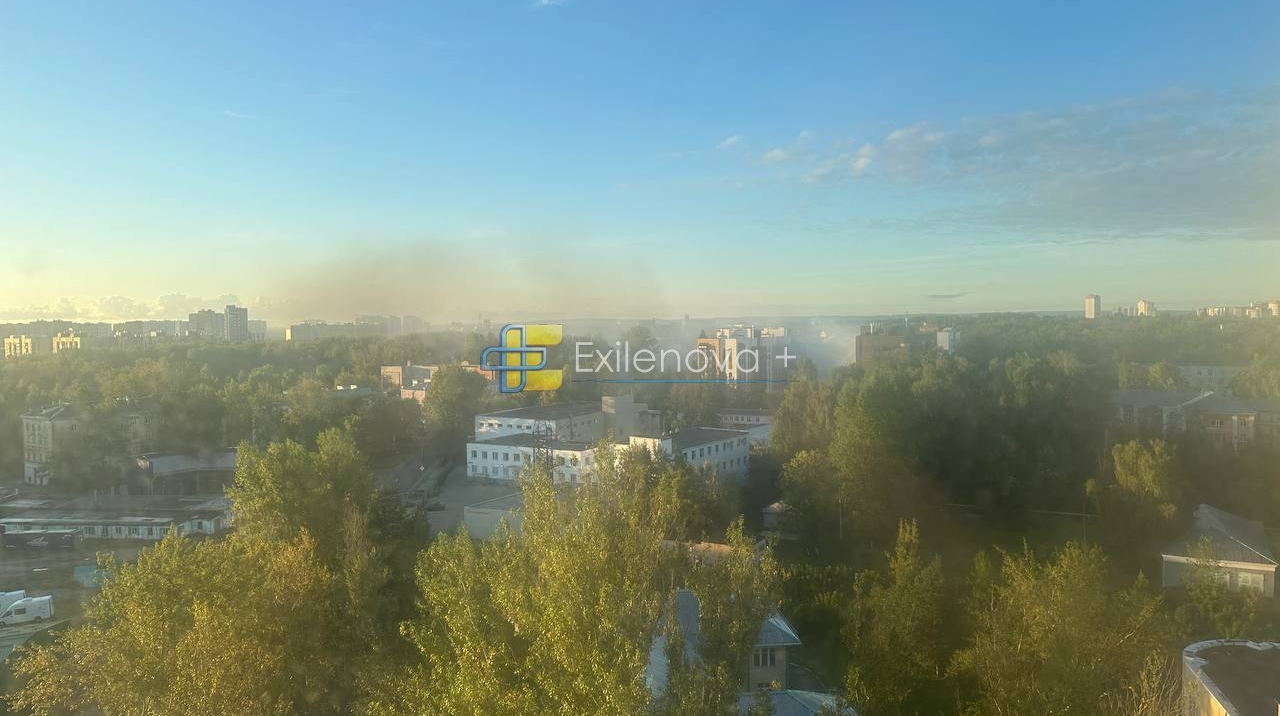
Ukraine struck the Russian capital with its most massive drone assault since the war began, sending over 1,600 unmanned aircraft toward Moscow and surrounding regions overnight on 19–20 September. The attack damaged the Moscow Oil Refinery – a facility that supplies roughly 40% of the city’s fuel – and hit a residential building, killing at least two people, according to Russian authorities.
Moscow Mayor Sergei Sobyanin acknowledged that 450 drones were shot down by air defences as they approached the capital, but several reached the grounds of the refinery in the Kapotnya district. Early assessments indicate the strike damaged the ELOU-AVT-6 primary refining unit, triggering a major fire that burned for hours Source: ASTRA, Exilenova+. Sobyanin claimed no casualties at the refinery, but video footage from the scene showed a massive blaze and emergency services working Source: Al Jazeera.
A separate drone struck a residential building in Moscow, killing at least two people, Russian officials reported. Sobyanin described the attack as the largest-ever on the capital and alleged, without evidence, that it was intended to disrupt local elections Source: Sobyanin on Telegram.
President Volodymyr Zelenskyy confirmed the operation, stating that Ukrainian forces used a range of domestically produced long-range weapons, including the Flamingo, Palianytsia, Pelican, FP-1, RZ-100, MICH-2000, Vendetta, Liutyi, Bars, and Sichen. The attack was carried out by the Security Service of Ukraine, Unmanned Systems Forces, Special Operations Forces, Defence Intelligence, and the Foreign Intelligence Service Source: Zelenskyy on X. Zelenskyy said one of Russia’s key oil industry plants and a logistics facility in the Moscow region were hit.
That logistics facility, the Sofyino technopark outside Moscow, also caught fire in the attack, according to monitoring Telegram channels Source: Exilenova+.
The strike on the Moscow refinery is part of a broader Ukrainian campaign targeting Russia’s energy infrastructure. Just three days earlier, on 17 September, a drone attack on the Slavneft-Yaroslavnefteorgsintez (Yanos) refinery in Yaroslavl Oblast, about 250 km north-east of Moscow, damaged the AVT-3 primary refining unit. That unit, with a capacity of 17,140 tonnes per day, accounts for roughly 40% of the plant’s total refining capacity. The refinery halted crude oil processing after the strike, and fuel from the plant disappeared from the domestic commodity exchange, according to four industry sources cited by Reuters Source: Reuters via Ukrainska Pravda. The Yaroslavl refinery had already been hit on 28 August, damaging the AVT-4 unit, which was still undergoing repairs.
The Moscow Oil Refinery, with a capacity of 11 million tonnes per year, is one of Russia’s largest. It supplies about 40% of Moscow’s fuel market and 70% of the Moscow region’s demand for petrol and aviation gas. The loss of the AVT-6 unit – even temporarily – could strain fuel supplies in the capital.
Russia’s Defence Ministry claimed that overnight alone it intercepted and destroyed 1,110 Ukrainian drones over various regions, including occupied Crimea and the Black Sea. The true scale of the attack is difficult to verify independently, but the simultaneous strikes on multiple high-value targets demonstrate a significant escalation in Ukraine’s deep-strike capability.
The coordinated use of over a dozen different weapon systems, including several newly revealed types, suggests that Ukraine has been building a diversified arsenal of long-range drones. The involvement of five separate Ukrainian agencies points to a centrally planned operation aimed at disrupting Russia’s war logistics and fuel supply.
For European readers, the message is clear: Ukraine is now able to reach and damage critical infrastructure deep inside Russia on a regular basis, challenging the Kremlin’s ability to protect its own territory while waging war abroad.
Sources
- Drones attack Moscow and Yaroslavl Oblast: motorway closed to traffic, smoke seen near Moscow – video August 28, 2026
- Drones attack fuel oil terminal in Novorossiysk, sparking fire September 9, 2026
- Drones attack chemical plant in Russia's Perm Krai – video September 11, 2026
- Drones attack Tolyatti and Taganrog in Russia, sparking fires at industrial sites – photos, videos September 12, 2026
- Yaroslavl oil refinery halts crude processing after drone attack – Reuters September 17, 2026
- Drones attack Moscow and oblast: fires reported at warehouses and oil refinery September 20, 2026
- Moscow attacked by more than 1,000 Ukrainian drones September 20, 2026
- Moscow oil refinery supplying 40% of city's fuel catches fire after drone attack September 20, 2026
- Moscow mayor reports largest-ever drone attack on Russian capital September 20, 2026
- Moscow region attacked with multiple weapons, including Flamingo and Pelican, Zelenskyy says – video September 20, 2026
Part of the dossier
Drone Attack on Moscow and Yaroslavl Oblast →