Ukraine restructures Donetsk command as Kharkiv gains continue and Russian claims face pushback
Zelenskyy restructures Donetsk command under Prokopenko and Biletskyi as Ukraine liberates 7.5 sq km in Kharkiv. Russian claims of capturing Pysarivka are denied. Over 200 clashes reported; Polish support for refugees drops to 52%.
Ukrainian President Volodymyr Zelenskyy announced on 26 August that two restructured military groupings will reinforce Ukrainian positions in Donetsk Oblast, placing them under the command of decorated officers Denys Prokopenko and Andrii Biletskyi. The move comes as Ukrainian forces reported liberating over 7.5 square kilometres in Kharkiv Oblast and denied Russian claims of capturing a village in Sumy Oblast, while the battlefield saw more than 200 combat clashes in a single day.
Zelenskyy said he had awarded Biletskyi the Gold Star of the Hero of Ukraine on the same day, and discussed next steps on the battlefield with Commander-in-Chief Mykhailo Drapatyi, Defence Minister Yevhen Khmara, and other senior commanders. The president also noted plans to increase the number of ground robotic systems and expand their production and procurement, as well as a more systematic approach to mid-strikes. Source: Ukrainska Pravda
Kharkiv Oblast gains
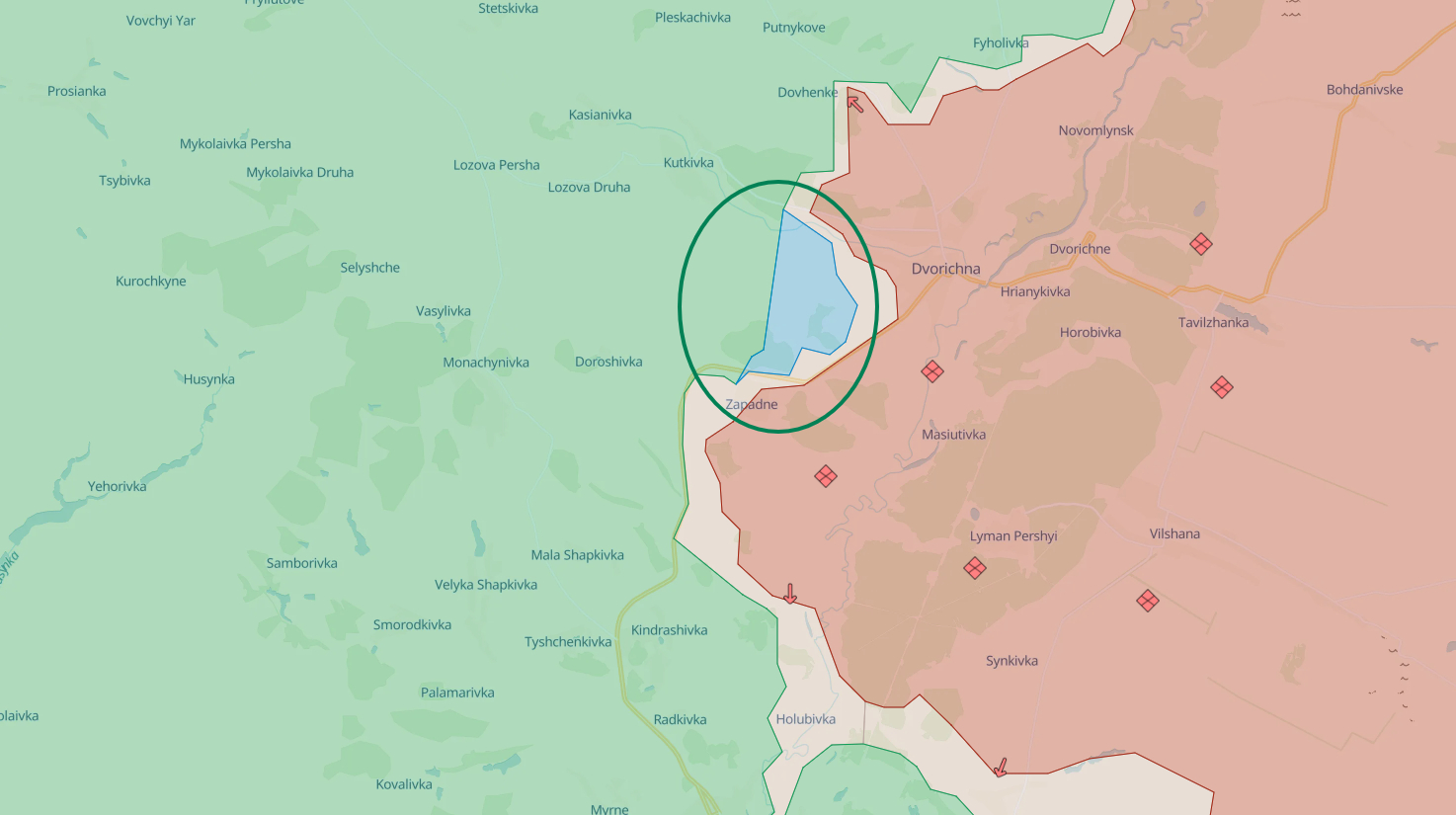
On 25 August, Ukrainian forces advanced between the village of Zapadne and the settlement of Dvorichna in the Kupiansk district of Kharkiv Oblast, liberating more than 7 square kilometres of territory. The Khartiia corps, a Ukrainian volunteer unit, said its reconnaissance and sabotage group cleared an area southwest of Dvorichna and took control of the northern part of Zapadne. The operation was confirmed by DeepState, a Ukrainian military analysis group. Source: Ukrainska Pravda
The Khartiia corps stated: "Step by step. Position by position. We're liberating Ukrainian land from the enemy. Dvorichna. More to come."
Russian claims denied
Ukraine's Kursk Group of Forces rejected Russian media claims that the village of Pysarivka in Sumy Oblast had been captured. In a statement, the group said: "A new statement by the Russian occupiers claiming the capture of the settlement of Pysarivka in Sumy Oblast is untrue. The settlement is under the control of Ukraine's defence forces, and fighting continues in this area." The group noted this was not the first time Russian sources had claimed to have "liberated" Pysarivka, having made a similar claim on 23 July. Source: Ukrainska Pravda
Battlefield overview
The General Staff of the Armed Forces of Ukraine reported that 203 combat clashes occurred over the past day, with the highest number of Russian attacks on the Kostiantynivka front (24 assaults repelled) and the Pokrovsk front (36 assaults repelled). On the North Slobozhanshchyna front and in the operational zone in Russia's Kursk Oblast, Ukrainian defenders stopped two Russian assaults, while the Russians launched three airstrikes using 12 guided bombs and conducted 77 strikes on Ukrainian positions, including seven with multiple-launch rocket systems. Source: Ukrainska Pravda
Shifting public sentiment in Poland
A CBOS poll published in late August shows that 52% of Poles now oppose accepting Ukrainian refugees, a significant shift from the overwhelming solidarity seen in the early months of the full-scale war. The Guardian reports that memory politics and Russian disinformation have contributed to the change, with the Polish right reacting angrily to Zelenskyy's decision to name a military unit after the Ukrainian Insurgent Army (UPA), a branch of which massacred about 100,000 Poles in 1943. Polish President Karol Nawrocki revoked Zelenskyy's Order of the White Eagle, and both sides have since returned further honours, freezing bilateral relations. Source: The Guardian
Strategic significance
The restructuring of command in Donetsk Oblast signals Ukraine's intent to shore up a front that has seen intense Russian pressure, particularly around Pokrovsk and Kostiantynivka. The appointment of Prokopenko and Biletskyi — both highly decorated and politically significant figures — suggests Kyiv is prioritising aggressive, experienced leadership in the east. Meanwhile, the modest but steady gains in Kharkiv Oblast show that Ukrainian forces are still capable of offensive operations, even as they defend against relentless Russian assaults elsewhere. The denial of Russian claims about Pysarivka underscores the ongoing information war, where both sides seek to shape perceptions of territorial control.
The Polish public opinion shift, if it translates into policy changes, could affect the logistics of refugee support and broader EU solidarity with Ukraine. For now, the immediate focus remains on the grinding battles along the eastern front, where neither side appears to have a decisive advantage.
Sources
- Ukrainian forces liberate 7.5 sq km in Kharkiv Oblast August 25, 2026
- In Poland, compassion for Ukrainians has turned to contempt. The consequences could be dramatic | Mateusz Mazzini August 26, 2026
- Battlefield sees over 200 clashes: 60 Russian attacks repelled on Pokrovsk and one more front August 26, 2026
- "I was so nervous I chewed through a pencil while my men were crossing the open ground": Ukraine's six-month advance on the Oleksandrivka front August 26, 2026
- Ukrainian troops deny claims that Russian forces have captured village in Sumy Oblast August 26, 2026
- Ukrainian positions in Donetsk Oblast to be strengthened by two restructured military groupings – Zelenskyy August 26, 2026
Part of the dossier
Ukraine War: Territorial Gains and Frontline Updates →