Ukraine Strikes Russian Chemical Plants and Caspian Flotilla Flagship in Escalating Campaign
Ukraine struck Russian chemical plants and destroyed a Su-33 jet and two Mi-8 helicopters on Sept 12. OSINT analysts reported a likely strike on the Caspian Flotilla flagship the previous day. The IEA warns Russia could lose 30% of refining capacity for 18 months.
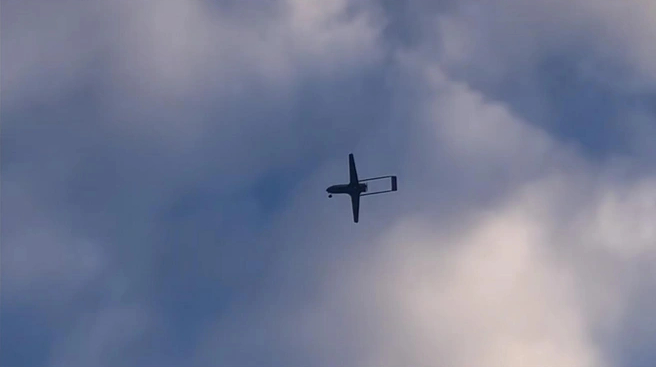
Ukrainian forces have struck two chemical plants inside Russia and destroyed a Su-33 fighter jet and two Mi-8 helicopters, President Volodymyr Zelenskyy confirmed on 12 September. The strikes mark a further widening of Kyiv’s campaign against Russian military and energy infrastructure, which the International Energy Agency (IEA) warned on 11 September could cost Moscow up to 30% of its oil refining capacity for 18 months.
“Today there were strikes on Russian chemical plants. One Su-33 and two Mi-8 helicopters were destroyed,” Zelenskyy said in his evening address, without specifying the exact location of the plants or the helicopters. The claim, if confirmed, would represent the first publicly acknowledged Ukrainian attack on chemical industry facilities inside Russia. The Su-33 is a carrier-based fighter operated by Russia’s naval aviation, and the Mi-8 is a widely used transport helicopter. Source
Caspian Flotilla Flagship Likely Hit
The helicopter and jet losses come a day after open-source intelligence (OSINT) analysts assessed that Ukrainian forces likely struck the flagship of Russia’s Caspian Flotilla. The vessel, whose name has not been officially disclosed, is the largest surface combatant in the Caspian Sea and has been used to launch Kalibr cruise missiles against Ukrainian infrastructure. Source
If confirmed, the strike would be a significant blow to Russia’s ability to project power from the Caspian, a secondary but strategically important theatre. The flotilla’s flagship has been a key asset for strikes on Ukrainian energy grids and civilian targets. Ukrainian forces have previously struck the port of Makhachkala on the Caspian coast, hitting oil infrastructure on 10 September. Source
Refining Capacity Under Pressure
The IEA report, published on 11 September, estimated that ongoing Ukrainian drone and missile attacks could degrade up to 30% of Russia’s oil refining capacity for as long as 18 months. The assessment, based on damage assessments and satellite imagery, underscores the strategic impact of a campaign that began in earnest in early 2024. Source
Zelenskyy first reported strikes on oil refineries inside Russia and an unspecified asset in the Black Sea on 7 September. Source The cumulative effect, according to the IEA, is that Russia will struggle to maintain domestic fuel supplies and export revenues, both of which are critical for funding the war effort.
Expanding the Target Set
The shift from purely oil infrastructure to chemical plants and naval aviation assets suggests Ukraine is deliberately widening its target set to impose maximum cost on Russia’s war machine. Chemical plants are often dual-use, producing both civilian goods and components for explosives or propellants. The destruction of a Su-33, a type based primarily on the aircraft carrier Admiral Kuznetsov, also hints at possible strikes on naval aviation bases in Crimea or the Black Sea region.
Separately, Russian Foreign Minister Sergei Lavrov described an invitation for Zelenskyy to visit Moscow as a “huge gesture of goodwill,” a statement likely aimed at framing Russia as open to diplomacy while it continues its offensive. Source The invitation has not been accepted, and Ukrainian officials have dismissed it as propaganda.
What It Means
For Ukraine’s Western partners, the sustained strikes demonstrate that Kyiv can now hit deep into Russian territory and degrade high-value assets far from the front line. The IEA’s warning gives a concrete metric for the campaign’s success. For Russia, the loss of refining capacity and naval assets in the Caspian will complicate logistics and reduce the margin of error in its energy exports, already constrained by sanctions.
As the campaign continues, the key question is whether Ukraine can maintain the tempo of strikes and whether Russia can adapt its air defences to protect critical infrastructure. The next few weeks will show whether the IEA’s 18-month timeline holds or whether the damage proves even more severe.
Sources
- Zelenskyy reports strikes on oil refineries in Russia and asset in Black Sea – video September 7, 2026
- Ukrainian forces strike oil infrastructure at Russia's ice-free port of Makhachkala September 10, 2026
- Russia could lose 30% of oil refining capacity for 18 months – IEA report September 11, 2026
- Ukrainian forces likely struck flagship of Russia's Caspian Flotilla – OSINT analysts September 11, 2026
- Zelenskyy reports strikes on Russian chemical plants and destruction of Su-33 and 2 Mi-8 helicopters – video September 12, 2026
- Lavrov calls invitation for Zelenskyy to visit Moscow a "huge gesture of goodwill" September 12, 2026
Part of the dossier
Ukrainian Strikes on Russian Oil Refineries →