Ukraine Strikes Syzran Refinery and Drone Facilities, Defying Disputed Energy Truce Claims
Ukrainian forces struck the Syzran oil refinery and drone facilities in Taganrog and Oryol, while hitting targets in the Black Sea. The strikes come amid disputed claims of an energy truce brokered by the US, with IEA warnings that Russia could lose 30% of refining capacity for 18 months.
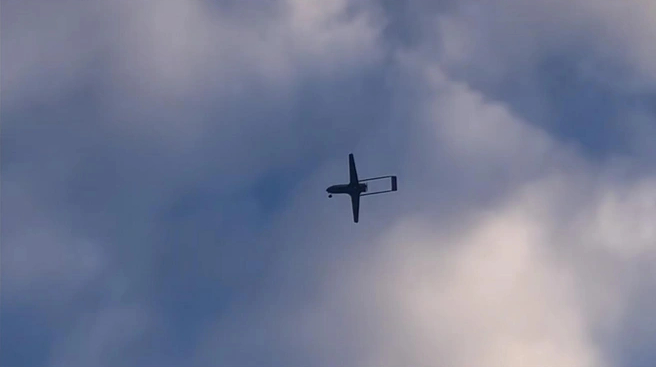
Ukrainian forces struck the Syzran oil refinery in Russia’s Samara Oblast, a drone production facility in Taganrog, a drone preparation and launch site in Oryol Oblast, and unspecified targets in the Black Sea on 15 September, President Volodymyr Zelenskyy confirmed. The strikes come as Washington and Moscow trade statements about a supposed moratorium on hitting each other’s energy infrastructure – an agreement that, on the evidence of the ground, does not yet exist.
“Russia continues to attack our energy sector, regular logistics and critical infrastructure. And our responses to them for this are tangible,” Zelenskyy wrote on X (Twitter). He framed the attacks explicitly as retaliation for Russian strikes on Ukraine’s power grid, which have intensified in recent weeks as Moscow tries to wear down the country’s energy system ahead of winter Source 8.
The Syzran refinery is one of Russia’s larger processing plants, located in the Volga region about 700 km from Ukraine’s border. It has been hit at least once before in this campaign. The Taganrog facility, in southwestern Russia near the Sea of Azov, produces Shahed-type attack drones and was also struck earlier this month. The Oryol site, roughly 150 km from the Ukrainian border, serves as a staging point for drone launches into northern Ukraine. By hitting both production and launch infrastructure, Ukraine is trying to degrade Russia’s ability to sustain its daily barrages.
In the Black Sea, the Ukrainian General Staff reported unspecified targets – likely naval assets or support vessels, consistent with a pattern of strikes that this month included the probable destruction of the flagship of Russia’s Caspian Flotilla on 11 September, according to OSINT analysts Source 4. That ship was anchored in the Caspian, but Kyiv’s reach now extends across multiple maritime theatres.
The latest operations cap a two-week surge that saw Ukrainian forces strike oil infrastructure at Makhachkala – Russia’s only ice-free port on the Caspian Sea – on 10 September Source 2, and an oil refinery in Krasnodar Krai on 13 September Source 7. The cumulative effect has been severe. A report from the International Energy Agency on 11 September estimated that Russia could lose 30% of its oil refining capacity for up to 18 months due to continued Ukrainian strikes Source 3. That assessment was cited by Ukrainian officials as evidence that the campaign is strategically significant, not merely symbolic.
The Truce That Isn’t
The flurry of strikes has unfolded against a confusing background of diplomatic signals. On 14 September, US President Donald Trump announced that Ukraine and Russia had “supposedly agreed not to strike energy facilities” Source 8. Zelenskyy responded later that evening, saying Ukraine was “ready to support de-escalation” if it meant an end to Russian attacks on Ukrainian critical infrastructure, but he attached conditions – crucially, that any halt be verifiable and reciprocal. The following day, Kremlin spokesman Dmitry Peskov called the idea “very good” but added that for Russia to stop attacking energy, it would need safe passage for oil tankers to global markets – effectively demanding that Western sanctions on Russian maritime exports be lifted Source 9.
No formal ceasefire is in place. The Financial Times reported on 14 September that talks on halting energy strikes have been under way for some time, but that President Putin does not want to reach an agreement before winter sets in, when Russia can best weaponise its gas and oil exports Source 8 background.
Why This Matters
For European readers following the war, the strategic calculus is clear. Ukraine’s long-range drone campaign is not just about inflicting economic damage – it is about forcing Russia to choose between protecting its energy infrastructure and maintaining its war machine. Every missile diverted from the front to defend a refinery in Samara or a drone plant in Taganrog reduces the pressure on Ukrainian troops in the east.
At the same time, the dispute over the reported truce reveals a fundamental asymmetry: Moscow wants to keep hitting Ukraine’s grid while shielding its own facilities, and it is using the promise of maritime navigation – a red line for any oil-exporting state – as a bargaining chip. Kyiv, for its part, has signalled conditional openness but shows no sign of pausing strikes as long as Russian missiles keep falling on its power plants.
The IEA’s 18-month timeline for lost capacity suggests that even if a halt were agreed tomorrow, the damage to Russia’s refining sector will take years to reverse. For now, the drones keep flying.
Sources
- Zelenskyy: Russia hits Ukraine's energy system, we retaliate September 15, 2026
- Zelenskyy reports strikes on oil refineries in Russia and asset in Black Sea – video September 7, 2026
- Kremlin calls energy truce "very good" idea but wants free maritime navigation September 15, 2026
- Ukrainian forces strike oil infrastructure at Russia's ice-free port of Makhachkala September 10, 2026
- Russia could lose 30% of oil refining capacity for 18 months – IEA report September 11, 2026
- Ukrainian forces likely struck flagship of Russia's Caspian Flotilla – OSINT analysts September 11, 2026
- Zelenskyy reports strikes on Russian chemical plants and destruction of Su-33 and 2 Mi-8 helicopters – video September 12, 2026
- Lavrov calls invitation for Zelenskyy to visit Moscow a "huge gesture of goodwill" September 12, 2026
- Ukrainian forces strike oil refinery in Russia's Krasnodar Krai – video September 13, 2026
Part of the dossier
Ukrainian Strikes on Russian Oil Refineries →