Ukraine Tests Four Interceptor Drones for Jet-Powered Shaheds as Rebel Group Unveils New EW System
Ukraine has field-tested four interceptor drones for jet-powered Shaheds, with plans to scale production to thousands. Separately, Rebel Group unveiled the Brama stationary EW/SIGINT system to counter FPV drones. The developments come as Russian jet-powered Shahed use surged 67% in a month.
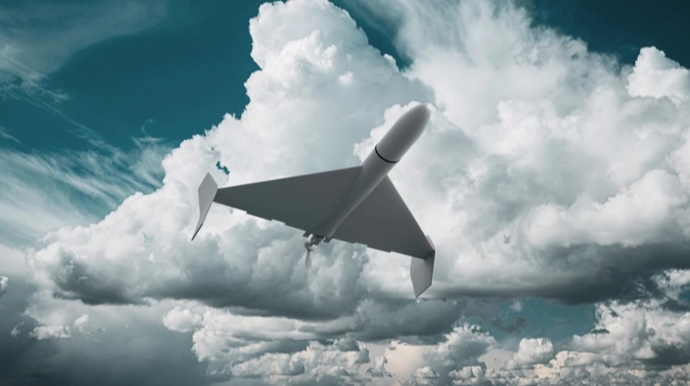
Ukraine has field-tested four prospective interceptor drones designed to shoot down Russia’s jet-powered Shahed unmanned aerial vehicles, Defence Minister Yevhenii Khmara announced on 30 August. The development comes as the number of jet-powered Shaheds used by Russian forces has surged by at least 67% over the past month – from approximately 1,500 to more than 2,500 units – according to data cited by Khmara during a meeting with journalists reported by Interfax-Ukraine.
“We already have four potential interceptors that can shoot down jet-powered Shaheds. Field testing has been conducted on them,” Khmara said. The minister added that the next priority is to bring these solutions to the required level as quickly as possible and scale up production to thousands of units. He did not specify the types or designs of the interceptors, nor a timeline for mass production.
The announcement underscores the accelerating technological race between Ukrainian developers and Russian forces, who have increasingly relied on jet-powered Shaheds – an upgraded variant of the Iranian-designed one-way attack drone – to strike critical infrastructure and civilian areas. The shift to jet propulsion makes these drones faster and harder to intercept with conventional air defences, which are already stretched thin by the sheer volume of incoming threats.
Separately, Ukrainian defence firm Rebel Group has unveiled a stationary electronic warfare and signals intelligence (EW/SIGINT) system called Brama, designed to counter the ubiquitous FPV (first-person view) drones that have become a staple of battlefield surveillance and attack on both sides. According to a Rebel Group press release, the system can detect the frequency of analogue video feeds from FPV drones, decode the signal, and then jam both the video channel and the drone’s control channel using directed electronic warfare. The operator can immediately suppress a target upon detection without needing additional equipment. Brama has completed range and laboratory testing and is now undergoing codification – the formal approval process required for use by Ukraine’s Defence Forces.
Rebel Group is a technology company specialising in EW and SIGINT systems; some of its products have already been codified and tested at General Staff ranges. The Brama system is a stationary solution, distinguishing it from mobile EW systems like the Stryi station developed by InLab, which was also designed to counter FPV drones.
The interceptor and EW programmes are complementary but remain separate efforts. While the four interceptors aim to shoot down jet-powered Shaheds in flight – essentially acting as drone-on-drone hunters – Brama provides a ground-based electronic countermeasure against the smaller, slower FPV drones that pose a persistent threat to troops and armoured vehicles near the front line.
The strategic importance of these developments is clear: Russia’s increased use of jet-powered Shaheds suggests Moscow is trying to overwhelm Ukrainian air defences with cheap, mass-produced drones that are difficult to track and intercept. If Ukraine can field thousands of interceptor drones, it could radically change the cost calculus for both sides. An interceptor drone, even if it costs several times more than a Shahed, would still be far cheaper than a surface-to-air missile. Meanwhile, the Brama system – if widely deployed – could protect fixed positions such as command posts, logistics hubs and energy infrastructure from the FPV drones that have become a ubiquitous threat on the modern battlefield.
On 3 September, a Russian drone attack on Kyiv injured four people, including a 12-year-old child, according to Ukrainska Pravda. The incident highlights the urgency of fielding effective countermeasures against both jet-powered and conventional drones. No further details on the attack were immediately available.
Open questions remain about the specific performance of the four interceptors in real combat conditions, the timeline for mass production, and whether Brama will be integrated with the interceptor programme or remain a standalone system. Khmara’s announcement suggests that the Ukrainian defence industry is moving quickly from prototype to production, but scaling to thousands of units will require sustained investment and coordination with international partners.
For Ukraine Desk readers, the key takeaway is that Ukraine is not merely reacting to Russian drone tactics but actively developing a layered defence: interceptors to kill the incoming Shaheds in the air, and electronic warfare to blind the smaller drones that have become the eyes and ears of Russian artillery. Both programmes reflect a war in which drones have become the dominant weapon system, and the ability to counter them is as important as the ability to deploy them.
Sources
Part of the dossier
Ukraine's Drone Interceptor Development →