US asks Ukraine to pause strikes on Moscow, St Petersburg during CIA director Ratcliffe’s first Moscow visit
The US asked Ukraine not to strike Moscow and St Petersburg while CIA Director John Ratcliffe visits Russia — his first trip to Moscow and the highest-level Trump administration visit since January. Ukrainian sources confirmed the narrowed request, raising questions about US-Ukraine relations and the direction of diplomatic efforts.
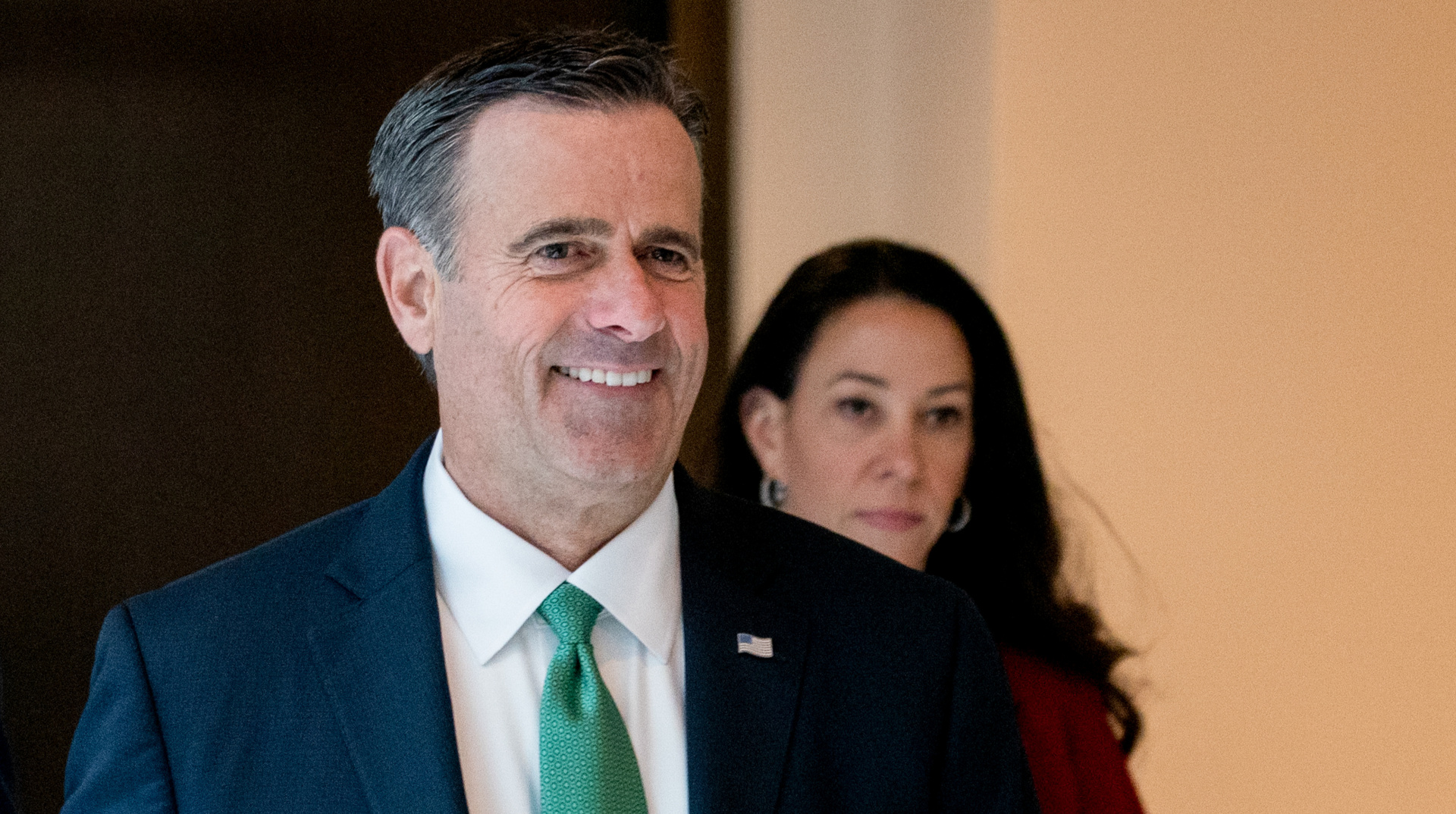
The United States has asked Ukraine to refrain from striking Moscow and St Petersburg while CIA Director John Ratcliffe is visiting the Russian capital, according to Ukrainian government sources and an Axios report.
The request, conveyed before Ratcliffe’s delegation arrived in Moscow, marks the highest-level visit by a Donald Trump administration official to Russia since January 2025. The last CIA director to travel to Moscow was William Burns in November 2021, who warned the Kremlin that Washington knew Moscow was preparing a full-scale invasion of Ukraine.
Axios, citing a source familiar with the situation, reported that the US informed Ukraine ahead of the trip that a senior delegation was heading to Moscow and asked Kyiv to pause strikes until the delegation leaves. Suspilne, a Ukrainian public broadcaster, later clarified that the request specifically covered attacks on Moscow and St Petersburg — a narrowing of an earlier, broader report.
“The US asked Ukraine not to attack Moscow and St Petersburg for a period of time amid Ratcliffe’s visit,” a Ukrainian government source told Suspilne, as reported by European Pravda.
Ratcliffe’s visit was first reported by CBS after a US Air Force Boeing C-17A Globemaster III transport aircraft and a convoy of US diplomats were spotted at Moscow’s Vnukovo Airport. The CIA declined to comment on the director’s travel schedule.
The request comes at a delicate moment in US-Ukraine relations. In August, US Secretary of State Marco Rubio said diplomatic efforts would be made in the coming weeks to determine whether peace negotiations between Ukraine and Russia can be restarted. Earlier this month, Trump’s special representatives Steve Witkoff and Jared Kushner were reported likely to visit Kyiv on Ukraine’s Independence Day, but the trip did not take place.
Why this matters
The request lays bare the limits of Washington’s support for Ukrainian strikes on Russian soil. Ukraine has increasingly targeted military infrastructure inside Russia using long-range drones and missiles, arguing that hitting supply hubs and airfields is a legitimate way to degrade Moscow’s ability to wage war. The US has provided some of these systems, but has also imposed restrictions on their use — particularly for strikes deep inside Russian territory.
By asking Ukraine to pause attacks on the two biggest Russian cities, the Trump administration appears to be trying to avoid a diplomatic incident that could derail Ratcliffe’s mission. A strike during the CIA director’s visit could be interpreted by the Kremlin as either a provocation or a sign that Washington cannot control its ally.
At the same time, the request may test Ukrainian patience. President Volodymyr Zelenskyy’s government has publicly resisted limits on its ability to defend itself, and any suggestion of a freeze on attacks — even a temporary one — could be seen in Kyiv as a concession to Moscow without any clear guarantees in return.
What comes next
It is unclear whether Ukraine will comply. Ukrainian officials have not confirmed any decision to halt attacks, and the country’s drone and missile units have not publicly signalled a change in operations.
The purpose of Ratcliffe’s visit also remains unknown. Open questions include whether he is carrying a message from Trump to Putin, whether the trip involves intelligence-sharing or prisoner exchange talks, and whether it could pave the way for a future summit.
What is clear is that Ratcliffe’s journey — and the US request that preceded it — represents the most direct attempt by the Trump administration to re-engage with Moscow since the war began, and the most tangible signal yet that Washington is seeking an off-ramp.
Reporting by Marta Kovalenko. Source material from Ukrainska Pravda and Ukrainska Pravda.
Sources
- Axios: US asks Ukraine not to strike Russia while CIA director is there August 25, 2026
- Putin adviser claims Ukraine planned to invade Russia on 8 March 2022, so Russia attacked first August 25, 2026
- Ukraine clarifies that Washington asked it not to attack Moscow and St Petersburg during CIA chief’s visit August 25, 2026
Part of the dossier
US asks Ukraine to pause strikes on Russia during CIA director's Moscow visit →