Zelenskyy faces twin tests: anti-corruption arrest of ex-aide and escalating drone war as EU warns on graft
Ukraine's President Zelenskyy faces a corruption probe that led to the arrest of a former deputy, as the EU warns of zero tolerance on graft. Simultaneously, he orders a major escalation of drone strikes inside Russia. The twin pressures test his wartime leadership and Ukraine's EU ambitions.
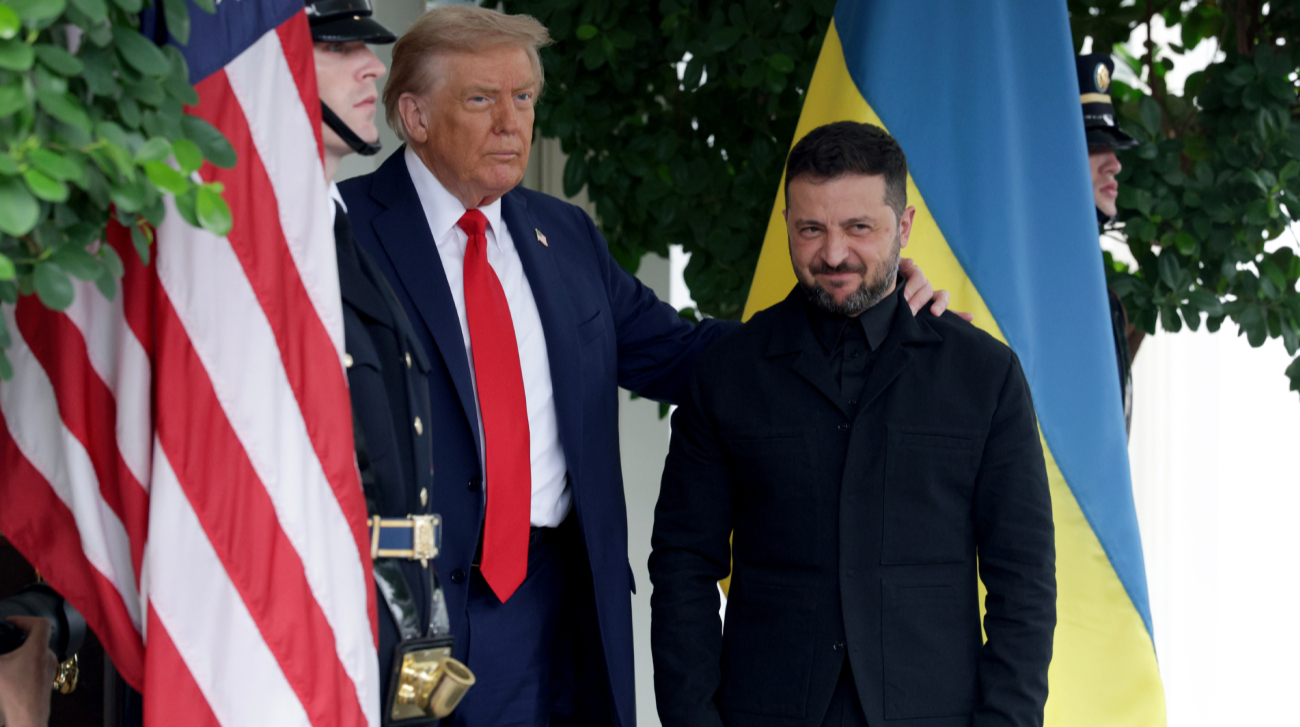
Ukraine’s President Volodymyr Zelenskyy is navigating a delicate balancing act this week. On one hand, his government is under the spotlight of a sweeping anti-corruption investigation that has snared a former deputy head of his office. On the other, the war against Russia is entering a new phase of long-range strikes, with Zelenskyy ordering a dramatic ramp-up in drone attacks to 1,000 per day. Meanwhile, the European Commission has made clear that Brussels is watching the corruption case closely, reiterating that fighting graft remains a non-negotiable condition for EU membership.
Operation Forrest Gump snares Iryna Mudra
The High Anti-Corruption Court on 25 August ordered the arrest of Iryna Mudra, the former deputy head of the President’s Office, in connection with the so-called Operation Forrest Gump probe. Mudra was remanded in custody for 60 days, with bail set at UAH 20 million (about US$447,000). The Specialised Anti-Corruption Prosecutor’s Office (SAPO) alleged she may have assets exceeding UAH 250 million (US$5.6 million) and had initially sought bail of UAH 150 million (US$3.3 million) Source: Ukrainska Pravda.
Mudra’s arrest is the highest-profile development in a corruption probe that has already generated headlines across Ukraine. The case is politically sensitive because it involves a former senior figure in Zelenskyy’s inner circle, and it comes at a time when domestic opponents and some Western partners are pressing for faster progress on institutional reform.
EU zero-tolerance reminder
On the same day, the European Commission spokesperson in Brussels confirmed that Brussels is “aware of the latest developments” in Operation Forrest Gump and reiterated that “the EU maintains a zero-tolerance policy on corruption.” The spokesperson added that fighting corruption “is a central element for any country to join the European Union” and that independent anti-corruption bodies must be safeguarded in Ukraine Source: Ukrainska Pravda.
For Ukraine, which has been a candidate for EU membership since June 2022, the timing is awkward. The probe serves as a test of whether the country’s anti-corruption institutions can act independently of political pressure. At the same time, it gives ammunition to those who argue that Ukraine’s wartime leadership has not done enough to stamp out the systemic graft that plagued the country before the full-scale invasion.
Wartime election calls rejected
Against this backdrop, calls for wartime elections have resurfaced. A former minister publicly urged Zelenskyy to hold presidential and parliamentary elections despite the ongoing conflict. Zelenskyy has consistently rejected such demands, arguing that it is impossible to hold free and fair elections under martial law, while millions of citizens are displaced or fighting at the front. The president also faces criticism from some domestic opponents who accuse him of using the war to delay elections and consolidate power Source: Al Jazeera.
War effort: drones, diplomats and the front line
Amid the political noise, Zelenskyy has kept his focus on the battlefield. On 26 August he visited the Oleksandrivka front line together with Commander-in-Chief Mykhailo Drapatyi, meeting soldiers of the 80th Halychyna Separate Air Assault Brigade. The president discussed specific requests for drones, long-range artillery, small radar systems, and measures to address unauthorised absences and improve training Source: Ukrainska Pravda.
That same day, Zelenskyy announced that Ukrainian forces had struck 16 targets inside Russia over the previous 24 hours, including oil facilities, airfields, a missile unit, and logistics sites. He framed the strikes as a way to “increase the cost of the war for the aggressor” Source: Ukrainska Pravda.
Then, on 28 August, Zelenskyy said he plans to ramp up long-range drone strikes to at least 1,000 per day — a more than threefold increase from the current estimate of around 300. In his evening address, he called for more: “There needs to be more. There is a concrete goal, and we will fulfil this task” Source: Al Jazeera. The escalation comes after a rare visit to Moscow by CIA Director John Ratcliffe, which Zelenskyy confirmed he had been briefed on by the US side. The Kremlin said Ratcliffe met Russian intelligence officials but not President Vladimir Putin.
Diplomacy: Trump, Poland, Moldova
On Independence Day (24 August), Zelenskyy shared a warm message from US President Donald Trump, who praised Ukraine’s resilience and called for “a durable, lasting peace.” Zelenskyy responded by thanking Trump and reminding him of Ukraine’s need for Patriot interceptor missiles Source: Ukrainska Pravda.
Zelenskyy also exchanged letters with Polish President Karol Nawrocki, who reaffirmed Poland’s support and expressed hope for Ukraine’s victory. Zelenskyy said he wants to develop ties with a “clear-eyed approach toward present threats” and reiterated Ukraine’s goal of joining both the EU and NATO Source: Ukrainska Pravda.
On 27 August, Zelenskyy travelled to Chișinău for Moldova’s Independence Day, holding bilateral talks with President Maia Sandu and a trilateral meeting with Romanian President Nicușor Dan. The visit came as Moldova reported Russian drones flying over its airspace on its independence day, which Sandu described as intimidation Source: Ukrainska Pravda.
Why it matters
Zelenskyy is simultaneously fighting a war, fending off domestic political pressure, and trying to keep Ukraine on the EU track. The Forrest Gump case is a reminder that the anti-corruption institutions created after the 2014 Euromaidan revolution are still active — but it also fuels the narrative of a government that is not clean enough. The EU’s public reminder of zero tolerance is a signal that Brussels will not quietly drop the conditionality, even during wartime.
Meanwhile, the escalation in drone strikes against Russia represents a strategic shift: Ukraine is betting that deep-strike capabilities can force Moscow to negotiate on Kyiv’s terms. Whether that bet pays off will depend on the continued supply of drones and long-range weapons from Western partners, as well as the political will to sustain the pace.
For the audience in Europe, the key takeaway is that the fight against corruption inside Ukraine is not a secondary issue — it is a frontline condition for the country’s future in the EU. And as the war grinds on, the pressure on Zelenskyy to deliver on both fronts will only intensify.
Sources
- What’s behind domestic political pressure on Ukraine’s president? August 24, 2026
- Zelenskyy shares Independence Day message from Trump August 25, 2026
- Ex-deputy head of Zelenskyy's Office remanded in custody with bail set at US$447,000 August 25, 2026
- European Commission aware of Operation Forrest Gump, reiterates "zero tolerance for corruption" August 25, 2026
- Zelenskyy: Ukraine hits 16 targets in Russia in one day, including missile unit and airfields August 26, 2026
- Zelenskyy on letter from Poland's Nawrocki: Ukraine wants to develop ties with clear-eyed approach towards threats August 26, 2026
- Zelenskyy and Commander-in-Chief Drapatyi visit front line August 26, 2026
- Zelenskyy arrives in Chișinău August 27, 2026
- Ukraine’s Zelenskyy plans to hit Russia with ‘1,000 drones’ a day August 28, 2026
Part of the dossier
Ukraine Political Pressure and Wartime Elections →