Zelenskyy faces wartime election calls and corruption fallout as Trump offers Independence Day praise
Zelenskyy rejects wartime election calls as a former senior official faces corruption charges, while Trump's Independence Day message mixes praise with a push for peace. The cases highlight the political pressures on Kyiv alongside the military fight.
Ukraine's president is entering the post-Independence Day period with political pressure mounting at home even as Washington sends warm words. Volodymyr Zelenskyy has rejected a call for wartime elections from a sacked minister, while a senior former official from his own office now faces a corruption court — a combination that analysts say could test the government's cohesion as the war with Russia grinds on.
The immediate trigger is the case of Iryna Mudra, former deputy head of the President's Office. On 25 August, the High Anti-Corruption Court ordered her into custody for 60 days, setting bail at UAH 20 million (about US$447,000). The Specialised Anti-Corruption Prosecutor's Office had argued for bail of UAH 150 million (US$3.3 million), saying Mudra may hold assets exceeding UAH 250 million (US$5.6 million). Mudra's defence called the suspicion unfounded and the bail disproportionate; Mudra herself said she would try to raise the money from acquaintances and friends. Ukrainska Pravda reported on the court ruling.
The case is part of a broader pattern. According to Al Jazeera's Inside Story, domestic political pressure on Zelenskyy has been growing amid the latest corruption investigations into senior government officials, even as Russian and Ukrainian attacks intensify. Zelenskyy has rejected calls for wartime elections from a sacked minister, a demand that touches on a sensitive question: whether a country under martial law can credibly hold a vote. Guests on the programme — Oleksandr Sushko of the International Renaissance Foundation, Olexiy Haran of the National University of Kyiv-Mohyla Academy and Michael Bociurkiw of the Atlantic Council — discussed the impact of these pressures, though none suggested an easy institutional answer.
The political backdrop matters because Ukraine's Western partners, including the United States, have repeatedly stressed the importance of democratic legitimacy. Yet holding elections during active hostilities poses obvious practical and legal problems, and corruption cases against senior officials can be read two ways: as evidence that the rule of law is functioning, or as a sign of internal political turbulence at a moment when unity is a wartime asset.
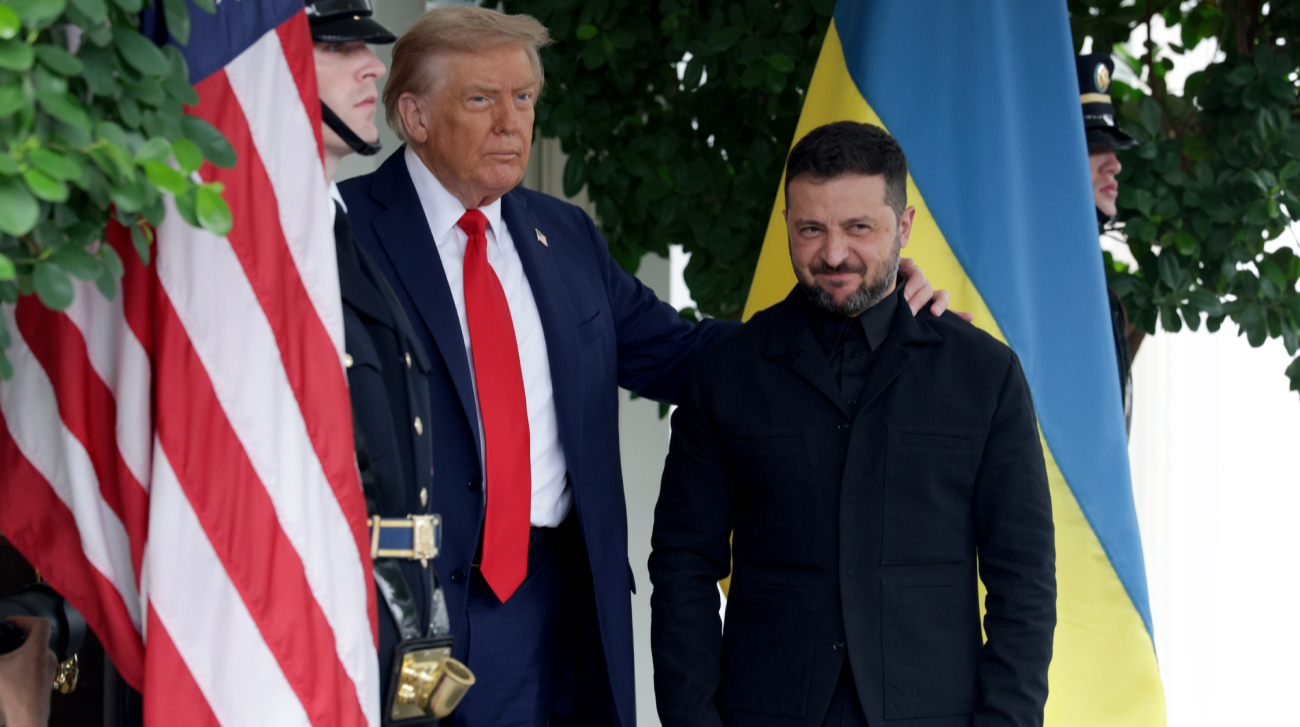
Into that atmosphere came an Independence Day message from US President Donald Trump, shared by Zelenskyy on 25 August. Trump congratulated Ukraine on the 35th anniversary of the restoration of its independence, praising the "enduring friendship" between the countries and the "resilient spirit" of Ukrainians. "With courageous, brave, and talented people, you have built a great country," Trump wrote, adding that the United States "remains confident in your future as a sovereign, prosperous nation." He closed with an appeal to "seize this moment to end the conflict and build a durable, lasting peace." Zelenskyy shared the message on X.
Zelenskyy's response was pointed: he thanked Trump and tied the message to a concrete military need — Patriot PAC-3 interceptor missiles for Ukraine's air defences. "These words, much like the sound of a Patriot PAC-3 launch, lift our spirits and give hope that lives can be protected from Russia's savage attacks and that a dignified peace can be achieved," he wrote.
The juxtaposition is telling. Washington is signalling friendship and a desire for peace talks; Kyiv is signalling gratitude but also reminding its most important ally that air defence hardware, not just rhetoric, is what protects Ukrainian cities. Meanwhile, at home, the Mudra case and the election question ensure that Zelenskyy's political flank is not entirely secure even as the front line remains active.
For readers following the war, the takeaway is that Ukraine's domestic politics are no longer a sideshow. The corruption investigation into a former senior official, the debate over wartime elections and the choreography of Independence Day diplomacy are all part of the same story: how a country at war manages accountability, legitimacy and alliance management at the same time.
Sources
Part of the dossier
Ukraine Political Pressure and Wartime Elections →